
Professional Teeth Whitening in Wilmslow
Dentist supervised whitening in custom made trays, from £395. Safely brighten your natural shade without altering the tooth itself.
Professional teeth whitening lightens the natural shade of the teeth using dentist supervised whitening gel, worn at home in custom made trays or applied at the practice. Unlike most cosmetic treatments it does not alter or remove any tooth structure. At Croft Dental on Manchester Road in Wilmslow, home whitening starts from £395 and the in-practice system from £725, supervised by Dr Natasja Kashyap, who holds an MSc in Fixed and Removable Prosthodontics. Results typically last from several months to a couple of years. In the UK, tooth whitening may only legally be carried out by a registered dental professional following an examination.
So, why can only a dentist do this?
It is a fair question, particularly when the salon on the high street is advertising it for a fraction of the price.
The answer is that tooth whitening is a regulated dental procedure in the UK. It may only be carried out by a dentist, or by a hygienist, therapist or dental nurse working to a dentist’s prescription, following an examination.
Beauty salons, whitening kiosks and mobile whitening services offering the treatment are acting illegally, and the General Dental Council prosecutes for it. That is not professional territorialism. It is because the things that go wrong go wrong quite badly.
Whitening gel is only safe under specific conditions. The right concentration. Trays that actually fit. And, critically, teeth and gums that have been examined first.
Whitening over untreated decay, a cracked filling or an exposed root causes real pain and lasting harm. Trays that do not fit leak gel onto the gums and burn them. Neither is theoretical, and both are common enough that we see the results.
Products sold online are a similar problem. They frequently contain either a concentration too weak to do anything, or one that is illegal here. Neither is worth the money.
If you have used a non-dental whitening service and something has gone wrong, come in. We will look at it and tell you honestly what can be done.
How teeth whitening works
Whitening gel contains hydrogen peroxide or carbamide peroxide. The gel passes through the enamel and breaks down the staining that has built up inside the tooth over the years.
It does not strip, scrub or wear down the enamel. It lightens the tooth from within, which is why the surface is left intact and properly supervised whitening does not weaken the tooth.
What causes teeth to darken
- Food and drink: coffee, tea, red wine, curry and dark berries
- Lifestyle: tobacco and smoking
- Age: enamel thins naturally over time, allowing the darker dentine beneath to show through
- Medical factors: certain childhood medications such as tetracycline, or trauma to an individual tooth
What whitening will not lighten
Crowns, veneers, bridges, white fillings and composite bonding do not respond to whitening gel. They stay exactly the shade they were made.
This matters if you have visible restorations on your front teeth. Whitening the natural teeth around them leaves those restorations looking darker by comparison, and they may need replacing afterwards to match.
We identify this at your consultation so you can plan and budget for it, rather than discovering it at the end.
Your whitening options
Home whitening with custom trays
Trays are made from impressions or a digital scan of your teeth, so they fit your teeth exactly. You wear them with whitening gel at home, usually overnight or for a set period each day, over two to three weeks.
The fit is the whole point. Custom trays hold the gel against the teeth and keep it off the gums, which is what separates professional home whitening from anything bought online.
Suits patients who want to whiten at their own pace, and those who want to keep the trays for occasional top ups afterwards, which is most people.
From £395
In-practice whitening
Whitening carried out at the practice in a single appointment using a stronger gel applied under supervision, with your gums protected throughout.
Faster, though the shade usually settles slightly over the following days. Frequently combined with home trays so the result can be maintained.
Suits patients who want a result quickly, or who would rather not manage trays at home.
From £725
A combination of both
Some cases are best treated with an in-practice session followed by a period of home whitening, or the other way round. This tends to produce the most consistent result on more stubborn staining.
Which is right for you
Dr Natasja will recommend based on your starting shade, the type of staining, whether you have experienced sensitivity before, and how quickly you want the result.
Am I a suitable candidate?
Usually suitable if you
- Have healthy teeth and gums
- Have natural teeth that have darkened with age or staining
- Have realistic expectations of how much lighter they will go
- Are over 18, since whitening is not permitted for under 18s in the UK except to treat disease
We will need to assess further if you
- Have decay or gum disease, both of which must be treated first
- Have sensitive teeth, since whitening can increase sensitivity temporarily
- Have exposed root surfaces from gum recession, which do not whiten in the same way and can be uncomfortable
- Have crowns, veneers or white fillings on your front teeth, which will not lighten
- Have internal staining from trauma or tetracycline, which responds less predictably and may need a different approach
- Are pregnant or breastfeeding, in which case whitening is deferred
On expectations
Whitening lightens your existing natural shade. How far it goes depends on where you are starting from and what has caused the discolouration. Most patients see a clear improvement of several shades.
What it will not do is take everybody to the same end point, because everybody starts somewhere different. Dr Natasja records your starting shade at the consultation and will tell you what is realistic for your teeth specifically, rather than for teeth in general.
- Real Patient Results
Thousands of Smiles Transformed
Explore real patient results demonstrating the life-changing impact of expert implant dentistry at Croft Dental. From single tooth restorations to comprehensive full-mouth rehabilitations, our tailored treatment plans restore both function and natural aesthetics.
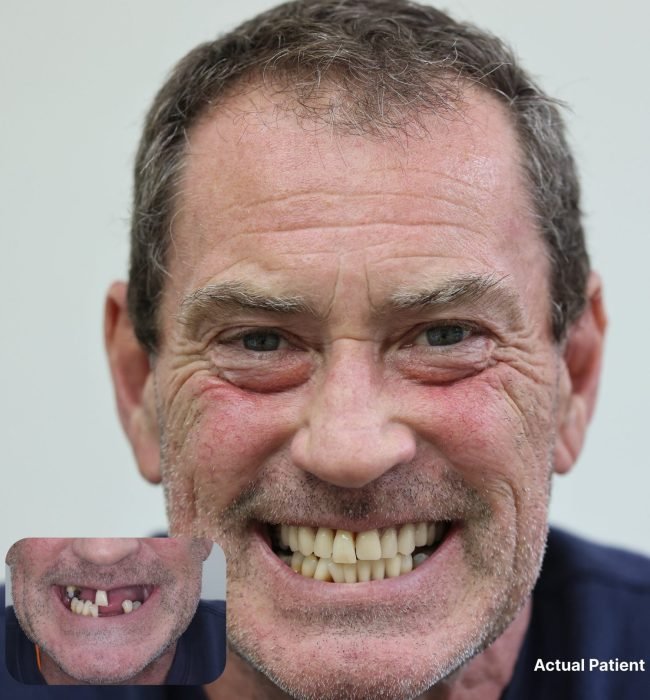
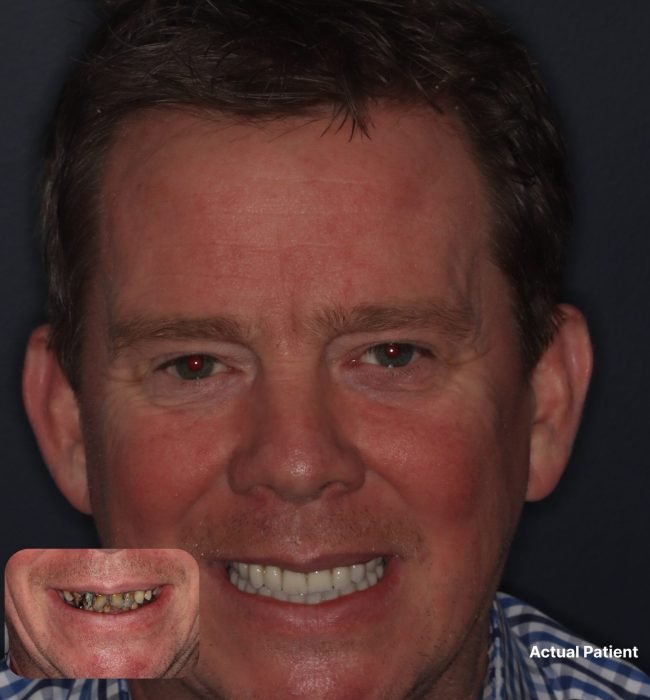
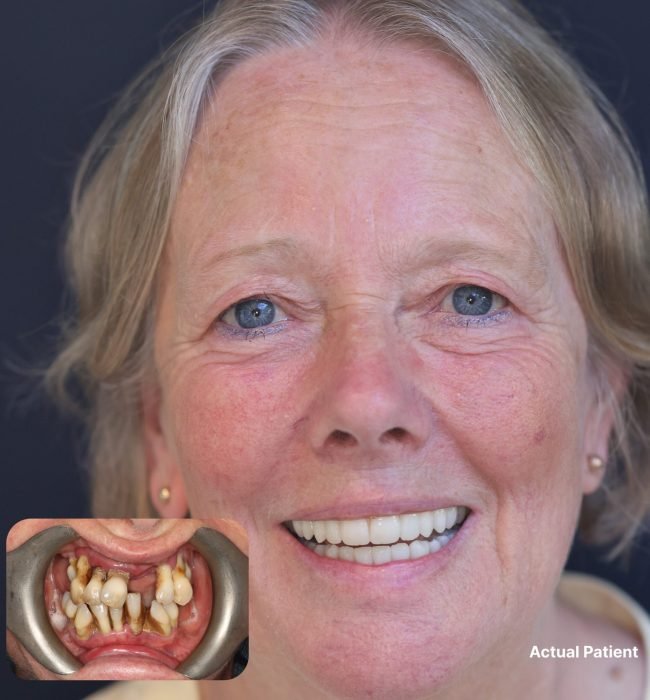
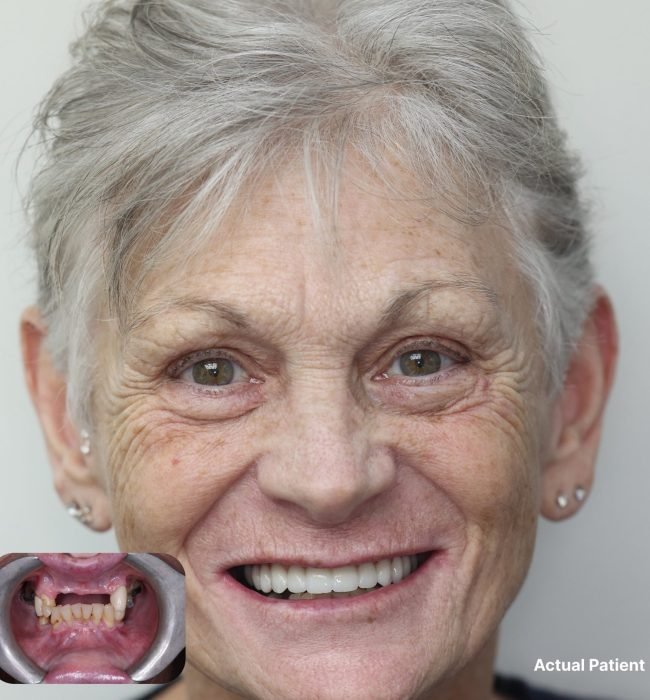
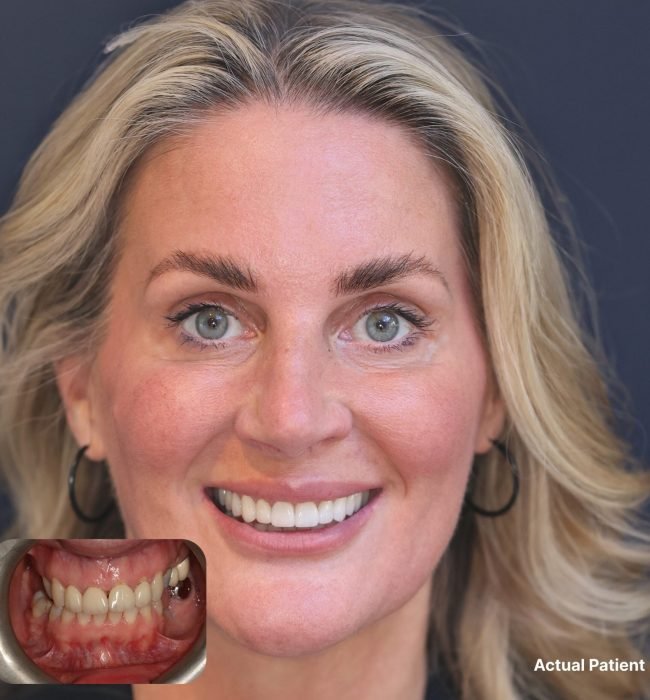
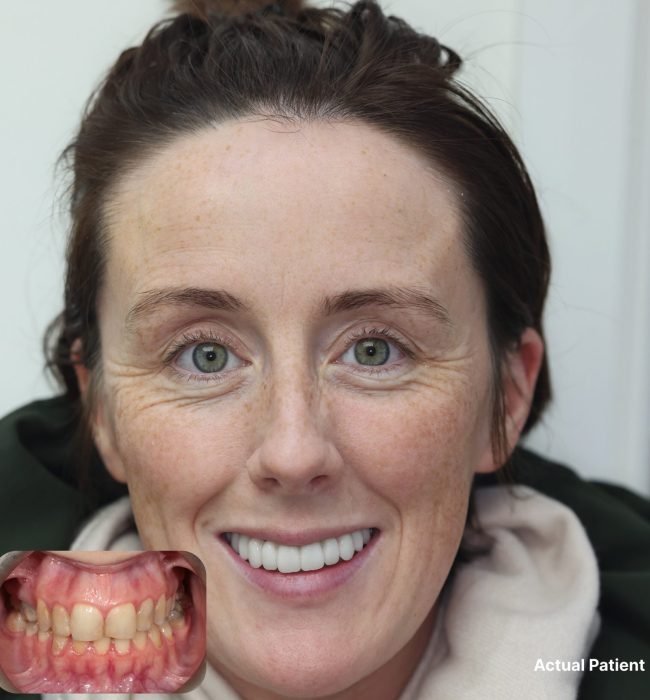
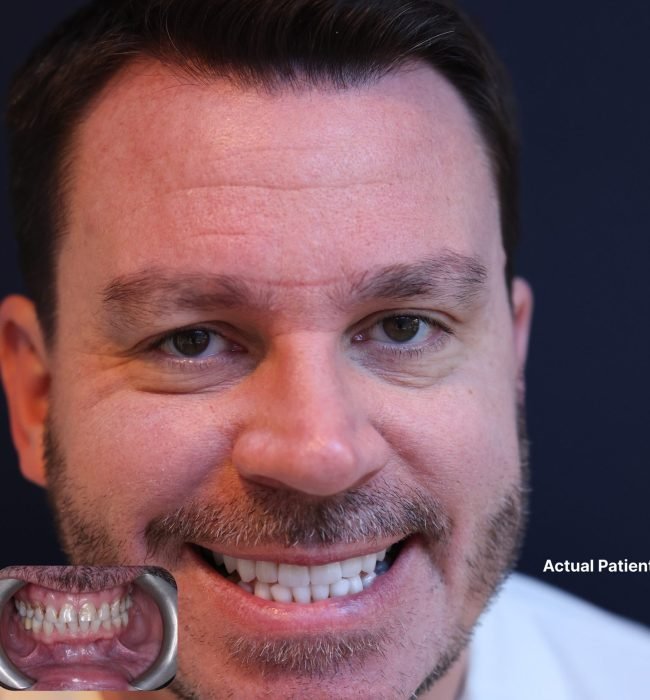
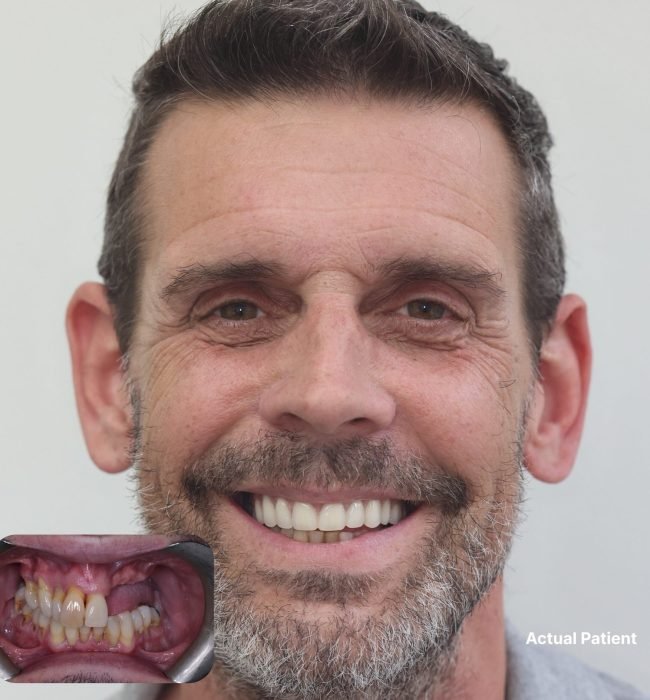
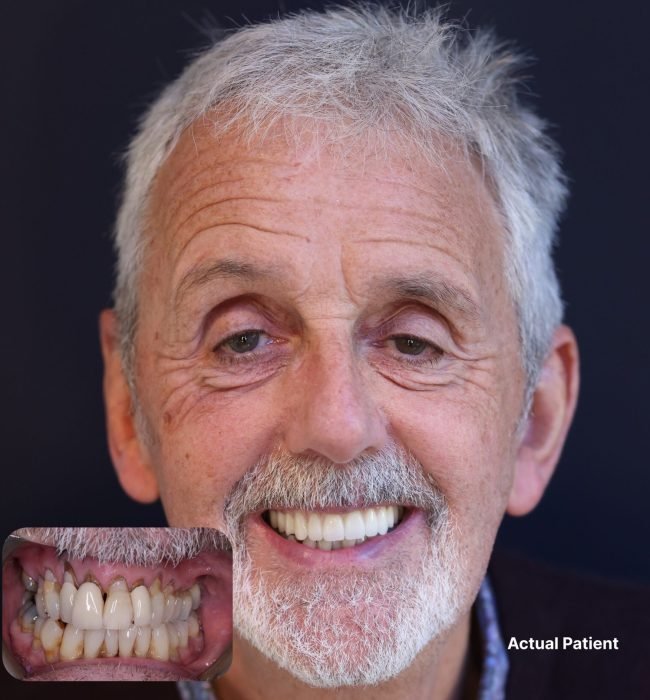
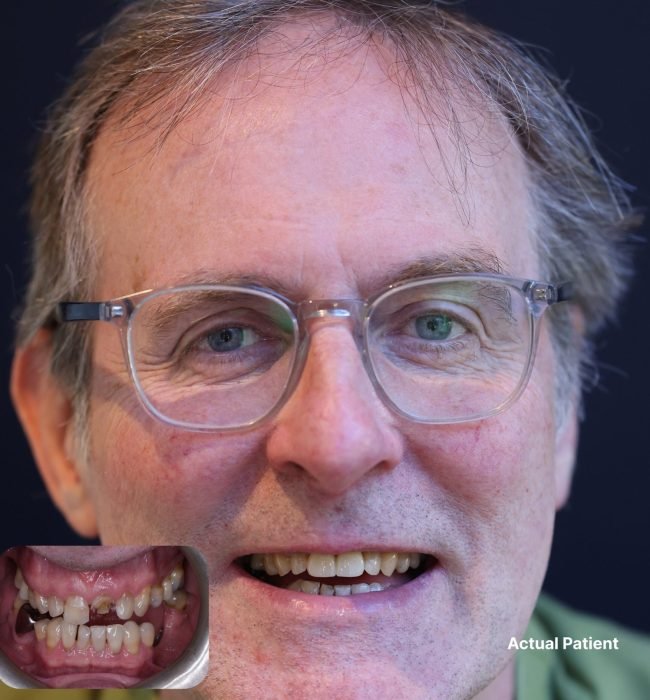
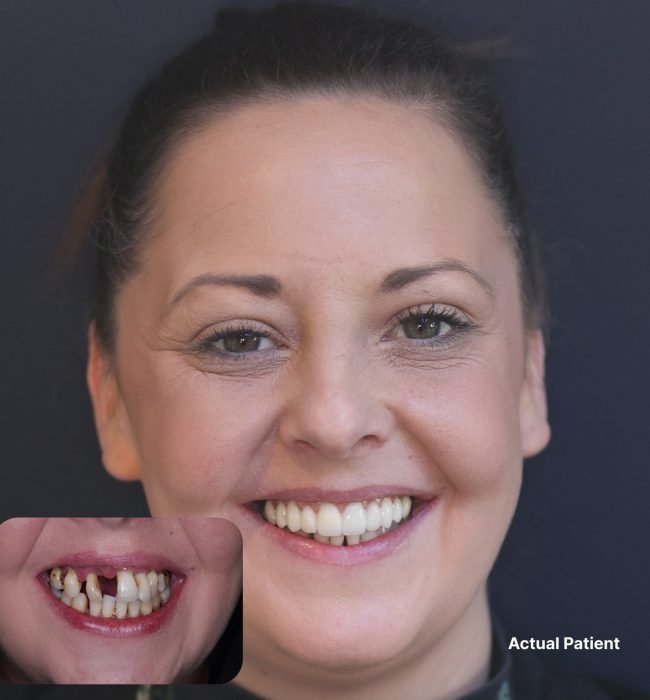
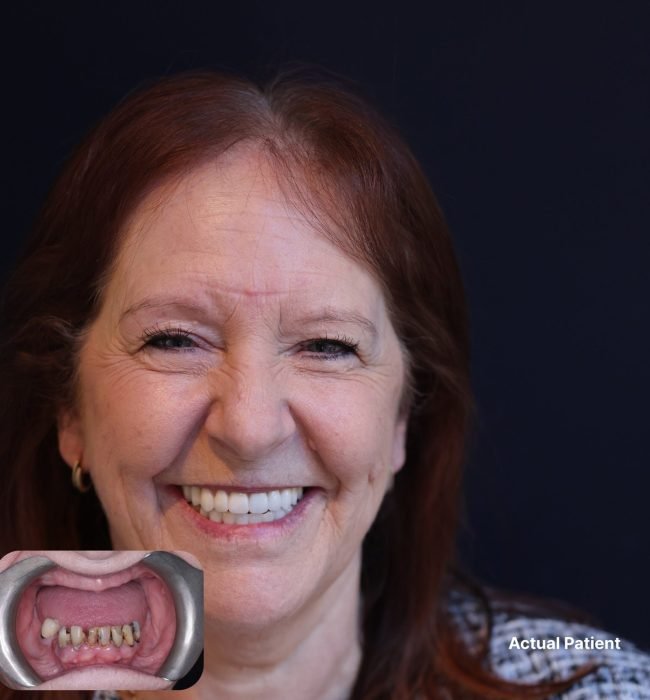
Be our Next Success Story!
All photographs show patients treated at Croft Dental and are published with their consent. Results shown are individual results.
Your treatment journey
-
1Step one: examination and assessmentWhitening is not carried out without an examination first. Dr Natasja checks your teeth and gums, identifies any decay, gum disease or exposed roots, notes any restorations that will not lighten, and records your starting shade so the change can be measured properly rather than guessed at.
-
2Step two: any preparatory treatmentDecay and gum disease are treated first. A hygiene appointment is often recommended beforehand, since removing surface staining and plaque means the gel works more evenly across the tooth.
-
3Step three: impressions or digital scanTaken so your custom trays can be made. This takes a few minutes and is considerably more comfortable than it used to be.
-
4Step four: fitting your traysYour trays are checked for fit and you are shown exactly how much gel to use and how long to wear them.
Using more gel than instructed does not whiten faster. It simply irritates the gums. -
5Step five: the whitening phaseTwo to three weeks at home, worn overnight or for a set period daily. Where in-practice whitening is used, this is a single appointment at the practice instead.
-
6Step six: review and maintenanceWe compare the result against your recorded starting shade, check gum health, and discuss how to maintain it. You keep your trays for top ups.
Managing sensitivity
Some sensitivity during whitening is common and usually temporary.
It typically presents as short, sharp twinges with cold and settles within a few days of finishing treatment. It is caused by the gel passing through the enamel rather than by any damage to the tooth.
What reduces it
- Using a sensitive toothpaste for a fortnight beforehand
- Reducing the wear time, or taking a night off if it builds up
- Desensitising gel, which we can provide
- A lower concentration gel worn over a longer period
If it becomes uncomfortable
Stop and call the practice. It is not something to push through, and we will adjust the protocol rather than have you persevere with it.
If your teeth are already sensitive
Tell us at the consultation. Existing sensitivity does not usually prevent whitening, but it changes how we approach it.
How long results last
Results typically last from several months to a couple of years, depending on your diet and habits.
What causes teeth to darken again
- Coffee, tea, red wine, curry and berries
- Smoking, which is by far the fastest
- Poor cleaning, which allows surface staining to build up
Maintaining the result
Keep your trays. Most patients top up for one or two nights every few months, which uses very little gel and holds the shade steady. Replacement gel can be bought from the practice.
Rinse with water after coffee, tea or red wine rather than brushing immediately, since enamel is temporarily softened by acidic drinks. Attend regular hygiene appointments, as professional cleaning removes the surface staining that dulls the result.
A point about restorations
If you have white fillings, crowns or bonding on your front teeth, they will not lighten and may need replacing after whitening to match your new shade. Worth factoring into your budget from the outset.
Pricing and fees
Treatment | From |
Consultation | Free |
Home whitening with custom trays | £395 |
In-practice whitening | £725 |
Combined in-practice and home | £[X] |
Replacement whitening gel | £[X] |
Replacement custom trays | £[X] |
Whitening is frequently included within a smile makeover plan, in which case it is quoted as part of the overall case rather than separately.
Finance is available on treatments over the practice threshold. Whitening on its own may fall below that, which we will confirm at your consultation.
Where to find us
Croft Dental sits at 64 Manchester Road, on the Handforth side of Wilmslow town centre. Coming up from The Carrs, we are north east along Manchester Road. If you reach Handforth Dean, you have gone too far.
We are around ten minutes on foot from Wilmslow station, five minutes from Handforth, and roughly ten minutes from Alderley Edge up the A34.
Patients come to us for whitening from Alderley Edge, Handforth, Styal, Prestbury, Knutsford, Macclesfield, Poynton, Bramhall, Cheadle, Hale and Altrincham.
Whitening involves an assessment, an appointment to fit your trays, and a review, which makes it straightforward for patients travelling a distance.
Not sure where to start? Give us a ring.
Make an Enquiry
- DENTIST
Meet your cosmetic dentist
Dr Natasja Kashyap
BDS · MSc Fixed and Removable Prosthodontics · MFDS RCS Edinburgh · Platinum Invisalign Provider · GDC 150054
Dr Natasja leads cosmetic dentistry at Croft Dental, including whitening.
Her prosthodontic background matters here in a way that is not immediately obvious. Whitening frequently forms the first stage of a larger cosmetic plan, and shade decisions made now determine what is possible later. Getting the sequence right, and matching any future bonding or veneers to the final shade rather than the original one, is the difference between a cosmetic case that works and one that has to be redone.
She will also tell you plainly
- Finance
Spread the cost of teeth whitening with finance
We offer finance on cosmetic treatment through Tabeo so the cost can be spread across monthly payments. Interest-free options are available with no arrangement fees or hidden charges.
Applications take a few minutes and you will know the outcome quickly. We will show you exactly what your treatment would cost per month at your consultation.
- REGISTRATION
We're Welcoming New Patients
We warmly welcome new patients to our practice. If it’s been a while since your last visit, if dental visits make you feel anxious, if you’ve recently moved to Wilmslow, or if you’re simply seeking a team that truly listens to your concerns, you’ll find a supportive and gentle environment here with us.
During your first appointment, we take the time to conduct a complete evaluation of your teeth, gums, and overall oral health. We will listen carefully to your goals, answer any questions, and collaboratively create a treatment plan tailored specifically to you.
"I have my smile back thanks to the skill of the team here. All in all, a very happy patient."
★★★★★ - Sarah F. | Croft Dental & Implant Clinic
- FAQs
Frequently asked questions
Professional teeth whitening at Croft Dental starts from £395 for home whitening with custom made trays, with the in-practice system from £725. Home whitening is generally the most affordable option and includes trays the patient keeps for future top ups. Replacement gel can be purchased separately.
Professional teeth whitening supervised by a dental professional is safe. The gel lightens staining within the tooth without removing or damaging enamel. Safety depends on an examination beforehand, the correct gel concentration, and custom made trays that keep the gel off the gums. In the UK, tooth whitening may only legally be carried out by a registered dental professional, and treatments offered by beauty salons or non dental providers are illegal.
Whitening results typically last from several months to a couple of years, depending on diet and lifestyle. Coffee, tea, red wine and smoking cause teeth to darken again more quickly. Most patients keep their custom trays and top up for one or two nights every few months, which maintains the shade using very little gel.
No. Whitening gel only lightens natural tooth structure. Crowns, veneers, bridges, white fillings and composite bonding remain the shade they were made. Patients with visible restorations on their front teeth may find these appear darker after whitening and need replacing to match the new shade.
Professional whitening carried out under dental supervision does not damage enamel. The gel passes through the enamel and breaks down staining within the tooth rather than removing surface material. Damage is associated with unsupervised whitening, incorrect gel concentrations and poorly fitting trays that allow gel to reach the gums.
Whitening is not painful, though temporary sensitivity to cold is common during treatment and usually settles within a few days of finishing. Using a sensitive toothpaste beforehand, reducing wear time or taking a night off generally manages it. Patients experiencing significant discomfort should stop and contact their dentist rather than continue.
Teeth whitening is not recommended during pregnancy or while breastfeeding. There is limited evidence on the effects of whitening agents in these circumstances, so treatment is usually deferred as a precaution. Whitening can be planned and carried out afterwards.
In the UK, tooth whitening products containing more than 0.1% hydrogen peroxide may not legally be used on patients under 18, except where the treatment is intended to treat or prevent disease. Cosmetic whitening for under 18s is therefore not offered.