All-on-4 Dental Implants in Wilmslow
A full arch of fixed teeth on four implants. No adhesive, nothing to take out at night, and in many cases you go home the same day with teeth.
All-on-4 replaces a full arch of missing or failing teeth using four dental implants to support a fixed bridge. Unlike a denture, the teeth are permanently secured and are not removed by the patient. At Croft Dental on Manchester Road in Wilmslow, All-on-4 is carried out by Dr Nikhil Oberai, who holds an MSc in Implant Dentistry from the University of Manchester and has a 99.5% success rate across hundreds of implant cases. Full arch packages start from £11,500 per arch. A fixed set of temporary teeth is fitted on the day of surgery in most cases, with the definitive bridge fitted four to six months later once the implants have fused with the bone. Consultations are free of charge.
So, what is All-on-4 Dental Implant?
If you wear a full denture, you already know the things nobody warns you about beforehand.
The adhesive that works until it does not. The moment at a family lunch when you realise you are eating carefully rather than eating. The glass on the bedside table. The gradual narrowing of what you order in restaurants, until you have quietly stopped ordering half the menu without ever making a decision about it.
And underneath all of that, the awkward fact that a denture which fitted beautifully six years ago fits noticeably less well now, because the bone beneath it has been shrinking the entire time.
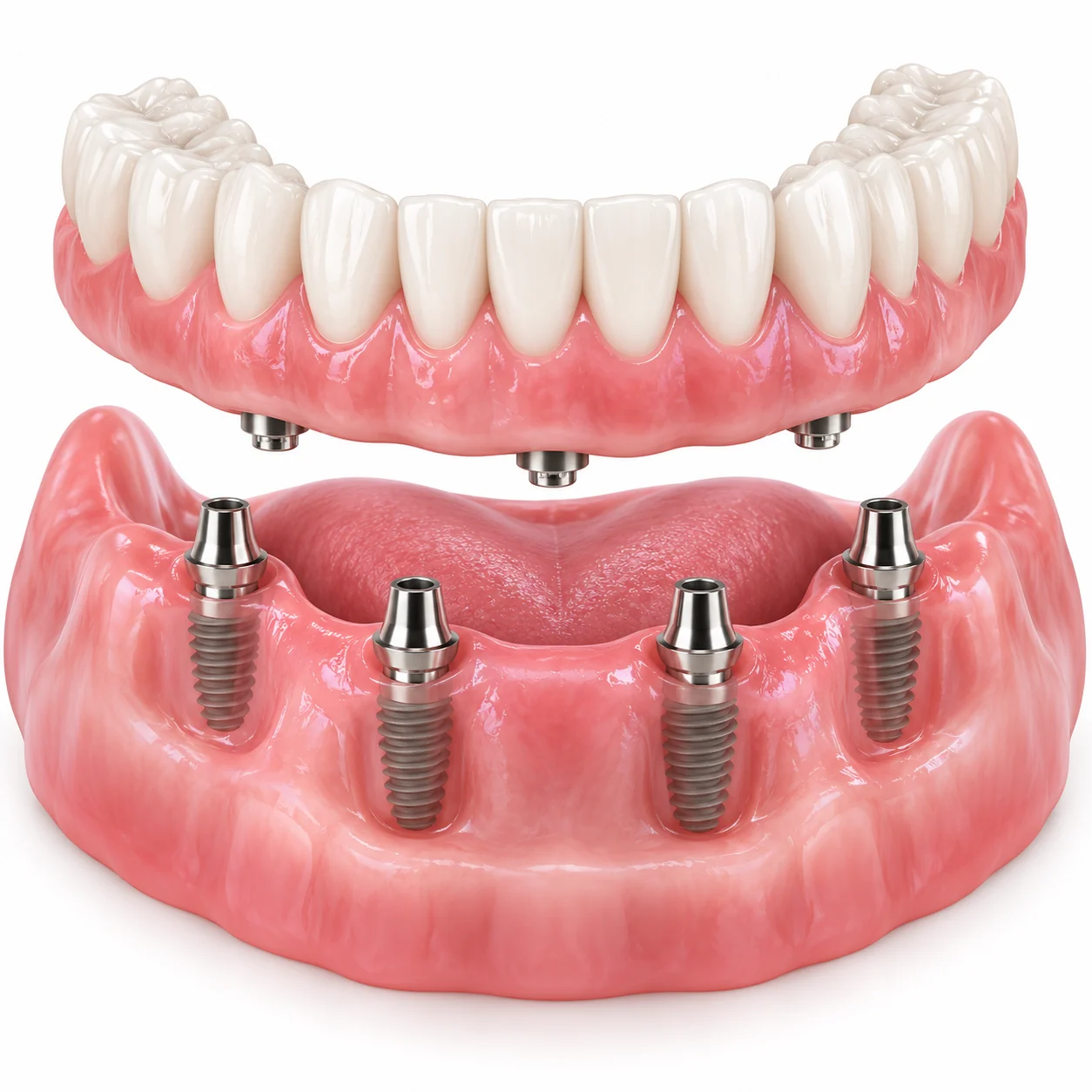
All-on-4 is the treatment that ends all of it.
It replaces an entire arch of teeth, upper or lower, using four implants rather than one for every tooth.
Two implants are placed vertically at the front of the jaw, where the bone is usually strongest and has held up best. The two at the back are placed at an angle, which lets them engage far more bone and, in a great many cases, avoids the need for bone grafting altogether. A fixed bridge of ten to twelve teeth is then secured onto those four implants.
The result is a full set of teeth that stays where it is. You do not take it out at night. You do not use adhesive. You eat what you want, including the things you stopped ordering.
Why four implants and not more
Placing four implants at carefully calculated angles spreads the biting load across the whole arch without needing an implant for every tooth. Fewer implants means less surgery, lower cost and, in most cases, no grafting.
Where your bone or your bite calls for it, Dr Nikhil may recommend five or six instead. That is a clinical judgement made after your 3D scan, not a decision made in advance.
Your options for a full arch
All-on-4 is one of several ways to replace a full arch. They differ considerably in cost, in how they feel and in how much surgery is involved.
All-on-4 and full arch implants
- Teeth are fixed permanently and never removed by you
- Feels closest to natural teeth, with the best chewing efficiency
- Preserves jawbone across the arch
- Temporary teeth usually fitted on the day of surgery
- Requires implant surgery and is the most expensive option
Implant retained dentures
- A denture that clips onto two to four implants and does not move while worn
- Still removable for cleaning
- Requires fewer implants and less surgery
- Considerably less expensive than a fixed bridge
- Chewing efficiency is better than a conventional denture but not equal to fixed teeth
A conventional denture
- No surgery required and the least expensive option
- Rests on the gum and can move, particularly in the lower jaw
- Does nothing to prevent the jawbone shrinking, so the fit worsens over years
- Removed for cleaning and overnight
So, which one suits you
The honest answer is that it depends on what bothers you most and what you can comfortably spend. If movement is your main problem and budget is a genuine consideration, an implant retained denture solves it for considerably less. If you want teeth that never come out and behave like teeth, All-on-4 is worth the difference.
Dr Nikhil will talk you through all three at your consultation and tell you which he would choose in your position.
Am I a suitable candidate?
Dr Nikhil will assess your case properly with a CBCT 3D scan, but as a general guide:
Usually suitable if you
- Are missing all or most of the teeth in one or both jaws
- Have teeth that are failing and cannot reliably be saved
- Have enough bone at the front of the jaw to support the implants, which most patients do
- Are in reasonable general health
- Do not smoke, or are willing to stop while the implants heal
We will need to assess further if you
- Have significant bone loss, since additional implants, grafting or zygomatic implants may be recommended
- Have uncontrolled diabetes, which affects healing
- Smoke, as this raises the risk of implant failure considerably
- Take bisphosphonates or other medications affecting bone
- Have a heavy bite or grind your teeth, which may influence the number of implants used
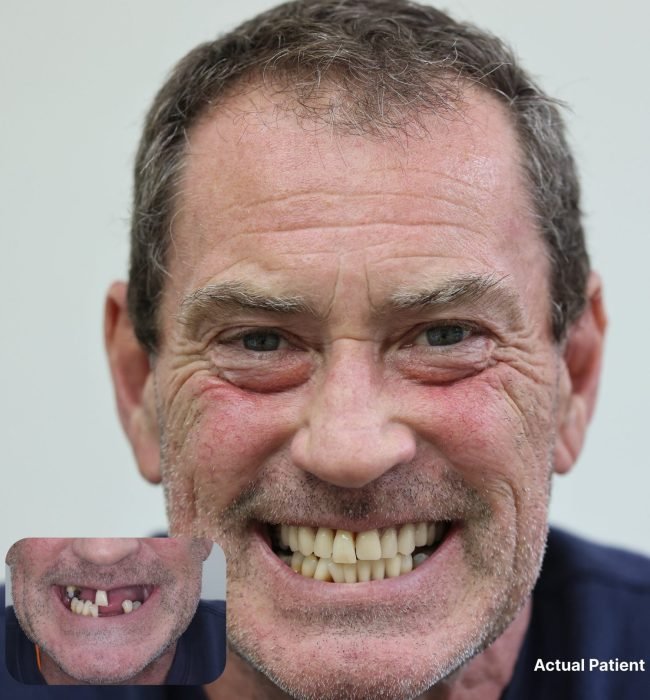
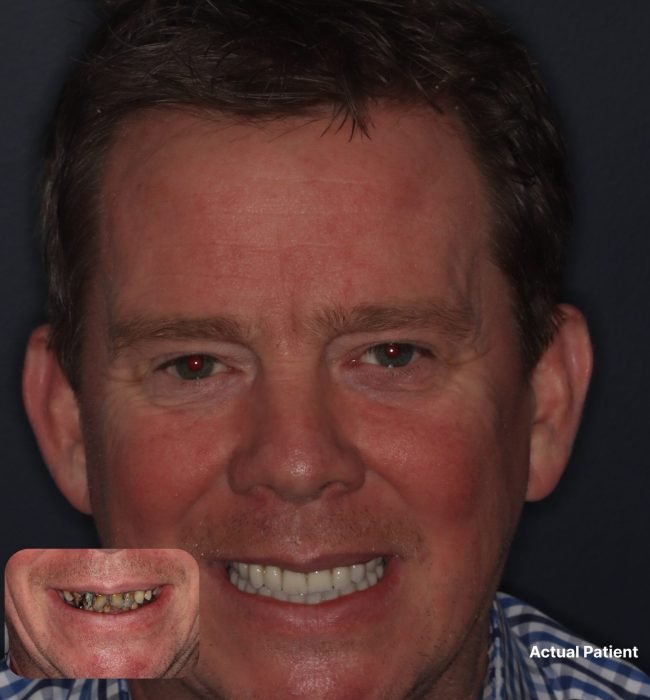
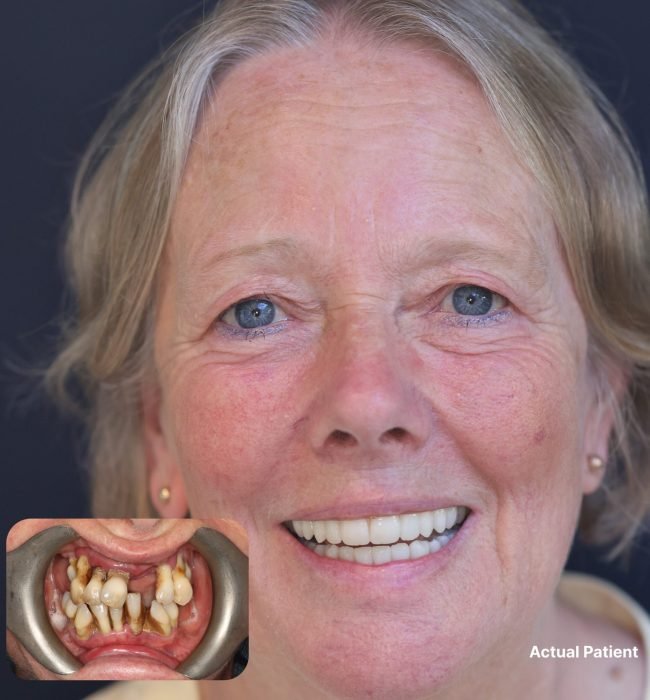
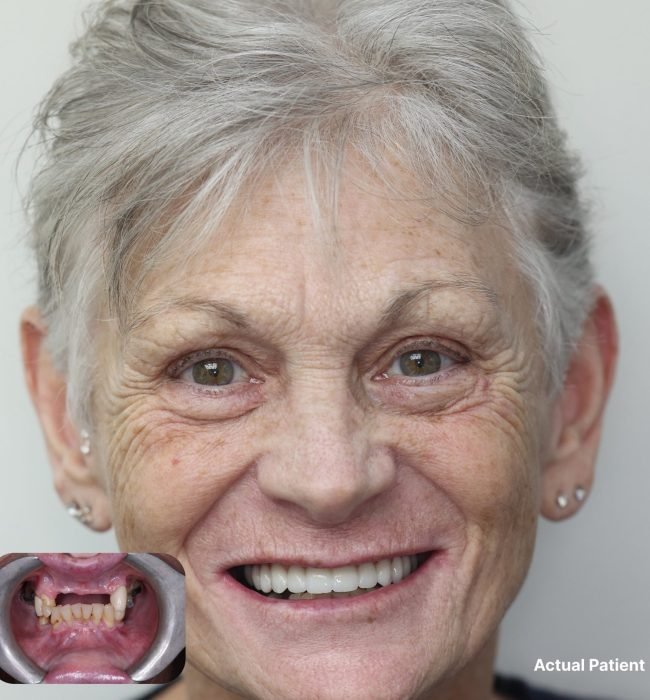
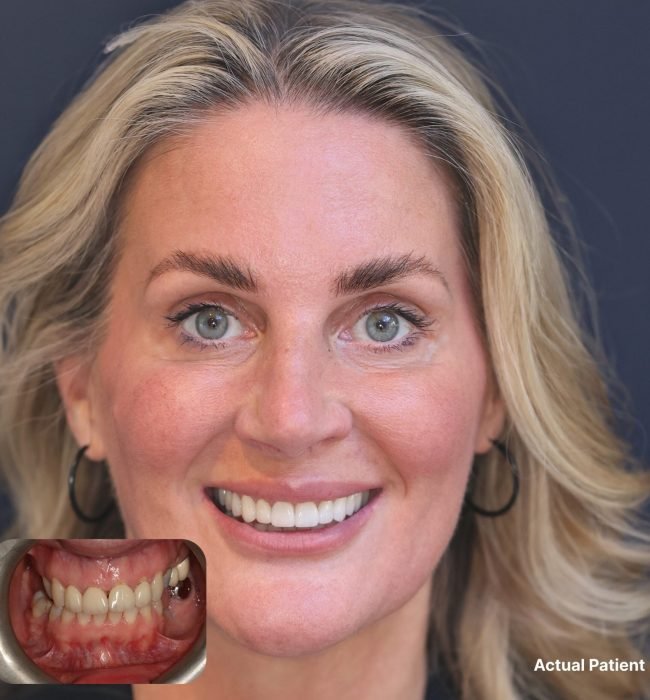
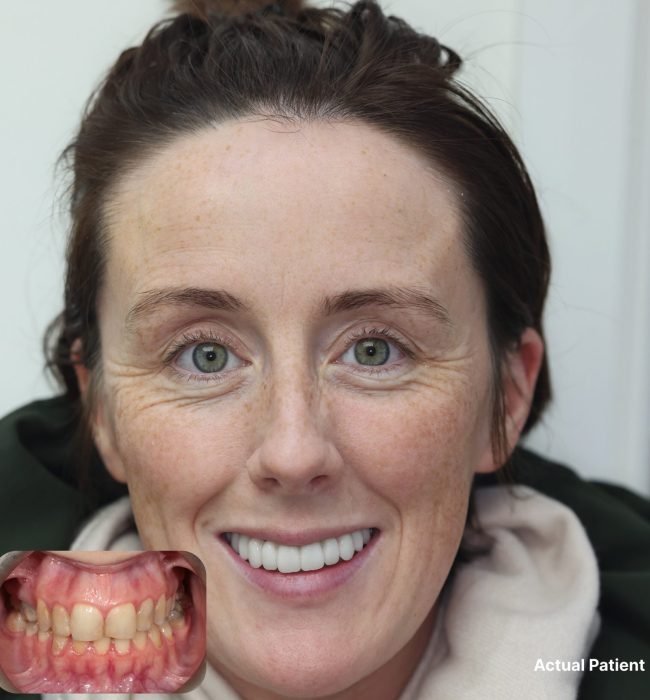
- Real Patient Results
Thousands of Smiles Transformed
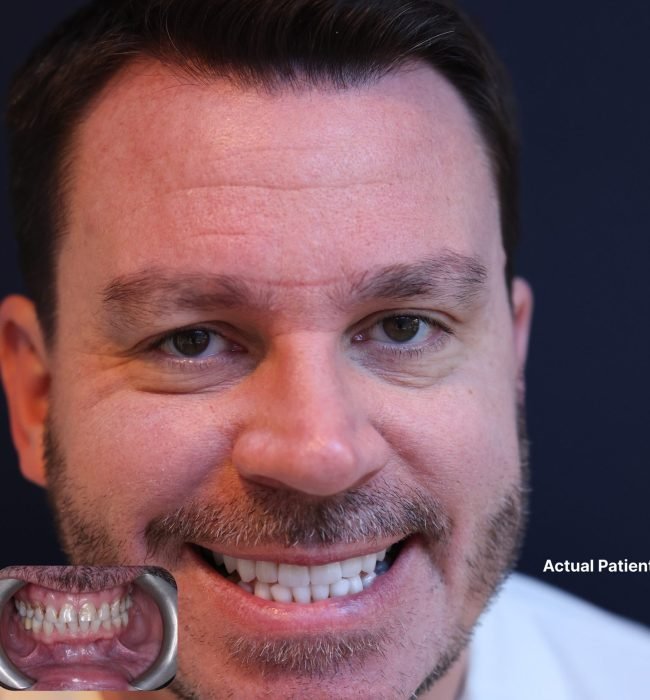
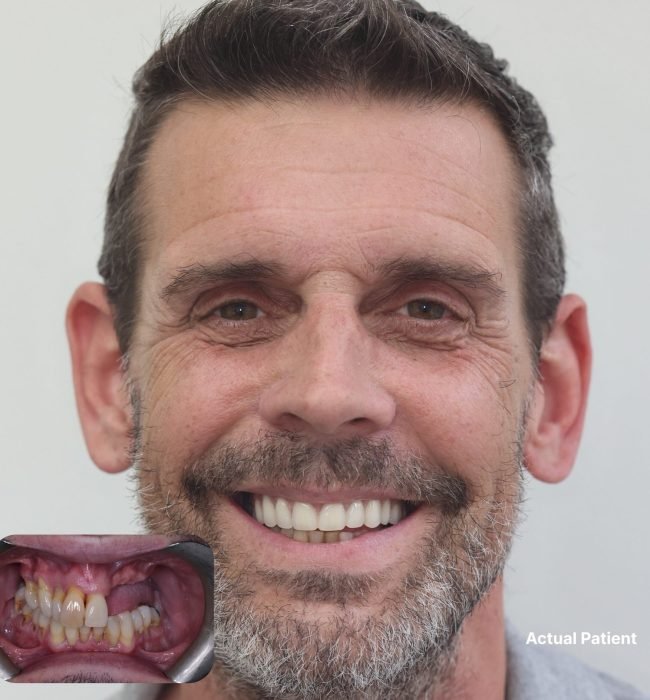
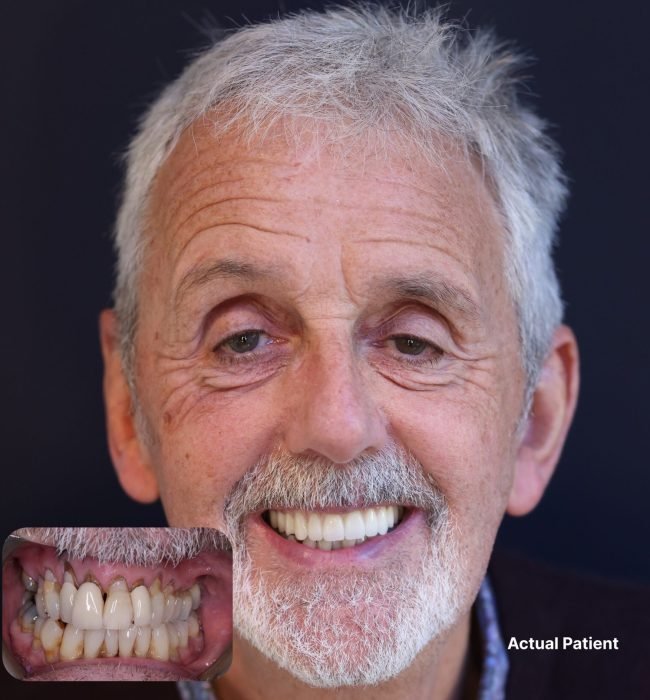
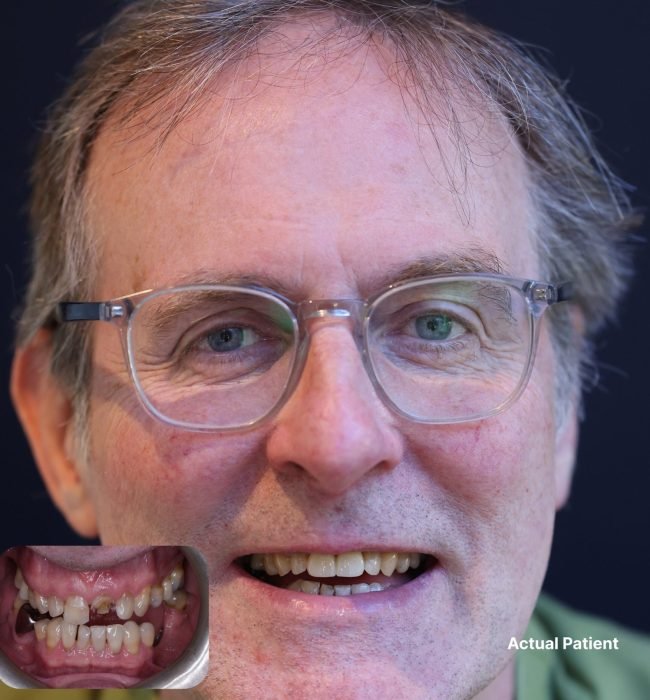
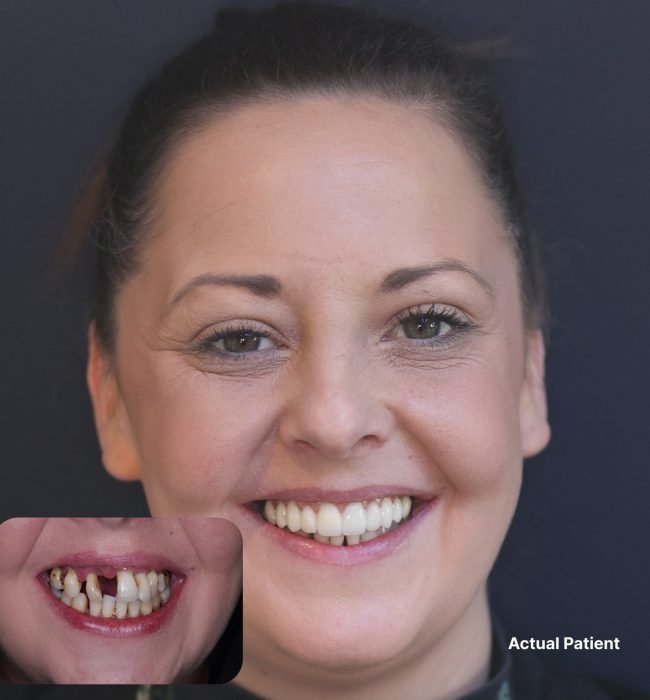
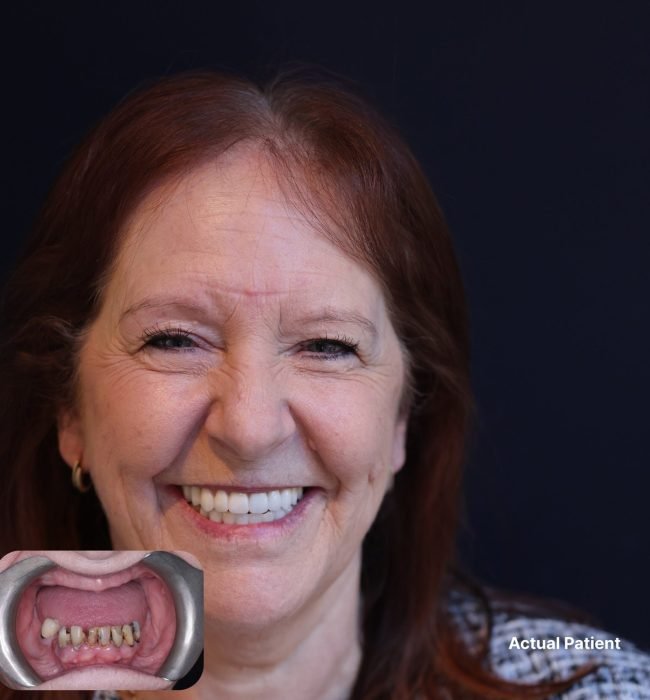
Be our Next Success Story!
All photographs show patients treated at Croft Dental and are published with their consent. Results shown are individual results.
Your treatment journey
-
1Step one: consultation and 3D scanDr Nikhil examines your mouth, discusses what you want to achieve and takes a CBCT 3D scan. The scan maps bone volume, density, nerve position and sinus anatomy across the whole arch, which is what makes accurate planning possible. Photographs and digital scans are taken at the same appointment.
-
2Step two: your treatment planYou receive a written plan setting out the number of implants, the full timeline, each stage and every cost. Finance options are explained at the same time. Nothing begins until you have agreed to all of it.
-
3Step three: planning and designYour case is planned digitally before surgery. The implant positions are determined from the scan, and the shape, size and shade of your new teeth are designed in advance. You see the design and can comment on it before anything is made.
-
4Step four: surgery dayAny remaining teeth in the arch are removed and the four implants are placed. This is carried out under local anaesthetic, with sedation available if you would prefer it. Surgery for one arch typically takes two to three hours.
-
5Step five: your temporary teethIn most cases a fixed set of temporary teeth is fitted the same day, so you leave the practice with a full arch. These are functional and look good, though they are not the final result.
-
6Step six: healingThe implants need four to six months to fuse with the bone. You wear the temporary teeth throughout and keep to a softer diet for the first few weeks. Review appointments monitor progress.
-
7Step seven: your final teethOnce integration is confirmed, the definitive bridge is made and fitted. It is stronger, more refined and made from higher grade material than the temporary. Shade and shape are finalised with you.
-
8Step eight: aftercare and living with themWe review your implants and continue to monitor them at regular appointments.
Eating: once healed, most patients eat without restriction. Steak, apples, crusty bread and everything else denture wearers tend to avoid.
Cleaning: your bridge is cleaned daily using a water flosser and interdental brushes to reach underneath. It is not difficult, but it is different from cleaning natural teeth and we will show you exactly how.
Speech: most patients adapt within days. Any initial difference settles as the tongue adjusts.
Maintenance appointments: regular hygiene visits are needed so the bridge can be cleaned professionally and the implants monitored. This genuinely matters. Implants can be lost through poor maintenance in the same way natural teeth are lost to gum disease.
Longevity: the implants themselves are designed to last decades. The bridge fitted on top will show wear over time and may eventually need replacing, as any restoration would.
Pricing and fees
Treatment | From |
Implant consultation | Free |
Silver full arch package | £11,500 |
Gold full arch package | £14,500 |
Platinum full arch package | £19,500 |
Zygomatic implants, where required | Priced on assessment |
Bone augmentation, if required | £450 |
Sinus lift, if required | £850 |
CBCT 3D scan, single arch | £80 |
CBCT 3D scan, dual arch | £170 |
Sedation | £350 |
The packages differ in the materials used and the specification of the final bridge, which affects appearance, strength and how long it lasts. Dr Nikhil will explain the practical differences at your consultation, including where paying more genuinely buys you something and where it would not.
Your quoted fee covers the implants, the surgery, your temporary teeth and your final bridge. Everything is set out in writing before treatment begins, and there are no charges partway through that you were not told about.
Where to find us
Croft Dental sits at 64 Manchester Road, on the Handforth side of Wilmslow town centre. Coming up from The Carrs, we are north east along Manchester Road. If you reach Handforth Dean, you have gone too far.
We are around ten minutes on foot from Wilmslow station, five minutes from Handforth, and roughly ten minutes from Alderley Edge up the A34.
Patients travel to us for full arch treatment from Alderley Edge, Handforth, Styal, Prestbury, Mottram St Andrew, Knutsford, Macclesfield, Poynton, Bramhall, Cheadle and Hale, as well as from South Manchester along the A538 from the airport. For full arch work specifically, a good number come from considerably further than that.
All-on-4 involves several appointments across four to six months. If you are travelling a distance, say so when you book and we will group appointments where it is clinically sensible to do so.
Not sure where to start? Give us a ring.
Make an Enquiry
- DENTIST
Meet your implant dentist
Dr Nikhil Oberai
BDS · MSc Implant Dentistry, University of Manchester · ADI Member · GDC 150126
Dr Nikhil carries out All-on-4 and full arch treatment at Croft Dental, with a 99.5% success rate across hundreds of implant cases.
Full arch work is the most demanding implant treatment there is, and the depth of training matters more here than anywhere else. His Master’s degree from the University of Manchester involved several years of postgraduate study and supervised clinical practice devoted entirely to implantology. Many dentists placing implants have completed shorter certificate courses instead.
He also places zygomatic implants for patients with severe upper jaw bone loss, a treatment very few clinicians in the North West offer, which means cases that would be referred away elsewhere are handled here.
He is a member of the Association of Dental Implantology, a Key Opinion Leader for Osstem, and an Honorary Clinical Teaching Fellow at the University of Manchester. Practices across the North West refer complex full arch cases to him.
- Finance
Spread the cost of All-on-4 with finance
We offer finance on implant treatment through Tabeo so the cost can be spread across monthly payments. Interest-free options are available with no arrangement fees or hidden charges.
Applications take a few minutes and you will know the outcome quickly. We will show you exactly what your treatment would cost per month at your consultation.
- REGISTRATION
We're Welcoming New Patients
We warmly welcome new patients to our practice. If it’s been a while since your last visit, if dental visits make you feel anxious, if you’ve recently moved to Wilmslow, or if you’re simply seeking a team that truly listens to your concerns, you’ll find a supportive and gentle environment here with us.
During your first appointment, we take the time to conduct a complete evaluation of your teeth, gums, and overall oral health. We will listen carefully to your goals, answer any questions, and collaboratively create a treatment plan tailored specifically to you.
"Nick was superb. I had my new teeth made on the day and went home with a full top set. It felt brilliant."
★★★★★ - Scott S. | Croft Dental & Implant Clinic
- FAQs
Frequently asked questions
Full arch implant packages at Croft Dental start from £11,500 for the Silver package, £14,500 for Gold and £19,500 for Platinum. The packages differ in the materials used and the specification of the final bridge. The quoted fee covers the implants, the surgery, the temporary teeth and the definitive bridge. Consultations are free of charge.
In many cases, yes. A fixed set of temporary teeth is usually fitted on the day of surgery, so patients leave the practice with a full arch rather than a gap. These temporary teeth are functional but are not the final result. The definitive bridge is fitted once the implants have fused with the bone, typically four to six months later. Same day teeth depend on achieving sufficient implant stability during surgery, which is assessed at the time.
Often not. All-on-4 places the rear implants at an angle specifically so they engage areas of denser bone, which allows many patients to avoid grafting altogether. Where bone loss is severe, additional implants, bone grafting from £450 or zygomatic implants may be recommended instead. A CBCT 3D scan determines what is possible in an individual case.
All-on-4 teeth are fixed to implants anchored in the jawbone and do not move, come out or require adhesive. Conventional dentures rest on the gum and can move during eating and speaking. All-on-4 also helps preserve the jawbone, which continues to shrink beneath a denture. All-on-4 costs considerably more than dentures and involves surgery.
The surgical placement of four implants in one arch usually takes two to three hours, with temporary teeth fitted the same day in most cases. The implants then need four to six months to fuse with the jawbone before the final bridge is fitted. Total treatment time is typically four to six months from surgery to completion.
Surgery is carried out under local anaesthetic, with sedation available from £350 for patients who would prefer it. Patients typically report feeling pressure rather than pain during the procedure. Swelling and discomfort for several days afterwards is normal and is managed with prescribed pain relief.
Yes. Patients missing or losing teeth in both the upper and lower jaws can have both arches treated, either at the same time or in stages depending on clinical circumstances and preference. Each arch is priced separately.
A fixed full arch bridge is cleaned daily using a water flosser and interdental brushes to reach underneath, since the bridge is not removed by the patient. Regular professional hygiene appointments are also required so the bridge can be cleaned thoroughly and the implants monitored. Poor maintenance is a leading cause of implant loss after successful placement.