
Invisalign vs Braces: Which Is Right For You?
An honest comparison, from a practice that provides both. Including the categories where braces win.
Invisalign uses clear removable aligners changed every one to two weeks, while fixed braces use brackets bonded to the teeth connected by a wire. Invisalign is considerably more discreet, removable for eating and cleaning, and generally more comfortable, but it relies on the patient wearing the aligners 20 to 22 hours a day. Fixed braces work continuously without depending on compliance and remain more effective for severe crowding, significant bite correction and complex movements. Croft Dental in Wilmslow provides both, with clear braces from £800 per arch and Quick Straight Teeth from £1,500 per arch alongside the full Invisalign range. Neither treatment is universally better, and the right choice depends on the case and the person.
So, which one should you actually have?
The short version, before the detail.
For most mild to moderate cases in adults, Invisalign does the job well and is the more comfortable and discreet option.
For severe crowding, significant bite correction, complex rotations, or patients unlikely to wear removable aligners consistently, fixed braces remain the more reliable choice.
That is the honest summary, and it is worth saying plainly because a great many pages on this subject are written by practices that only offer one of the two.
We offer both. Invisalign in all four treatment types, clear braces from £800 per arch, and Quick Straight Teeth from £1,500 per arch. Which means we have no particular reason to talk you into either.
The question that matters more than the teeth
Here is the thing nobody asks directly enough.
Invisalign works brilliantly for people who wear the aligners as instructed. It works poorly for people who do not. That is not a design flaw, it is simply what removable means.
So the real question is not only what your teeth need. It is whether you honestly believe you would keep aligners in for twenty hours a day, every day, for months.
If the answer is no, or even probably not, fixed braces are not a consolation prize. They are the sensible choice, because they work whether you remember them or not. And that is a considerably better outcome than a compromised Invisalign result that cost the same as a good one.
Everything below is the detail behind that.
Invisalign and fixed braces compared
Invisalign | Fixed braces | |
Appearance | Clear, difficult to notice in most situations | Visible, though ceramic brackets are less obvious than metal |
Removable | Yes, for eating and cleaning | No, fixed for the duration |
Relies on the patient | Yes, heavily. 20 to 22 hours daily | No, works continuously |
Eating | No restrictions, aligners come out | Hard and sticky foods must be avoided |
Cleaning teeth | Straightforward, aligners removed | More difficult, requires threading around wires |
Comfort | Pressure after each change, no sharp edges | Pressure after adjustments, brackets can rub |
Appointments | Every 6 to 10 weeks, usually short | Every 4 to 8 weeks for adjustments |
Emergencies | Rare, occasional lost aligner | Broken brackets and poking wires need appointments |
Treatment time | 3 to 18 months, varies by case | 12 to 24 months typically |
Complex cases | Effective within limits | More effective for severe cases |
Retainers afterwards | Required indefinitely | Required indefinitely |
Where Invisalign wins
- Appearance during treatment. The main reason adults choose it. In conversation, meetings and photographs the aligners are very difficult to notice. For anyone whose work involves presenting or client contact, that matters considerably.
- Eating normally. The aligners come out. No avoiding apples, crusty bread or anything sticky. With fixed braces those restrictions run for the whole treatment.
- Cleaning your teeth properly. Aligners are removed to brush and floss. Cleaning around fixed brackets and wires is genuinely difficult, and decalcification marks on the teeth after brace removal are a well recognised consequence of poor cleaning during treatment.
- Comfort. No brackets to rub the inside of the lip, no wires to poke. Pressure after changing aligners, but nothing sharp.
- Fewer emergencies. Broken brackets and displaced wires require unscheduled appointments. Invisalign has very few equivalents.
- Seeing the result first. The ClinCheck digital plan shows the intended final position before you commit. Fixed braces do not offer that in the same way.
- Shorter treatment in suitable cases. Where the movement required is modest, Invisalign can finish considerably faster than fixed braces.
Where fixed braces win
- They do not depend on you. The significant one. Fixed braces work continuously, twenty four hours a day, regardless of motivation, memory or willpower.
- Complex movements. Certain movements are more predictable with fixed appliances, including significant rotations, moving teeth bodily rather than tipping them, and closing large extraction spaces.
- Severe crowding. Where a substantial amount of movement is needed, fixed braces remain more reliable.
- Meaningful bite correction. Significant overbite, underbite and skeletal discrepancies are generally better handled with fixed appliances, sometimes combined with other treatment.
- Growing patients. Some cases in children and younger teenagers require appliances that work with jaw growth, which aligners are not designed to do.
- Cost, in some cases. Clear braces start from £800 per arch, which for a single arch case can be less than comprehensive Invisalign.
- No temptation to remove them. For some people, taking the decision out of their own hands is the advantage rather than the drawback.
Common misconceptions
“Invisalign is always faster.”
Not necessarily. Straightforward cases finish quickly, but comprehensive Invisalign for a complex case can take as long as fixed braces, or longer if wear time slips.
“Invisalign is always more expensive.”
Not necessarily. Costs overlap considerably. Short Invisalign courses cost less than comprehensive fixed treatment, and comprehensive Invisalign can cost more than clear braces.
“Invisalign cannot fix bite problems.”
It can fix many of them. What it handles less predictably is significant skeletal discrepancy, which is a different matter from a bite that simply needs correcting.
“Braces are only for children.”
A large proportion of orthodontic patients are adults. Ceramic and clear brackets are considerably more discreet than traditional metal.
“Once treatment finishes, that is the end of it.”
It is not, for either treatment. Retainers are required indefinitely after both, and teeth drift back without them.
Which suits which case
Invisalign is usually the better choice if you
- Have mild to moderate crowding, spacing or bite issues
- Want treatment that is discreet during working life
- Are motivated and will wear the aligners consistently
- Want to eat and clean your teeth without restriction
- Are an adult, or a teenager who has asked for the treatment themselves
Fixed braces are usually the better choice if you
- Have severe crowding or significant bite correction to achieve
- Need complex movements that aligners handle less predictably
- Know you would struggle to wear removable aligners consistently
- Are a growing patient requiring an appliance that works with jaw development
- Want the least expensive route for a single arch case
Where honest assessment matters most
The compliance question, and it is the one patients are least likely to answer honestly to themselves.
If you suspect you would leave the aligners out at work, over dinner, at weekends, that is worth saying at your consultation. It is not a failure. It simply points towards fixed braces, which do not care whether you remember.
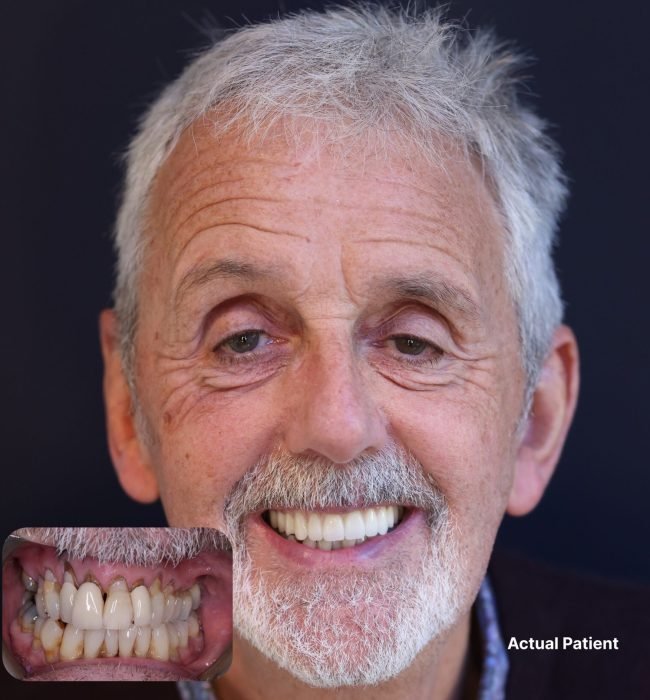
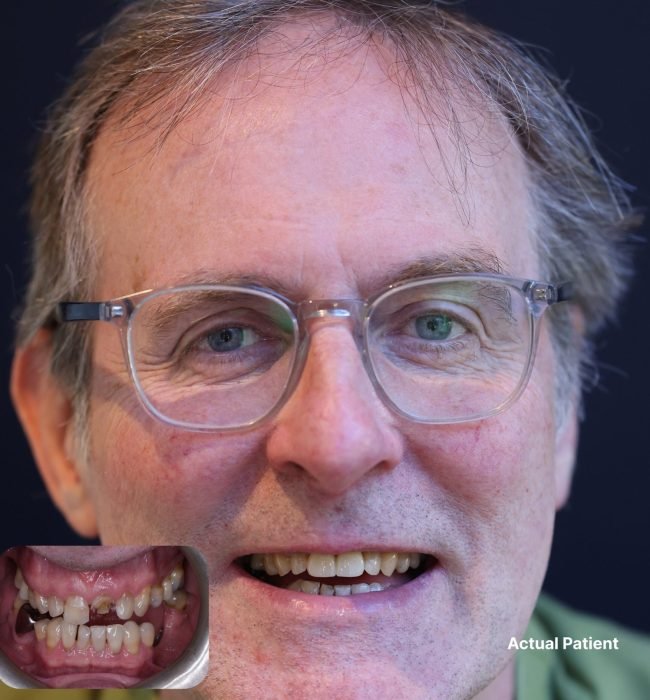
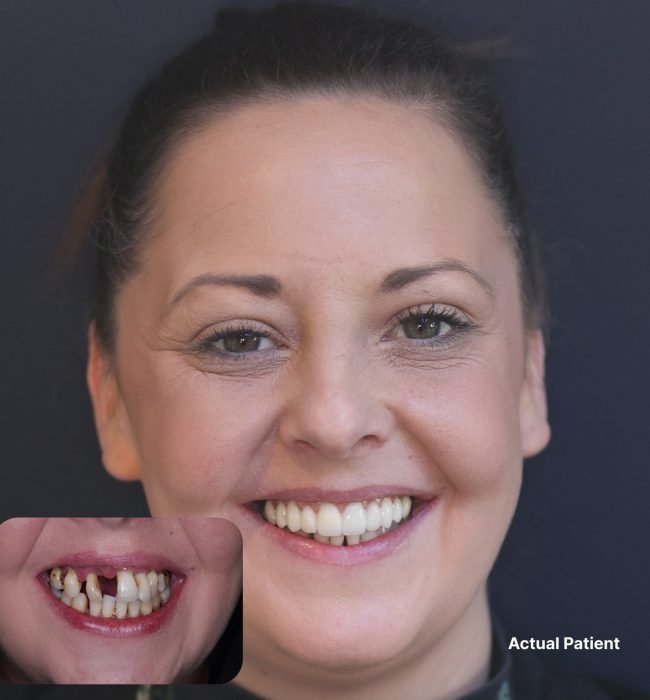
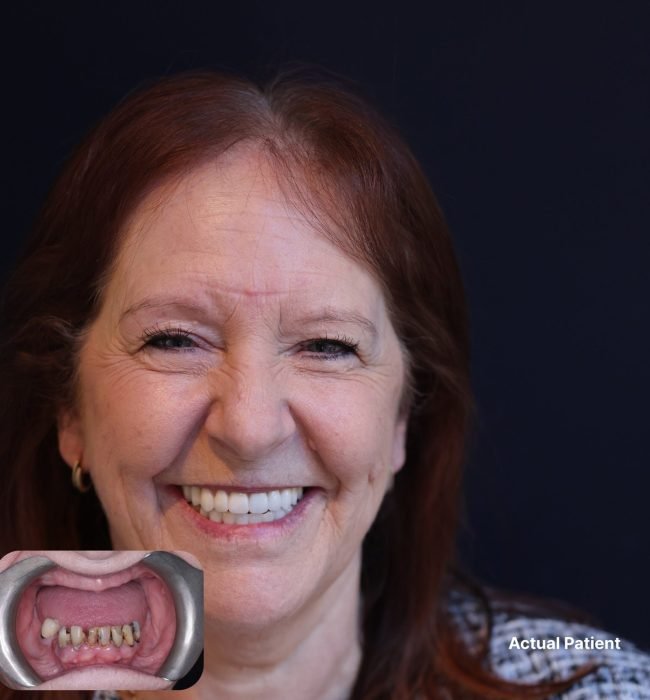
- Real Patient Results
Thousands of Smiles Transformed
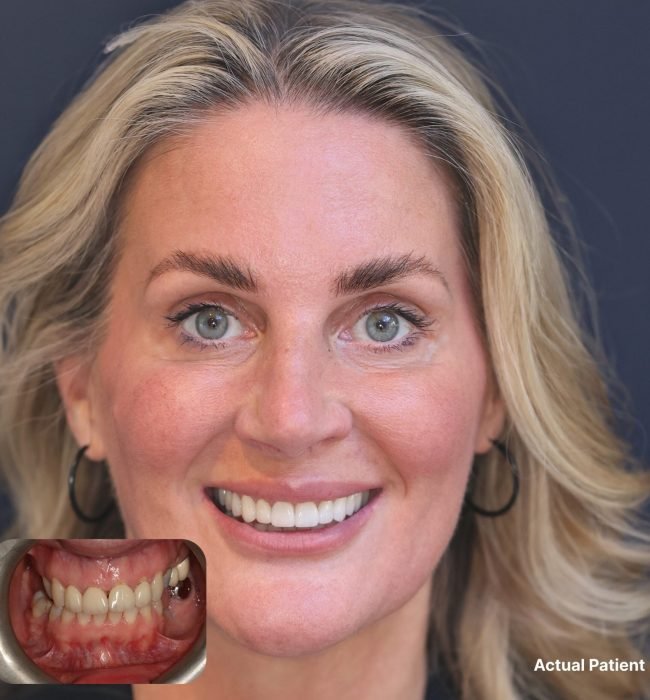
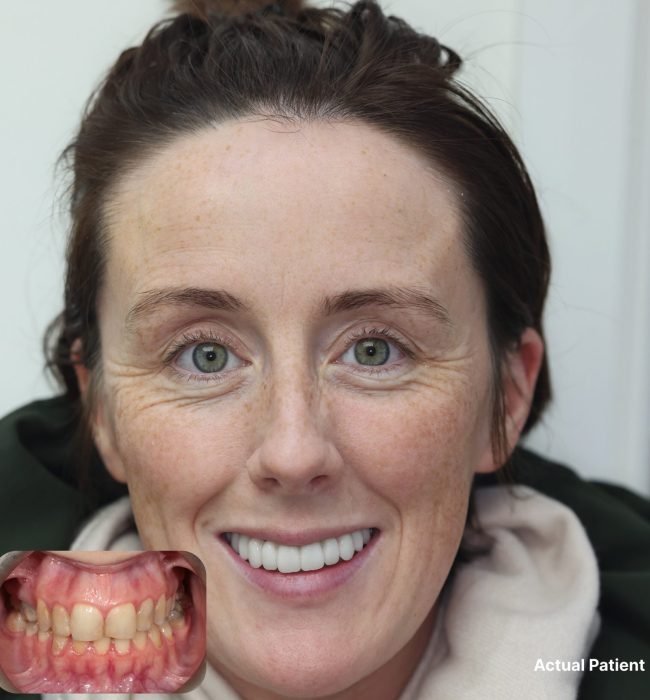
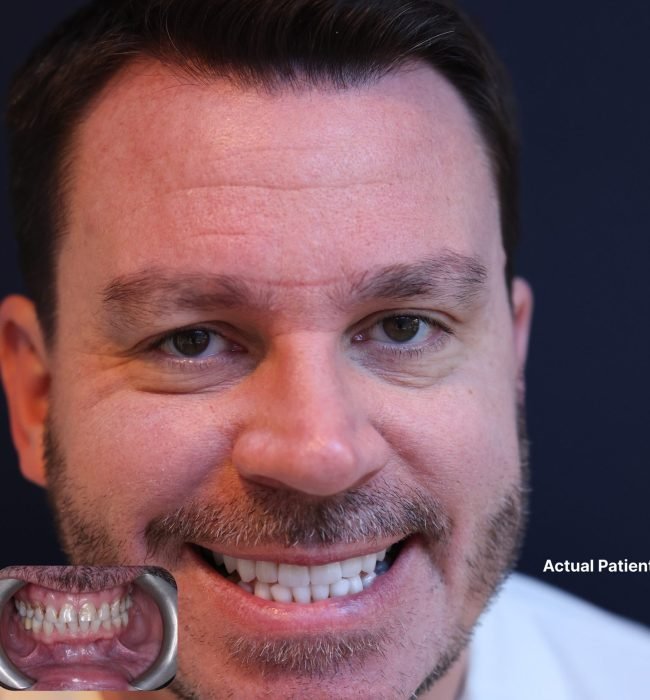
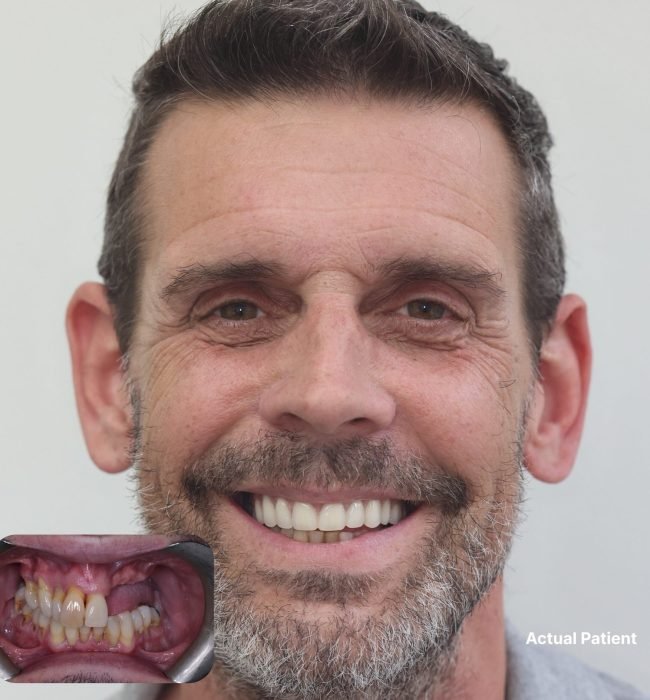
Explore real patient results demonstrating the life-changing impact of expert implant dentistry at Croft Dental. From single tooth restorations to comprehensive full-mouth rehabilitations, our tailored treatment plans restore both function and natural aesthetics.
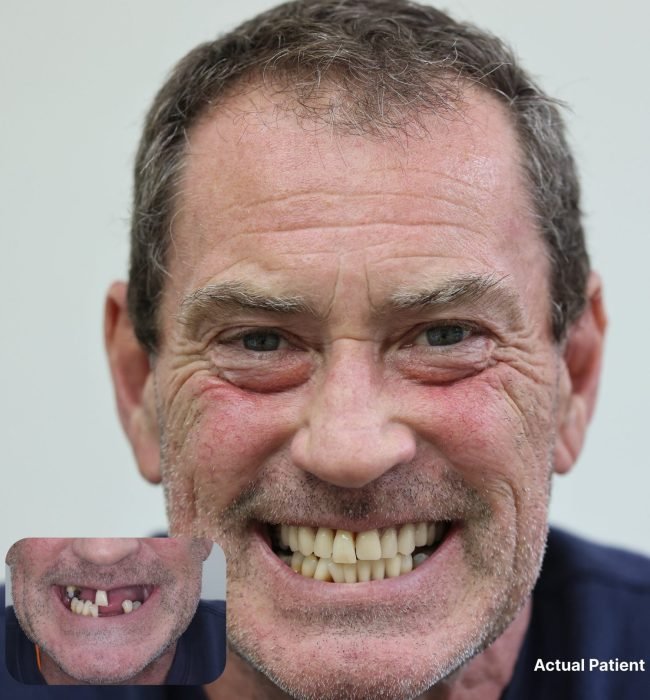
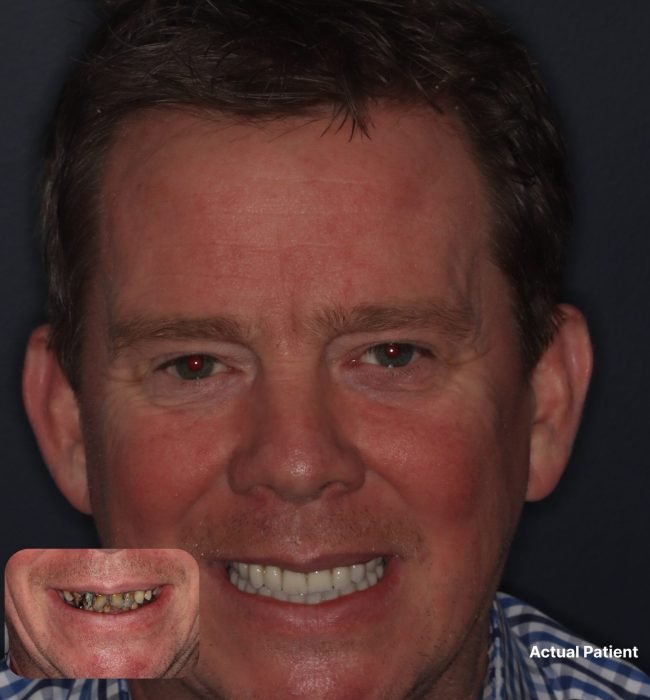
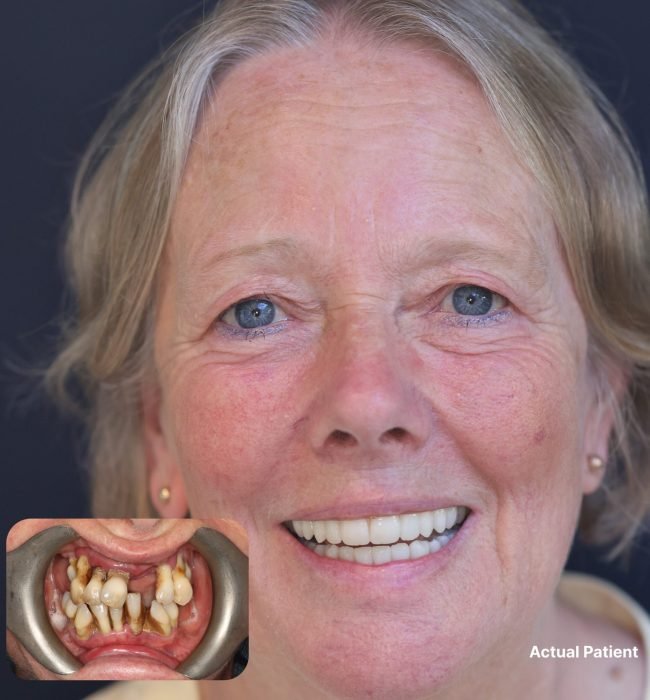
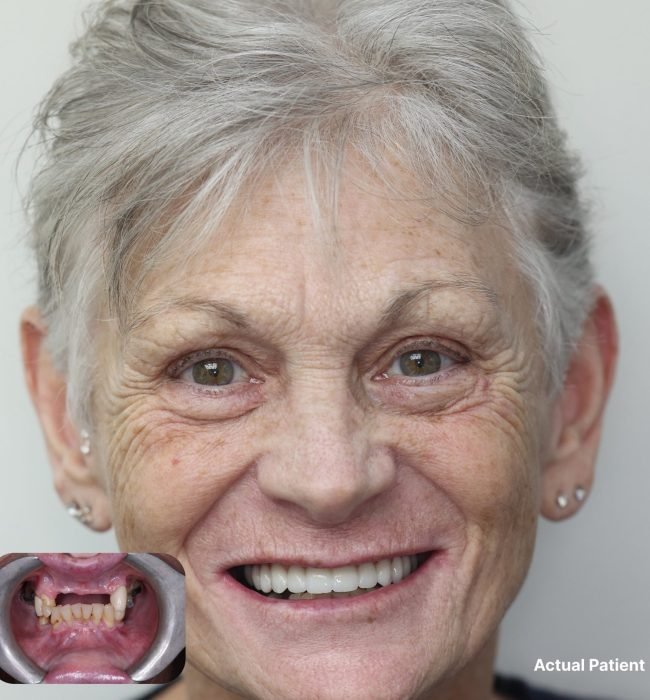
Be our Next Success Story!
All photographs show patients treated at Croft Dental and are published with their consent. Results shown are individual results.
Your treatment journey
Whichever route you take, the process follows the same shape at the start.
-
1Step one: your free consultationAround 45 minutes. Dr Natasja examines your teeth, gums and bite, and asks what you want to change. She will explain which treatments are realistic for your case, what each would involve and roughly how long each would take.
She will also ask, directly, how confident you are about wear time. That answer shapes the recommendation as much as the clinical assessment does. -
2Step two: digital scan and planningA digital scan is taken. For Invisalign cases a ClinCheck plan is produced at £325, showing stage by stage how the teeth will move and simulating the final result before you commit.
For fixed brace cases, the plan is discussed and explained at this stage. -
3Step three: your written planTreatment type, timeline, total cost, retainer costs and finance options. Nothing proceeds until you have agreed to all of it.
-
4Step four: any preparatory treatmentDecay and gum disease are treated first, for either treatment.
-
5Step five: treatmentInvisalign involves changing aligners every one to two weeks with reviews every six to ten weeks. Fixed braces involve adjustment appointments every four to eight weeks.
-
6Step six: retainersFitted at the end of either treatment and worn indefinitely.
One thing that applies to both
Whichever treatment you have, retainers are required afterwards and they are required indefinitely.
Teeth drift back towards their previous position after any orthodontic treatment. This is normal biology, it happens to everybody, and it is not affected by which appliance moved them.
A substantial proportion of adults seeking orthodontic treatment are people who had braces as teenagers and stopped wearing retainers in their twenties.
- Fixed retainer: a fine wire bonded behind the front teeth, £150 per arch
- Removable retainer: clear trays worn at night, from £400 for Vivera retainers
Retainers wear out and need replacing periodically, which is a modest ongoing cost worth factoring in from the start.
Pricing and fees
Treatment | From |
Consultation | Free |
ClinCheck treatment plan | £325 |
Invisalign i7 | £[X] |
Invisalign Lite | £[X] |
Invisalign Full | £[X] |
Invisalign Teen | £[X] |
Clear braces, per arch | £800 |
Quick Straight Teeth, per arch | £1,500 |
Vivera retainers, both arches | £400 |
Fixed retainer, per arch | £150 |
On comparing quotes
When comparing orthodontic quotes between practices, check what is included. Specifically whether refinements are covered, whether initial retainers are included, and what replacement retainers cost afterwards. Headline prices frequently exclude one or more.
Where to find us
Croft Dental sits at 64 Manchester Road, on the Handforth side of Wilmslow town centre. Coming up from The Carrs, we are north east along Manchester Road. If you reach Handforth Dean, you have gone too far.
We are around ten minutes on foot from Wilmslow station, five minutes from Handforth, and roughly ten minutes from Alderley Edge up the A34.
Patients come to us for teeth straightening from Alderley Edge, Handforth, Styal, Prestbury, Mottram St Andrew, Knutsford, Macclesfield, Poynton, Bramhall, Cheadle, Hale and Altrincham.
Fixed braces involve slightly more frequent appointments than Invisalign, at every four to eight weeks rather than six to ten. Worth factoring in if you are travelling a distance.
Not sure where to start? Give us a ring.
Make an Enquiry
- DENTIST
Meet your orthodontic dentist
Dr Natasja Kashyap
BDS · MSc Fixed and Removable Prosthodontics · MFDS RCS Edinburgh · Platinum Invisalign Provider · GDC 150054
Dr Natasja provides both Invisalign and fixed brace treatment at Croft Dental.
That is what makes the advice on this page worth having. A practice offering only aligners has an obvious incentive to recommend them, and a practice offering only braces has the opposite one. Being able to provide either means the recommendation can be based on what your case actually needs.
As a Platinum Invisalign Provider, her status is awarded on the number of cases completed each year, which means she has treated a wide range including complex ones that lower volume providers decline.
Where a case requires specialist orthodontic care beyond what general practice can appropriately provide, she will arrange a referral rather than take it on.
- Finance
Spread the cost of teeth straightening with finance
We offer finance on teeth straightening through Tabeo so the cost can be spread across monthly payments. Interest-free options are available with no arrangement fees or hidden charges.
Applications take a few minutes and you will know the outcome quickly. We will show you exactly what your treatment would cost per month at your consultation.
- REGISTRATION
We're Welcoming New Patients
We warmly welcome new patients to our practice. If it’s been a while since your last visit, if dental visits make you feel anxious, if you’ve recently moved to Wilmslow, or if you’re simply seeking a team that truly listens to your concerns, you’ll find a supportive and gentle environment here with us.
During your first appointment, we take the time to conduct a complete evaluation of your teeth, gums, and overall oral health. We will listen carefully to your goals, answer any questions, and collaboratively create a treatment plan tailored specifically to you.
"I have my smile back thanks to the skill of the team here. All in all, a very happy patient."
★★★★★ - Sarah F. | Croft Dental & Implant Clinic
- FAQs
Frequently asked questions
Neither is universally better. Invisalign is considerably more discreet, removable for eating and cleaning, and generally more comfortable, but it relies on being worn 20 to 22 hours a day. Fixed braces work continuously without depending on the patient and remain more effective for severe crowding, significant bite correction and complex tooth movements. The right choice depends on the case and the individual.
It depends on the case. Minor corrections with Invisalign can be completed in around three months, considerably faster than fixed braces. Comprehensive Invisalign for a complex case typically takes twelve to eighteen months, which is comparable to fixed braces, and can take longer if the aligners are not worn consistently.
Costs overlap considerably. At Croft Dental, clear braces start from £800 per arch and Quick Straight Teeth from £1,500 per arch, while Invisalign is quoted by treatment type following a ClinCheck. Short Invisalign courses generally cost less than comprehensive fixed treatment, while comprehensive Invisalign can cost more than clear braces.
Invisalign corrects most common orthodontic problems including crowding, spacing, overbite, underbite, crossbite and open bite. Fixed braces remain more effective for severe crowding, significant skeletal discrepancies, large rotations, moving teeth bodily and closing extraction spaces. Cases requiring jaw growth modification in children generally need appliances other than aligners.
Most patients find Invisalign more comfortable. Both cause pressure and mild soreness when the teeth are being moved, but fixed braces also have brackets that can rub the inside of the lips and cheeks and wires that occasionally poke. Invisalign aligners are smooth and have no components that catch on soft tissue.
Yes, and indefinitely for both. Teeth drift back towards their previous position after any orthodontic treatment regardless of which appliance was used. Retention typically involves a fixed wire bonded behind the front teeth at £150 per arch, a removable retainer worn at night from £400, or both.
Yes. A large proportion of orthodontic patients are adults. Options include Invisalign, clear braces using tooth coloured or ceramic brackets, and Quick Straight Teeth, which focuses on the front teeth using clear brackets and tooth coloured wires.
Yes. Croft Dental provides the full Invisalign range alongside clear braces from £800 per arch and Quick Straight Teeth from £1,500 per arch. Offering both means treatment can be recommended based on what the individual case requires. Where a case needs specialist orthodontic care beyond general practice, a referral is arranged.