Am I Suitable for Dental Implants?
The short answer is probably yes. The things people assume rule them out usually do not, and the things that genuinely do are rarer than you would think.
Most adults missing one or more teeth are suitable for dental implants. Suitability depends on gum health, available jawbone, general health and certain medications rather than on age, and there is no upper age limit. Many patients told elsewhere that they lack sufficient bone remain suitable, since bone can often be rebuilt through grafting from £450, or bypassed altogether using zygomatic implants anchored into the cheekbone. A CBCT 3D scan is the only reliable way to determine suitability. At Croft Dental on Manchester Road in Wilmslow, implant consultations are free of charge and are carried out by Dr Nikhil Oberai, who holds an MSc in Implant Dentistry from the University of Manchester.
So, what actually rules somebody out?
Far less than most people imagine, and rarely the thing they are worried about. Most people who type this question into Google have already half-decided the answer is no. They are too old. They left it too long. They wore dentures for fifteen years. Somebody mentioned bone loss once and they filed it away as a closed door.
Almost none of that is what determines suitability.
What actually matters is four things: the health of your gums, the bone available to hold an implant, your general health, and a small number of specific medications. That is genuinely it.
And of those four, only one of them cannot be worked on. Gum disease can be treated. Bone can frequently be rebuilt, or bypassed entirely. Most medical conditions are managed rather than disqualifying. The list of absolute, permanent barriers is very short indeed, and we have set it out further down this page rather than leaving you to guess.
The one thing nobody can tell you from a website is whether you personally are suitable. That requires a look and a 3D scan. The sections below will tell you what to expect before you get there.
The factors that determine suitability
Am I too old for dental implants?
There is no upper age limit. Suitability is determined by general health and bone quality rather than age, and patients in their seventies, eighties and beyond are routinely treated successfully.
What matters is whether you are well enough for a minor surgical procedure under local anaesthetic, and whether the bone will support an implant. Both are assessed at consultation.
Is there a minimum age?
Yes. Implants are not placed until the jaw has finished growing, generally around eighteen and sometimes slightly later for young men. Placing an implant into a developing jaw causes problems later, since the implant stays put while the surrounding teeth continue to move. For younger patients who have lost a tooth, we will discuss temporary options until placement becomes appropriate.
I have been told I do not have enough bone
This is the single most common reason people wrongly believe they are unsuitable.
When a tooth is lost, the bone that supported it begins to shrink because nothing is stimulating it any more. The longer the tooth has been gone, the more bone is typically lost. In the upper back jaw the sinus also tends to expand downwards into the space.
Where there is insufficient bone, there are four routes forward:
- Bone grafting, from £450: Bone is built up at the implant site using graft material. The graft heals over several months and the implant is then placed into the rebuilt bone.
- Sinus lift, from £850: In the upper back jaw, the sinus floor is raised and bone placed beneath it, creating the height needed for an implant.
- Angled implant placement: Techniques such as All-on-4 place the rear implants at an angle so they engage denser bone that is still present, frequently avoiding grafting altogether.
- Zygomatic implants: Where the upper jaw has lost too much bone for any of the above, these anchor into the cheekbone instead, which does not resorb after tooth loss. Very few clinicians in the North West offer this.
The practical point. If you were told elsewhere that implants were not possible, it is worth finding out whether that was a limitation of your bone or a limitation of what that practice offers. A CBCT 3D scan will tell you which.
Can I have implants if I have gum disease?
Not while it is active, but it does not rule you out permanently.
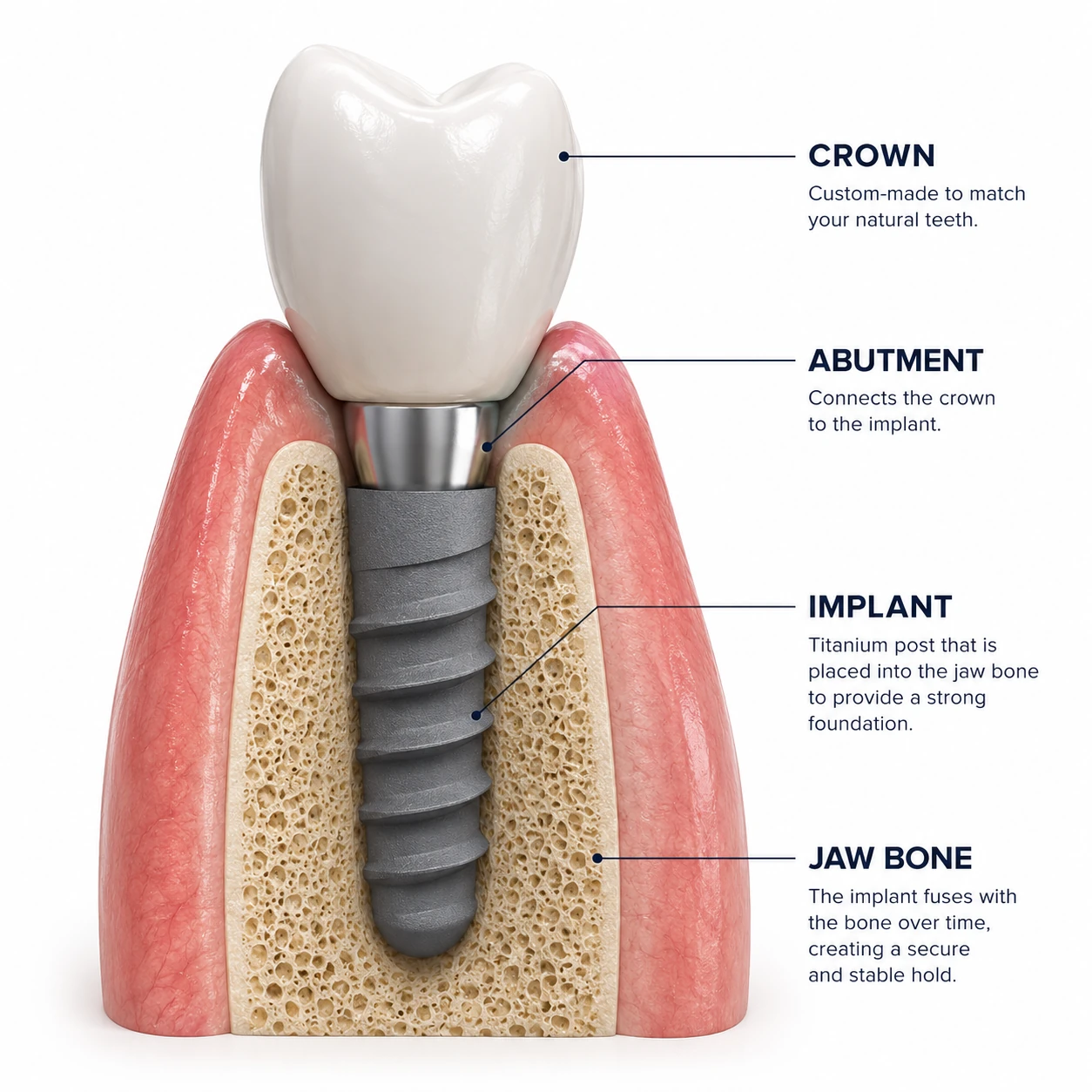
Gum disease must be treated and brought under control before implants are placed. The reason is straightforward: the same bacterial process that damages bone around natural teeth will attack the bone around an implant, a condition called peri-implantitis. Placing an implant into an untreated mouth risks losing it.
What treatment involves: A course of hygiene appointments and, in some cases, additional periodontal treatment. Typically several weeks to a few months depending on severity, after which your gum health is reassessed.
If you have already lost teeth to gum disease: Common among implant patients and not a barrier. It does mean ongoing maintenance afterwards matters particularly, since the underlying susceptibility remains.
Can I have implants if I smoke?
Smoking does not make implant treatment impossible, but it significantly increases the risk of failure and it will be discussed frankly at your consultation.
Smoking restricts blood flow to the gums and bone, which slows healing and interferes with the process by which the implant fuses with the jaw. Studies consistently show higher failure rates among smokers, and the risk is highest during the healing period immediately after placement.
What we ask: that you stop, or at minimum stop during the healing period. A good number of patients use implant treatment as the reason to stop altogether, and we will support you with that.
We will not refuse to treat you for smoking. We will be clear about the increased risk and ask you to accept it before proceeding, because it would be wrong to take on a case without that conversation.
Can I have implants with a medical condition?
Most medical conditions do not prevent implant treatment, though several require assessment and some require liaison with your doctor.
- Diabetes: well controlled diabetes is not a barrier and diabetic patients are treated routinely. Poorly controlled diabetes affects healing and increases infection risk, so treatment is usually deferred until control improves.
- Heart conditions: most are compatible with implant treatment. Some require antibiotic cover before surgery, and blood thinning medication may need managing around the procedure in consultation with your doctor.
- Osteoporosis: the condition itself is not a barrier. The relevant issue is medication, covered below.
- Autoimmune conditions: those affecting the immune system or healing require individual assessment. Many patients with autoimmune conditions are treated successfully.
- Cancer treatment: radiotherapy to the head or neck significantly affects bone healing and requires careful assessment. Chemotherapy timing matters. Discussed case by case and often with your oncology team.
- Pregnancy: implant treatment is contraindicated during pregnancy. Planning can be carried out and treatment started once appropriate.
Bring your medical history. The consultation includes a full review. Bring a list of your conditions and medications, and we will tell you honestly whether anything needs addressing first.
Can I have implants if I take medication?
Most medications are not a problem. A small number require specific consideration.
- Bisphosphonates and other bone medications: drugs such as alendronic acid, taken for osteoporosis, affect bone turnover and carry a small risk of medication related osteonecrosis of the jaw. Risk is considerably higher with intravenous forms than tablets. This does not automatically rule out implants, but it requires careful assessment and a discussion of risk, sometimes involving your doctor.
- Blood thinners: anticoagulants such as warfarin, apixaban or clopidogrel can usually be managed around implant surgery without stopping them.
- Steroids: long term use affects healing and immune response and requires assessment.
- Immunosuppressants: require individual assessment, often in consultation with the prescribing clinician.
Never stop taking prescribed medication to prepare for dental treatment. Tell us what you take and we will work around it.
I have worn dentures for years. Am I still suitable?
Long term denture wearers are among the most common implant patients, and years in dentures does not rule you out.
What it does mean is that bone loss has probably occurred, since a denture rests on the gum without stimulating the bone beneath it. The longer they have been worn, the more bone has usually gone.
That affects which treatment is recommended, not whether treatment is possible.
- Implant-retained dentures, from £5,000 per arch: clip onto two to four implants and stop the denture moving, while remaining removable for cleaning.
- All-on-4 or full arch treatment, from £11,500: fixed teeth that never come out.
- Zygomatic implants: where upper bone loss is severe.
A CBCT 3D scan will show what your bone allows. A great many denture wearers who assumed they had left it too late turn out to have good options.
Read about implant-retained dentures
I have had a failed implant before. Can I try again?
In most cases, yes.
Implants fail for identifiable reasons, most commonly infection during healing, insufficient bone, smoking, untreated gum disease, or excessive force from grinding. Identifying why the first one failed is the starting point, because treating the cause is what changes the outcome second time around.
Where an implant has been removed, the site usually needs time to heal and may require grafting before a replacement is placed. That adds time but it does not generally prevent treatment.
Patients who have had failed implants elsewhere make up a meaningful proportion of the complex cases referred to Dr Nikhil.
When implants are genuinely not suitable
To be straightforward about it, the situations that genuinely prevent implant treatment are uncommon.
- Ongoing pregnancy, where treatment is deferred rather than refused
- An incomplete jaw, where a patient is too young for the jaw to have finished growing
- Active, untreated gum disease, until it has been resolved
- Certain cancer treatments, particularly head and neck radiotherapy affecting the jaw
- High dose intravenous bisphosphonates, where risk may outweigh benefit
- Severe systemic conditions affecting healing or immune function
- Medical unfitness for minor surgery under local anaesthetic
Most of these are temporary or manageable rather than absolute. Very few patients are permanently unsuitable for any form of implant treatment.
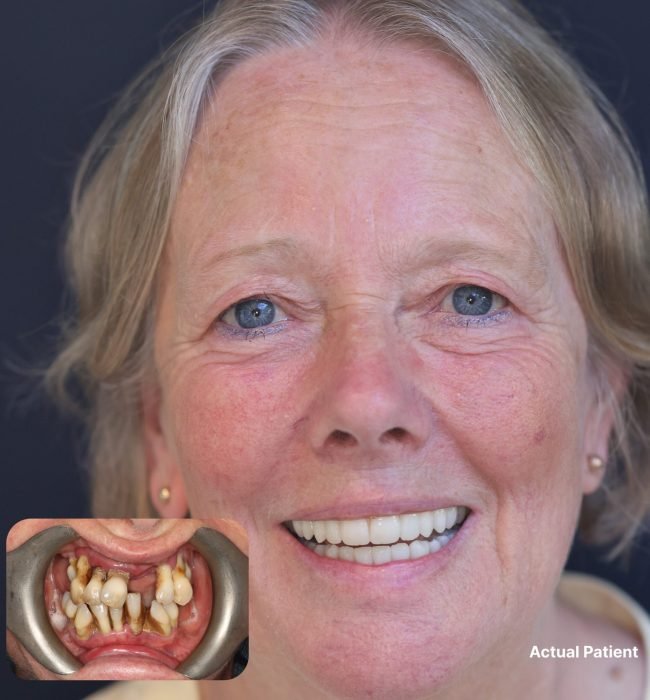
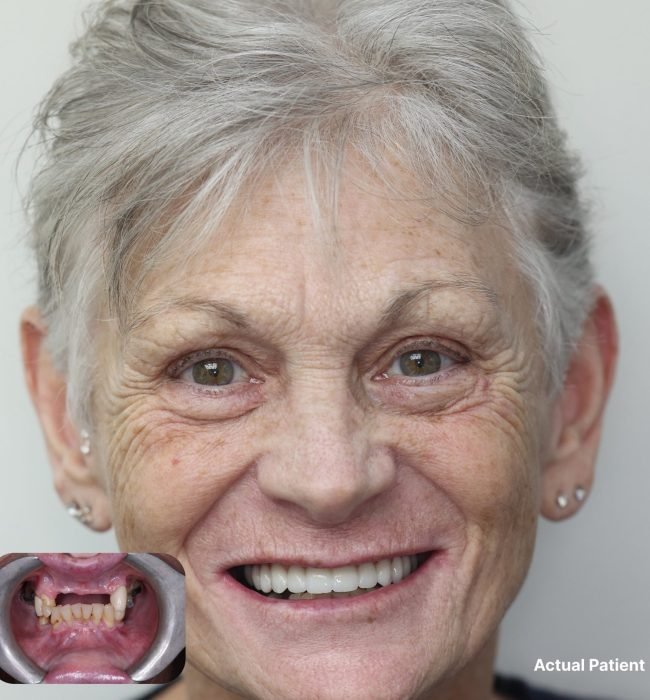
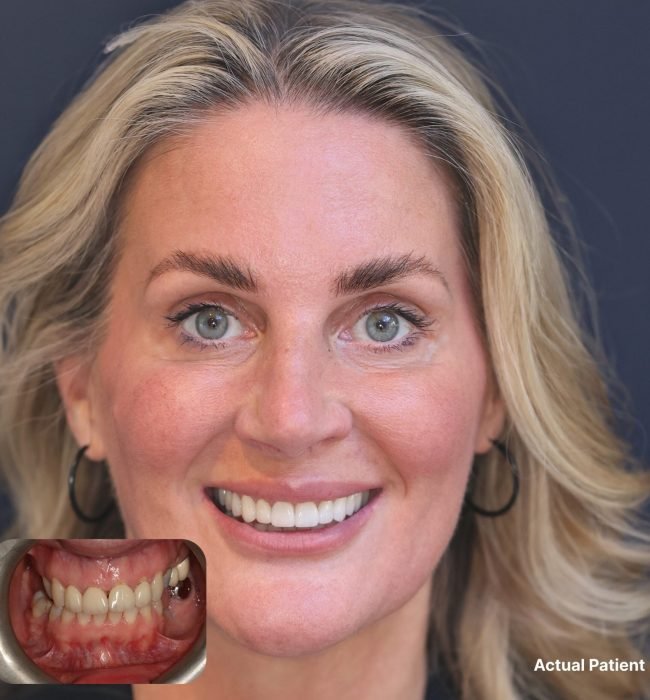
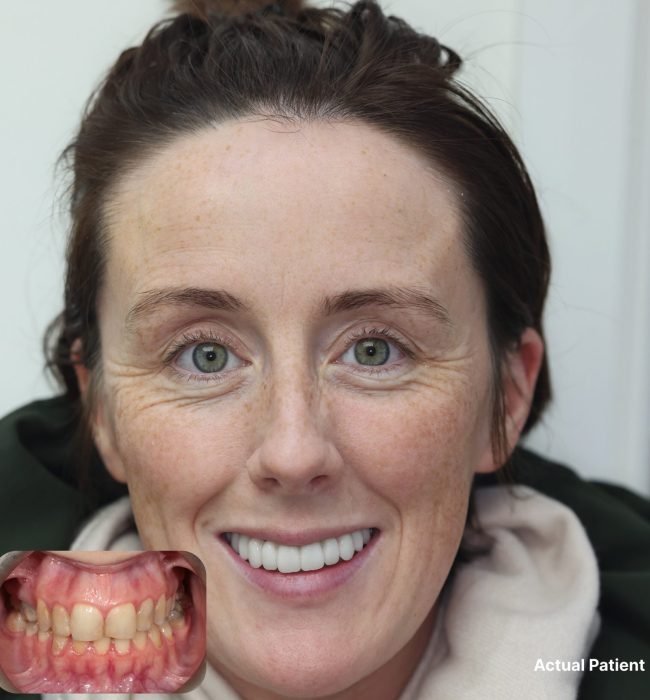
- Real Patient Results
Thousands of Smiles Transformed
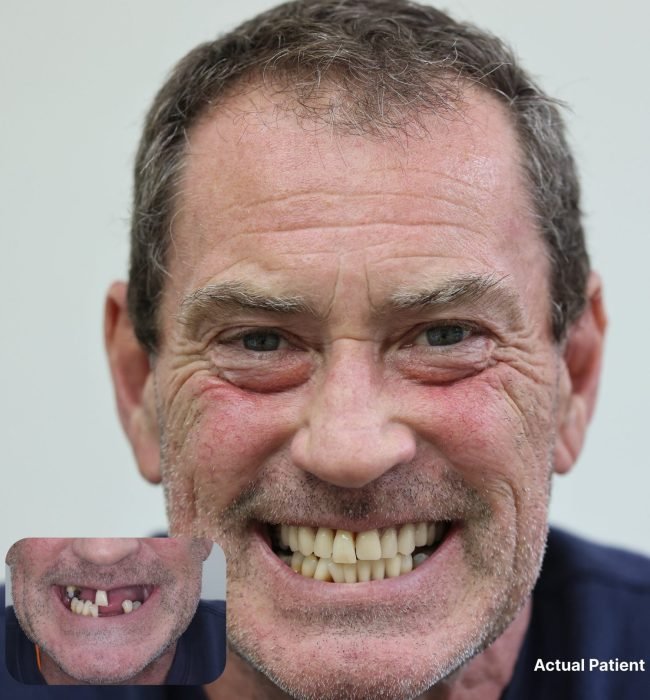
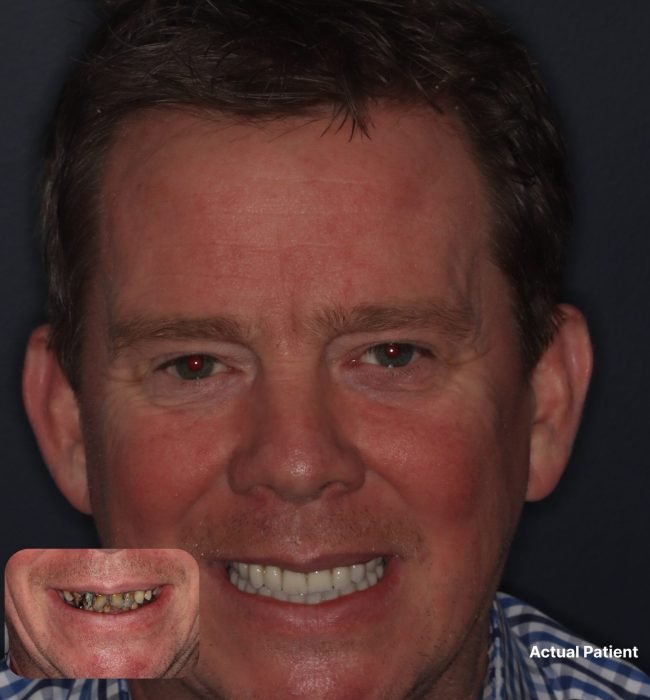
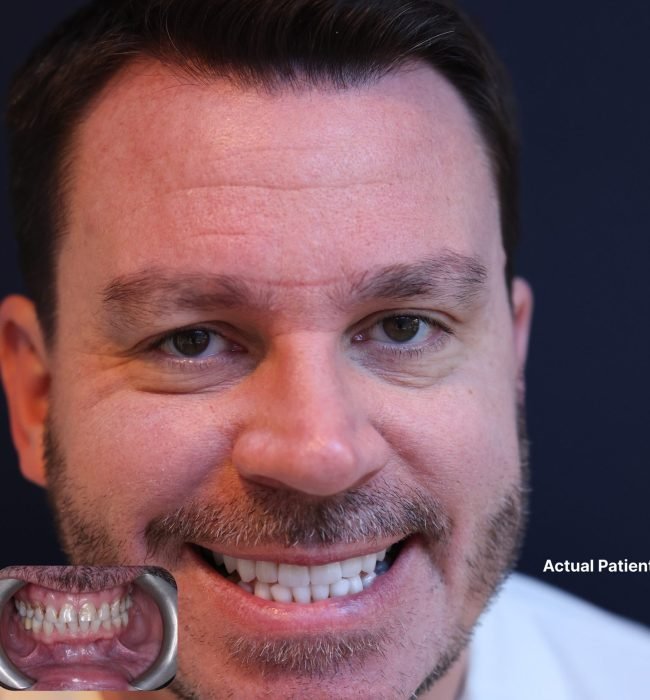
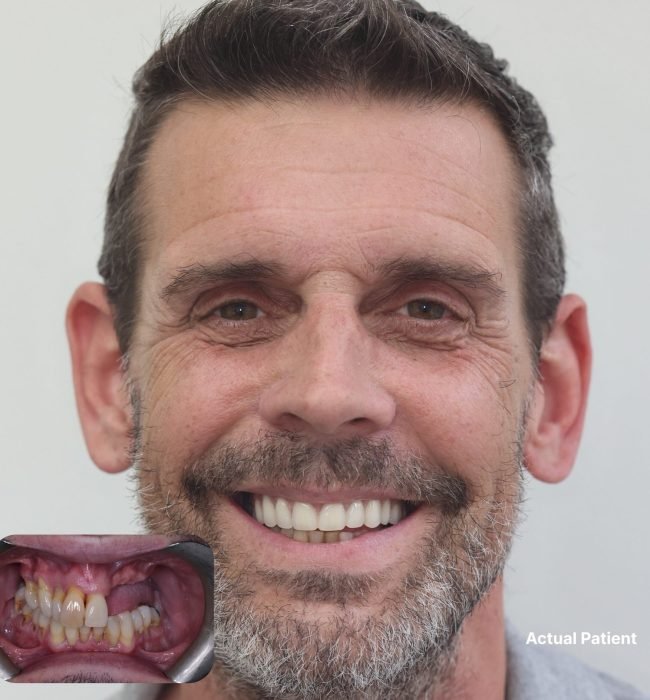
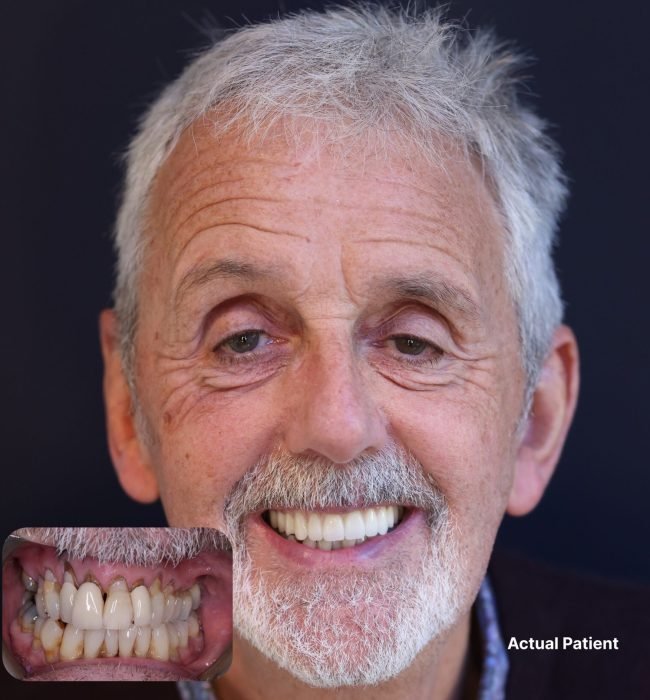
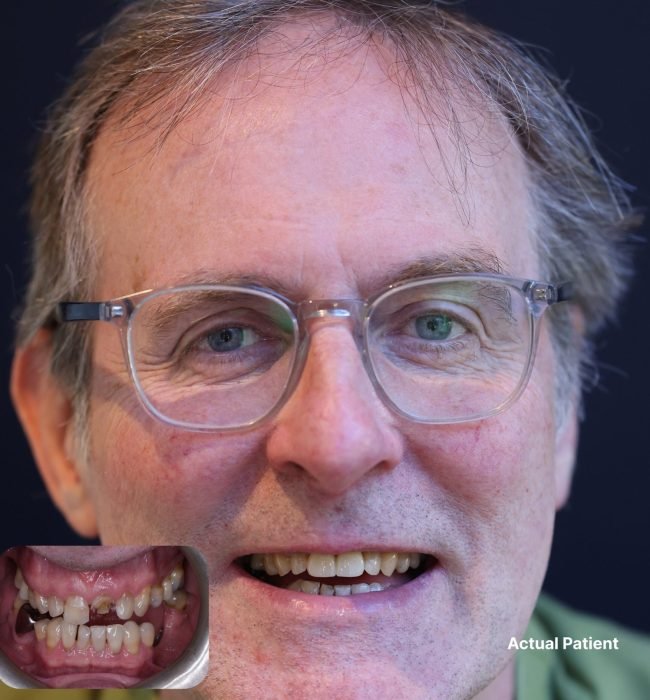
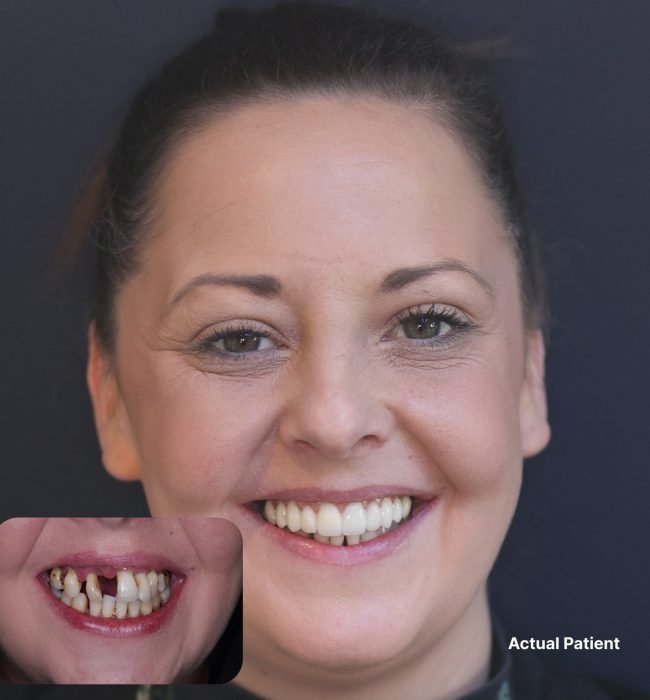
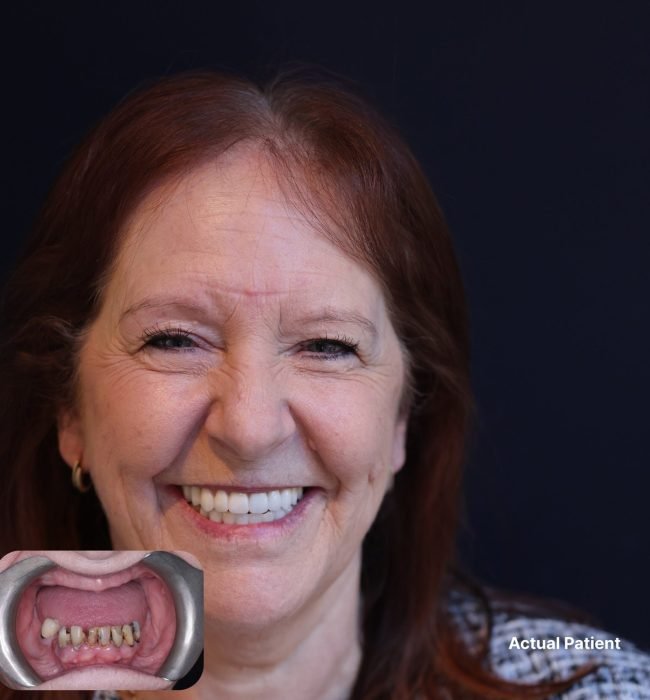
Be our Next Success Story!
All photographs show patients treated at Croft Dental and are published with their consent. Results shown are individual results.
How we work out whether implants suit you
Suitability cannot be determined from a photograph, a phone call or a website. It requires an examination and a scan.
-
1Step one: a full clinical examinationYour teeth, gums, bite and soft tissues, assessed properly rather than glanced at.
-
2Step two: a CBCT 3D scanHigh resolution imaging showing bone volume, bone density, nerve position and sinus anatomy in three dimensions. This is the part that determines what is actually possible, and nothing else substitutes for it.
-
3Step three: medical and medication reviewA full review of your health history and everything you take.
-
4Step four: an honest conversationWhat your case allows, which treatment Dr Nikhil would recommend, what it would cost, and what the alternatives are, including doing nothing.
It commits you to nothing. The consultation is free, and if implants are not the right answer for you, we will tell you that and explain what would be.
Pricing and fees
Treatment | From |
Implant consultation | Free |
Complete single implant | £2,300 |
Implant bridge, three teeth | £3,500 |
Implant-retained denture, per arch | £5,000 |
Full arch package | £11,500 |
Zygomatic implants | Priced on assessment |
Bone augmentation, if required | £450 |
Sinus lift, if required | £850 |
CBCT 3D scan, single arch | £80 |
Sedation | £350 |
You will receive full written costs before any treatment begins.
Where to find us
Croft Dental sits at 64 Manchester Road, on the Handforth side of Wilmslow town centre. Coming up from The Carrs, we are north east along Manchester Road. If you reach Handforth Dean, you have gone too far.
We are around ten minutes on foot from Wilmslow station, five minutes from Handforth, and roughly ten minutes from Alderley Edge up the A34.
Patients travel to us from Alderley Edge, Handforth, Styal, Prestbury, Mottram St Andrew, Knutsford, Macclesfield, Poynton, Bramhall, Cheadle and Hale, as well as from South Manchester along the A538 from the airport.
For zygomatic cases and complex assessments, people come from considerably further across the North West, simply because so few practices offer them.
Not sure where to start? Give us a ring.
Make an Enquiry
- DENTIST
Meet your implant dentist
Dr Nikhil Oberai
BDS · MSc Implant Dentistry, University of Manchester · ADI Member · GDC 150126
Dr Nikhil assesses and treats implant cases at Croft Dental, with a 99.5% success rate across hundreds of implants placed. His Master’s degree from the University of Manchester involved several years of postgraduate study devoted entirely to implantology.
The reason that matters on this page in particular: because bone grafting, sinus lifts, All-on-4 and zygomatic implants are all carried out at the practice, his recommendation is based on what your case needs rather than on what happens to be available here. Patients who have been declined elsewhere are frequently suitable.
He is a member of the Association of Dental Implantology, a Key Opinion Leader for Osstem, and an Honorary Clinical Teaching Fellow at the University of Manchester. Practices across the North West refer their complex cases to him.
- Finance
Spread the cost of dental implants with finance
We offer finance on implant treatment through Tabeo so the cost can be spread across monthly payments. Interest-free options are available with no arrangement fees or hidden charges.
Applications take a few minutes and you will know the outcome quickly. We will show you exactly what your treatment would cost per month at your consultation.
- REGISTRATION
We're Welcoming New Patients
We warmly welcome new patients to our practice. If it’s been a while since your last visit, if dental visits make you feel anxious, if you’ve recently moved to Wilmslow, or if you’re simply seeking a team that truly listens to your concerns, you’ll find a supportive and gentle environment here with us.
During your first appointment, we take the time to conduct a complete evaluation of your teeth, gums, and overall oral health. We will listen carefully to your goals, answer any questions, and collaboratively create a treatment plan tailored specifically to you.
"Nik and the team were exceptional. I went in for an initial appointment about one missing tooth. Twelve months later I have implants that feel like real teeth."
★★★★★ - Melissa Wilde | Croft Dental & Implant Clinic
- FAQs
Frequently asked questions
Most adults missing one or more teeth are suitable for dental implants. Suitability depends on having healthy gums, sufficient jawbone or bone that can be rebuilt, reasonable general health, and no medications or conditions that prevent healing. Age is not a barrier, and there is no upper age limit. A CBCT 3D scan is required to determine suitability accurately.
There is no upper age limit for dental implants. Patients in their seventies, eighties and older are treated routinely. Suitability is determined by general health and bone quality rather than age. The minimum age is generally around eighteen, since implants should not be placed until the jaw has finished growing.
In most cases, yes. Bone can often be rebuilt through bone grafting from £450 or a sinus lift from £850 before the implant is placed. Techniques such as All-on-4 angle the implants to engage available bone and often avoid grafting entirely. Where the upper jaw has severe bone loss, zygomatic implants anchor into the cheekbone instead. Many patients told elsewhere they lack sufficient bone are suitable for one of these approaches.
Smoking does not make implants impossible but it significantly increases the risk of failure, particularly during the healing period. Smoking restricts blood flow to the gums and bone, which slows healing and interferes with the implant fusing to the jaw. Patients who smoke are generally advised to stop, or at minimum to stop throughout the healing period.
Gum disease must be treated and brought under control before implants are placed, but it does not rule out treatment permanently. The bacteria that damage bone around natural teeth also attack bone around implants, a condition called peri-implantitis. Gum treatment usually takes several weeks to a few months, after which suitability is reassessed.
Bisphosphonates, taken for osteoporosis, affect bone turnover and carry a small risk of medication related osteonecrosis of the jaw. This does not automatically prevent implant treatment, particularly with tablet forms, though it requires careful assessment and sometimes consultation with the prescribing doctor. Intravenous bisphosphonates carry higher risk. Patients should never stop prescribed medication without medical advice.
Yes. Long term denture wearers are among the most common implant patients. Wearing dentures for many years usually means some jawbone has been lost, since dentures rest on the gum and do not stimulate the bone. This affects which treatment is recommended rather than whether treatment is possible. Options include implant-retained dentures, full arch fixed bridges, and zygomatic implants where bone loss is severe.
In most cases, yes. Implants fail for identifiable reasons including infection during healing, insufficient bone, smoking, untreated gum disease and excessive biting force. Identifying the cause is the starting point, since addressing it is what changes the outcome. The site usually needs time to heal and may require bone grafting before a replacement implant is placed.
Suitability cannot be determined without a clinical examination and a CBCT 3D scan, which shows bone volume, bone density, nerve position and sinus anatomy in three dimensions. A full medical history and medication review is also required. At Croft Dental in Wilmslow, implant consultations are free of charge and carry no obligation to proceed.