
Your Dental Implant Journey
Every stage, in order, with honest timelines. Because most of the worry about implant treatment comes from not knowing what happens next.
Dental implant treatment at Croft Dental in Wilmslow follows a clear sequence, from the first free consultation and CBCT 3D scan through to the fitting of the final teeth and ongoing aftercare. Most single implant cases take three to six months from placement to completion across three or four appointments, with full arch treatment usually taking four to six months. A temporary tooth or bridge is provided throughout, so patients are never left with a visible gap. Treatment is carried out by Dr Nikhil Oberai, who holds an MSc in Implant Dentistry from the University of Manchester and has a 99.5% success rate across hundreds of cases.
So, what actually happens, step by step?
Almost everyone arrives with the same handful of questions, and almost nobody asks them out loud.
How many times will I have to come in? How long will each appointment take? Will it hurt? Will I be walking around with a gap in the meantime. What exactly happens in the months between the surgery and the finished result, and am I going to be sitting at home wondering whether it is working.
That uncertainty is what stops people booking far more often than the cost does.
So this page lays it all out in order. Every stage, how long it takes, what happens in the chair, and what is expected of you between appointments. No vagueness and no surprises.
If you would rather talk it through than read it, ring the practice on 01625 523 524. Somebody will happily go through it with you, and no, that is not a sales call.
Your treatment journey
-
1Step one: your free consultation and 3D scanAround 45 minutes · Free of charge
We start by talking. Dr Nikhil will ask what brought you in, what you would like to achieve, and whether anything has put you off dental treatment in the past. If you are nervous, this is the moment to say so.
He then carries out a full examination of your teeth, gums, bite and soft tissues, and takes a CBCT 3D scan where implant treatment is being considered. The scan shows bone volume, bone density, nerve position and sinus anatomy in a level of detail a standard x-ray simply cannot provide. It is what allows implant positions to be planned precisely rather than estimated.
You will then be shown your scan and talked through what it shows, in plain terms. Dr Nikhil will explain which options are realistic in your case, which he would recommend, and what the alternatives are, including doing nothing.
What to bring: a list of any medication you take and details of any medical conditions. If you are transferring from another practice, your previous dentist's details are useful.
What you are not asked to do: decide anything on the day. There is no obligation to proceed and nobody will chase you afterwards. -
2Step two: your written treatment planPrepared within a few days · Free of charge
You receive a written plan setting out:
• The treatment recommended and the number of implants involved
• Each stage of treatment in sequence
• How long the whole process should take
• The full cost, broken down stage by stage
• Finance options with monthly figures
• Any preparatory work required first
Nothing begins until you have read the plan and agreed to it. There are no charges partway through that you were not told about at this point.
Take your time. Implant treatment is a significant decision and a significant investment. Go away and think about it. Discuss it at home. Get a second opinion if you want one. That is entirely reasonable and we will not pressure you either way. -
3Step three: any preparatory treatmentVaries from a few weeks to several months · Applies to some patients, not all
Not everyone needs this stage. Where it is required, it happens before implant placement.
Tooth extraction. If a failing tooth is still in place it needs removing, from £220. The site is usually left to heal for a period before the implant is placed, though in some cases an implant can be placed immediately after extraction.
Gum disease treatment. Implants cannot be placed into unhealthy gums. Where gum disease is present it is treated and brought under control first, typically across several hygiene appointments.
Bone grafting. Where there is insufficient bone to hold an implant, bone is built up at the site from £450. The graft then needs several months to heal before the implant is placed.
Sinus lift. In the upper back jaw, where the sinus sits close to where the implant needs to go, the sinus floor is raised and bone added beneath it, from £850. Healing again takes several months.
Your treatment plan sets out exactly what is required, why, how long it adds and what it costs. Nothing is hidden or added later. -
4Step four: implant placementUnder an hour for a single implant, two to three hours for a full arch · Local anaesthetic, sedation available · Home the same day
The area is numbed thoroughly. Dr Nikhil then places the implant into the jawbone in the position planned from your 3D scan. For a single implant this is a straightforward procedure. For full arch treatment, several implants are placed and any remaining teeth in the arch removed at the same time.
What it feels like: you will feel pressure and movement rather than pain. This is the part most patients worry about beforehand, and it is also the part most patients mention afterwards as having been considerably easier than expected. It appears repeatedly in Dr Nikhil's reviews.
Will I have a gap? No. Where the implant site is visible when you smile, a temporary tooth is provided. For full arch cases, a fixed temporary bridge is usually fitted the same day.
Afterwards: you go home the same day. If you have had sedation, arrange for someone to drive you. -
5Step five: healing and integrationThree to six months · Review appointments throughout · Temporary tooth or bridge worn
This is the longest part of the process and the part that asks least of you.
The implant needs time to fuse with the jawbone, a process called osseointegration. It cannot be rushed. During this period the bone grows onto the titanium surface, which is what gives the implant its strength.
The first week: some swelling and tenderness is normal, generally settling within three to five days. Take painkillers as advised, keep to softer foods and chew on the other side. Keep the area clean but brush gently around it.
The following months: most patients carry on entirely normally. Eat sensibly, clean well, attend your reviews.
Smoking: if you smoke, this is the period where it matters most. Smoking significantly increases the risk of implant failure during healing. We will support you if you want to stop, and we would strongly encourage it.
Review appointments: we check the site is healing as expected and answer anything on your mind. You can also ring the practice at any point between appointments if something does not feel right. -
6Step six: impressions and shade matchingAround 30 to 45 minutes · Usually one appointment
Once integration is confirmed, we take a digital scan of your mouth so your final tooth or bridge can be made.
Shade matching is done carefully, because a crown that is slightly the wrong shade is noticeable in a way a well matched one never is. Dr Natasja is involved in shade and aesthetic decisions on front tooth cases, given her prosthodontic background.
For full arch cases this stage involves more detail, since the shape, size, shade and position of an entire arch is being finalised. You will see and approve the design before it is made. -
7Step seven: fitting your final teethAround 30 to 60 minutes · Anaesthetic usually not required
Your final crown, bridge or denture is fitted and adjusted so it sits correctly against the opposing teeth and feels comfortable when you bite.
Checks made: fit, bite, contact with the adjacent teeth, appearance and comfort. Adjustments continue at this appointment until it is right.
Cleaning instructions: for a single implant this is much the same as a natural tooth. For a full arch bridge, a water flosser and interdental brushes are needed to clean underneath, and we will teach you the technique before you leave.
For most single implant patients, this is the end of active treatment. -
8Step eight: aftercare and long term maintenanceOngoing
Implants do not need special treatment, but they do need maintenance. This is the stage most often overlooked and it genuinely matters.
Regular check ups: your implant is examined at your routine appointments alongside your natural teeth.
Regular hygiene appointments: professional cleaning around implants keeps the surrounding gum and bone healthy. Implants can be lost to peri-implantitis, which is the implant equivalent of gum disease, and it is largely preventable with proper maintenance.
Daily cleaning: brushing twice daily and cleaning between the teeth. For full arch bridges, cleaning underneath with a water flosser.
Nightguards: if you grind your teeth, we may recommend a nightguard to protect the crown from excessive force.
How long it should last: implants are designed as a permanent replacement and frequently last decades when maintained properly. The crown or bridge fitted on top will show wear over time and may eventually need replacing, as any restoration would.
- Real Patient Results
Thousands of Smiles Transformed
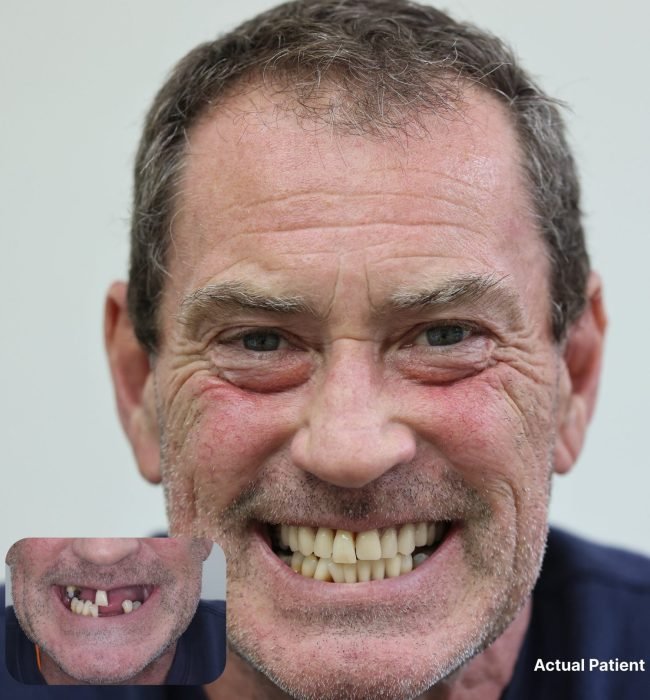
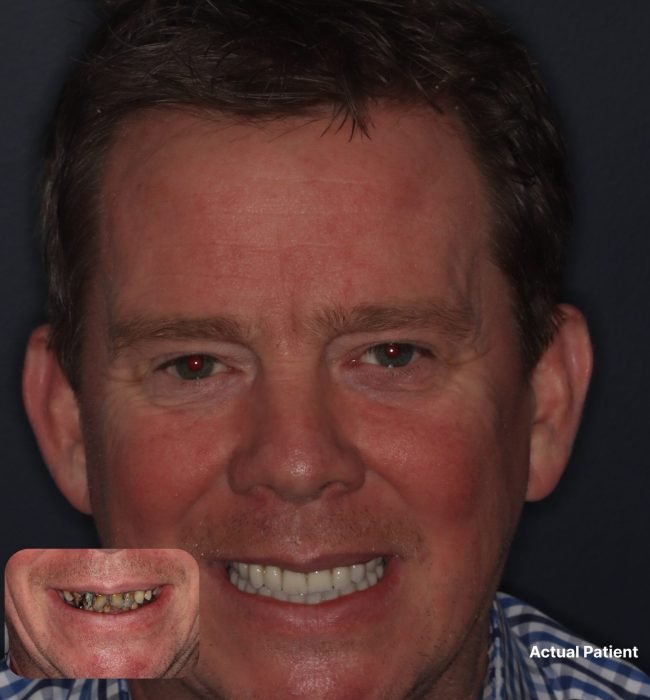
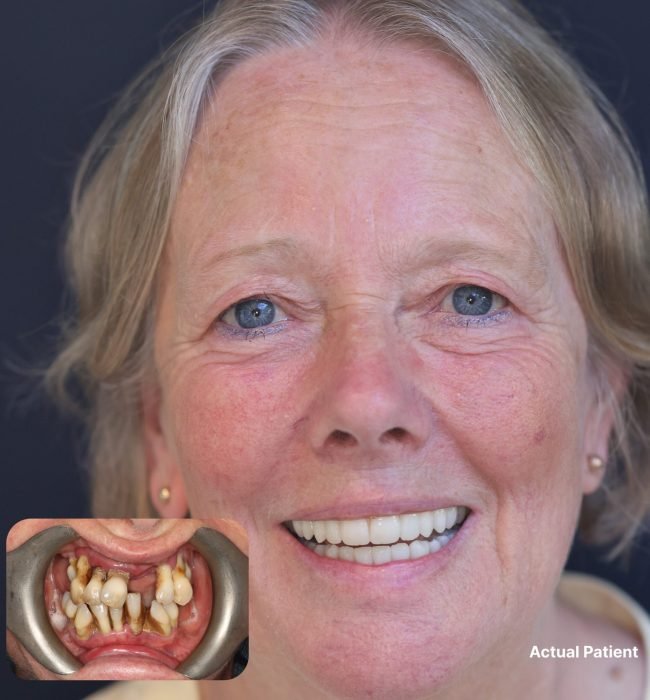
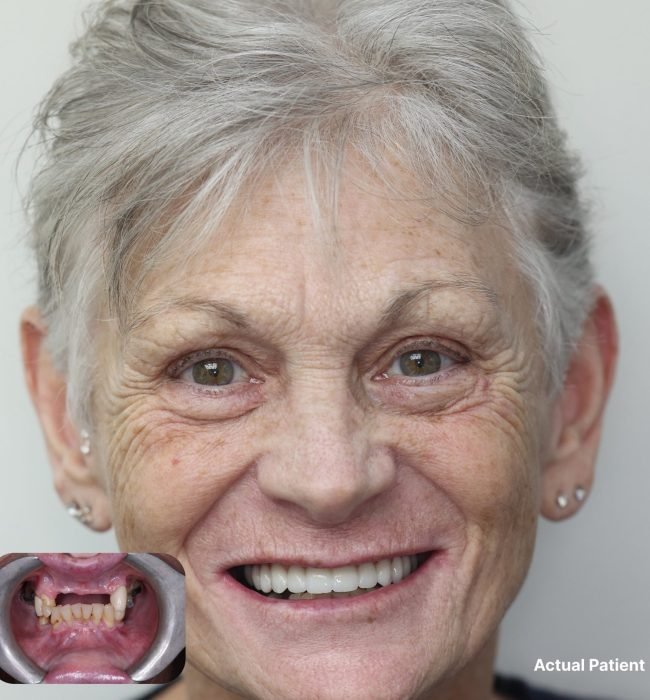
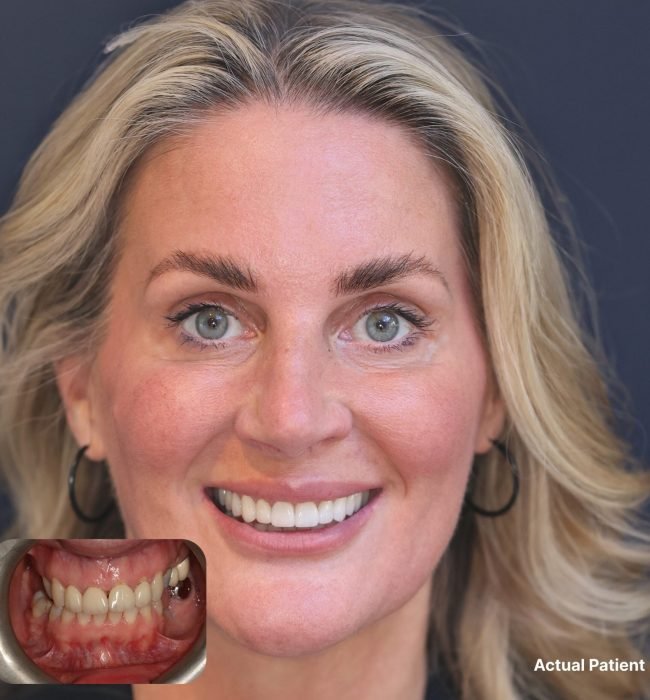
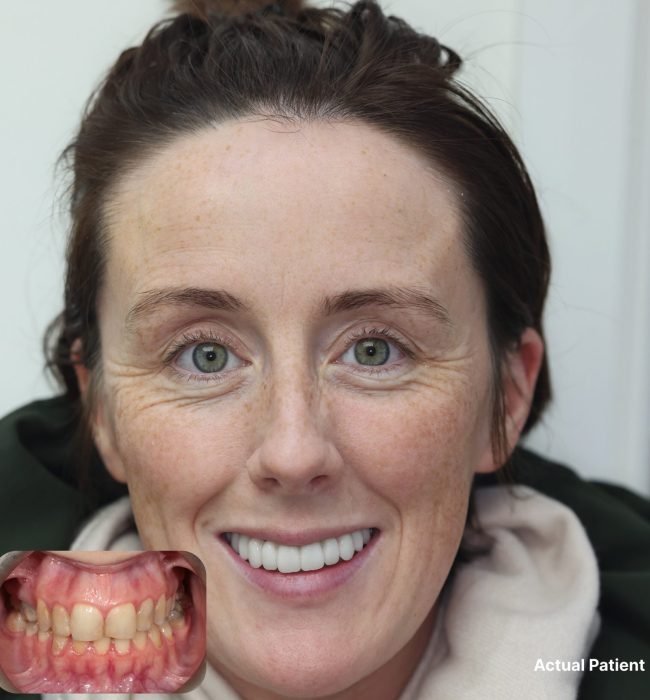
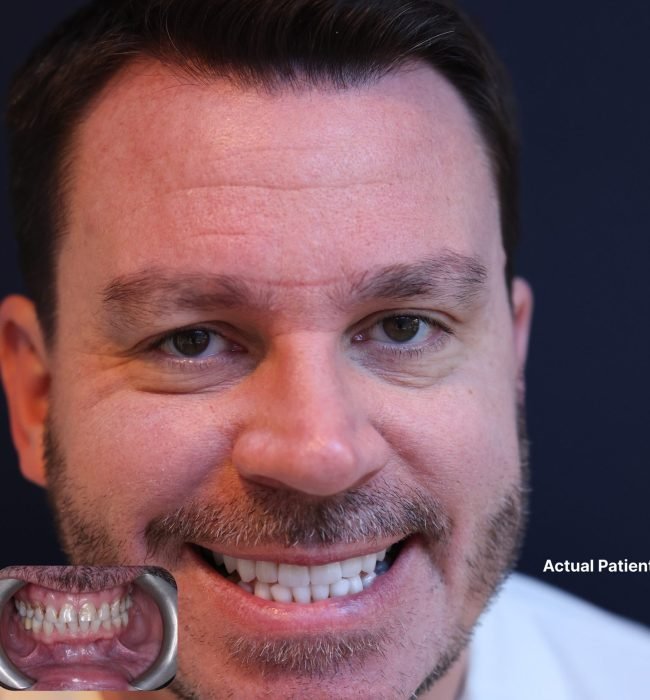
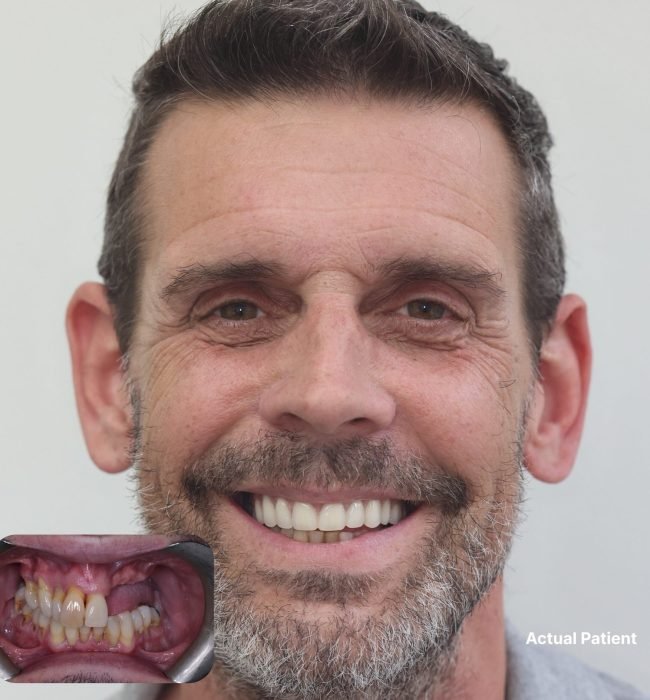
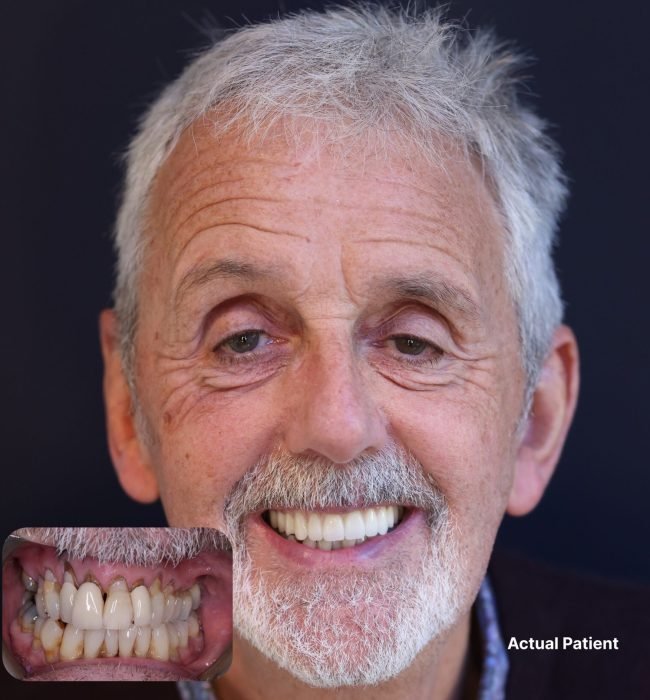
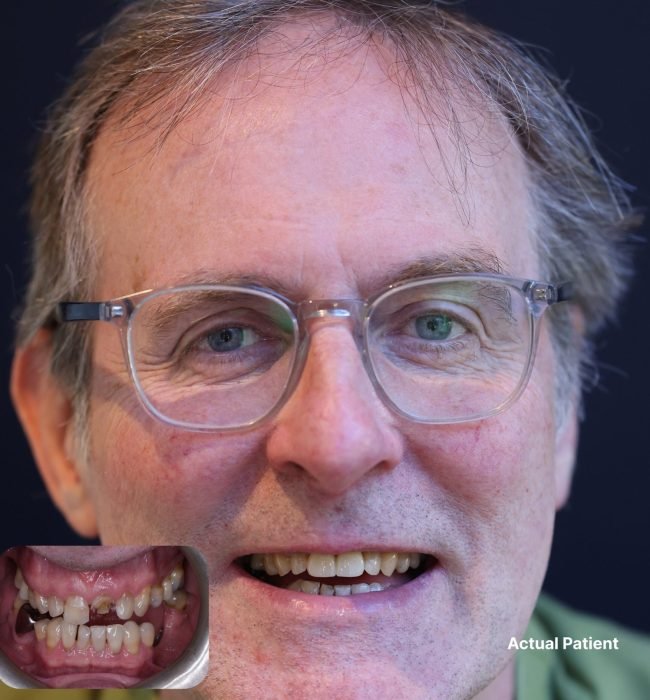
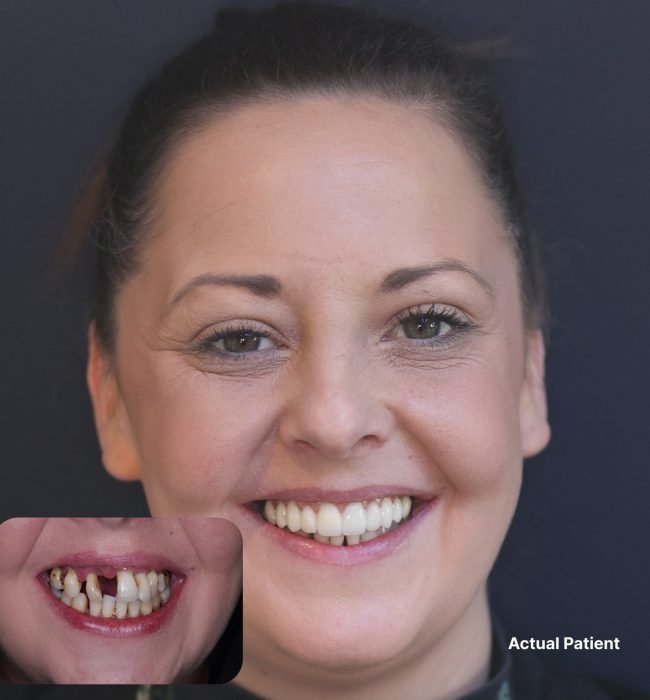
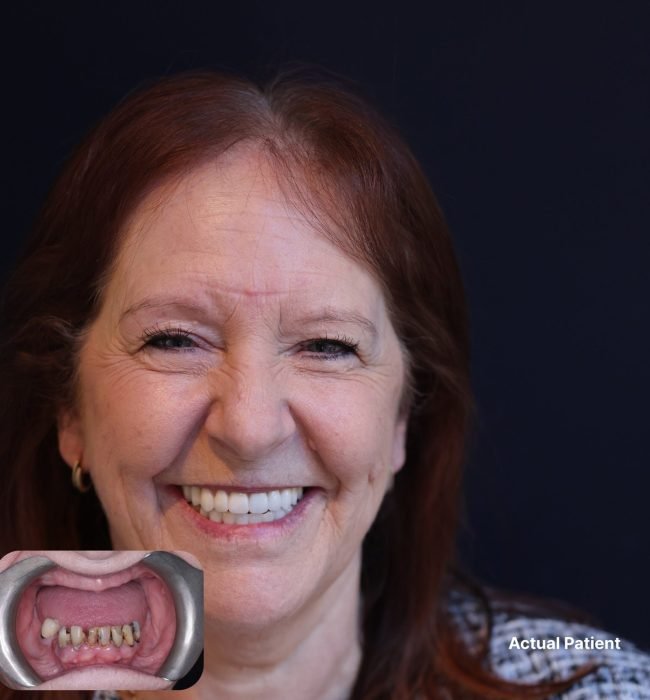
Explore real patient results demonstrating the life-changing impact of expert implant dentistry at Croft Dental. From single tooth restorations to comprehensive full-mouth rehabilitations, our tailored treatment plans restore both function and natural aesthetics.
Be our Next Success Story!
All photographs show patients treated at Croft Dental and are published with their consent. Results shown are individual results.
How long treatment takes
Treatment | Typical appointments | Typical total time |
Single implant | 3 to 4 | 3 to 6 months |
Multiple implants or implant bridge | 4 to 5 | 4 to 6 months |
All-on-4 or full arch | 5 to 6 | 4 to 6 months |
Implant-retained denture | 4 to 5 | 3 to 6 months |
Zygomatic implants | 5 to 6 | 4 to 6 months |
Cases requiring bone grafting | Additional appointments | Add 4 to 9 months |
These are typical ranges. Your written treatment plan will give the timeline specific to your case.
The things patients worry about
Will I be without teeth at any point?
No. Where the site is visible, a temporary tooth or bridge is always provided. Nobody leaves the practice with a visible gap.
Will it hurt?
Placement is done under local anaesthetic and most patients report pressure rather than pain. Sedation is available from £350 if you would prefer it. Discomfort in the days afterwards is normal and manageable with ordinary painkillers. This is consistently the thing patients tell us was easier than expected.
Can I take time off work?
Most patients return to work the next day after a single implant. Full arch surgery usually warrants a few days, and zygomatic surgery around a week.
What if the implant fails?
Implant failure is uncommon, and Dr Nikhil’s success rate across his cases is 99.5%. Where an implant does fail it is usually during the healing period, and it can often be replaced once the site has healed. This would be discussed with you fully at the time.
What if I am nervous?
Tell us when you book and it goes on your notes before you arrive. Appointments are given extra time, everything is explained before it happens, and we agree a signal so you can pause at any point. A significant number of our implant patients arrived having avoided dentists for years.
Pricing and fees
Treatment | From |
Implant consultation | Free |
Complete single implant | £2,300 |
Same day single implant | £2,000 |
Implant bridge, three teeth | £3,500 |
Implant-retained denture, per arch | £5,000 |
Full arch package | £11,500 |
Tooth extraction | £220 |
Bone augmentation | £450 |
Sinus lift | £850 |
CBCT 3D scan, single arch | £80 |
Sedation | £350 |
Your written treatment plan at step two sets out every stage and every cost before anything begins.
Where to find us
Croft Dental sits at 64 Manchester Road, on the Handforth side of Wilmslow town centre. Coming up from The Carrs, we are north east along Manchester Road. If you reach Handforth Dean, you have gone too far.
We are around ten minutes on foot from Wilmslow station, five minutes from Handforth, and roughly ten minutes from Alderley Edge up the A34.
Patients travel to us from Alderley Edge, Handforth, Styal, Prestbury, Mottram St Andrew, Knutsford, Macclesfield, Poynton, Bramhall, Cheadle and Hale, as well as from South Manchester along the A538 from the airport.
Because implant treatment runs across several months, the practicalities of getting here matter. If you are travelling a distance, say so when you book and we will group appointments where it is clinically sensible.
Not sure where to start? Give us a ring.
Make an Enquiry
- DENTIST
Meet your implant dentist
Dr Nikhil Oberai
BDS · MSc Implant Dentistry, University of Manchester · ADI Member · GDC 150126
Dr Nikhil leads implant treatment at Croft Dental and has completed hundreds of cases with a success rate of 99.5%. His Master’s degree from the University of Manchester involved several years of postgraduate study devoted entirely to implantology.
The two comments that appear most consistently in his patient reviews are that he explains everything before he does it, and that the treatment did not hurt. Both are rather relevant to how this journey feels from the chair.
He is a member of the Association of Dental Implantology, a Key Opinion Leader for Osstem, and an Honorary Clinical Teaching Fellow at the University of Manchester.
- Finance
Spread the cost of dental implants with finance
We offer finance on implant treatment through Tabeo so the cost can be spread across monthly payments. Interest-free options are available with no arrangement fees or hidden charges.
Applications take a few minutes and you will know the outcome quickly. We will show you exactly what your treatment would cost per month at your consultation, and the figures appear in your written treatment plan at step two.
- REGISTRATION
We're Welcoming New Patients
We warmly welcome new patients to our practice. If it’s been a while since your last visit, if dental visits make you feel anxious, if you’ve recently moved to Wilmslow, or if you’re simply seeking a team that truly listens to your concerns, you’ll find a supportive and gentle environment here with us.
During your first appointment, we take the time to conduct a complete evaluation of your teeth, gums, and overall oral health. We will listen carefully to your goals, answer any questions, and collaboratively create a treatment plan tailored specifically to you.
"Nikhil was absolutely fantastic and the implant was done painlessly. Rose, his nurse, was so caring throughout."
★★★★★ - Melissa Wilde | Croft Dental & Implant Clinic
- FAQs
Frequently asked questions
Most single implant cases involve three or four appointments, comprising the consultation and scan, implant placement, impressions, and fitting of the final crown. Full arch treatment typically involves five or six appointments. Cases requiring bone grafting, gum treatment or extractions beforehand involve additional visits.
Single implant treatment typically takes three to six months from placement to the fitting of the final crown, with most of that time allowing the implant to fuse with the jawbone. Full arch treatment usually takes four to six months. Cases requiring bone grafting take longer, since the graft must heal before the implant can be placed.
No. Where the implant site is visible when smiling, a temporary tooth is provided so there is no visible gap at any stage. For full arch cases, a fixed temporary bridge is usually fitted on the day of surgery.
The implant fuses with the jawbone over three to six months in a process called osseointegration. During this period the patient wears a temporary tooth or bridge, keeps the area clean, and attends review appointments. Most patients return to normal activities within a few days of surgery.
Dental implants require daily brushing and cleaning between the teeth, regular dental check ups, and regular professional hygiene appointments. Implants can be lost to peri-implantitis, an infection of the gum and bone around the implant, which is largely preventable with good cleaning and regular monitoring.
Most patients return to work the day after a single implant placement. Full arch surgery usually warrants a few days off, and zygomatic implant surgery around a week. Swelling and tenderness typically peak two to three days after surgery before settling.
The implant fuses with the jawbone over three to six months, during which a temporary tooth or bridge is worn so there is no visible gap. Review appointments monitor healing, and most patients carry on with normal life throughout. Once integration is confirmed, impressions are taken and the final tooth is made and fitted.
Softer foods are recommended for the first week after implant placement, chewing on the opposite side. After that most patients eat normally throughout the healing period, though care is taken with the temporary tooth or bridge. Full, unrestricted eating resumes once the final teeth are fitted.