
Dental Hygiene & Airflow Stain Removal in Wilmslow
Professional cleaning that reaches what brushing cannot, with Airflow available to lift years of tea, coffee and red wine staining.
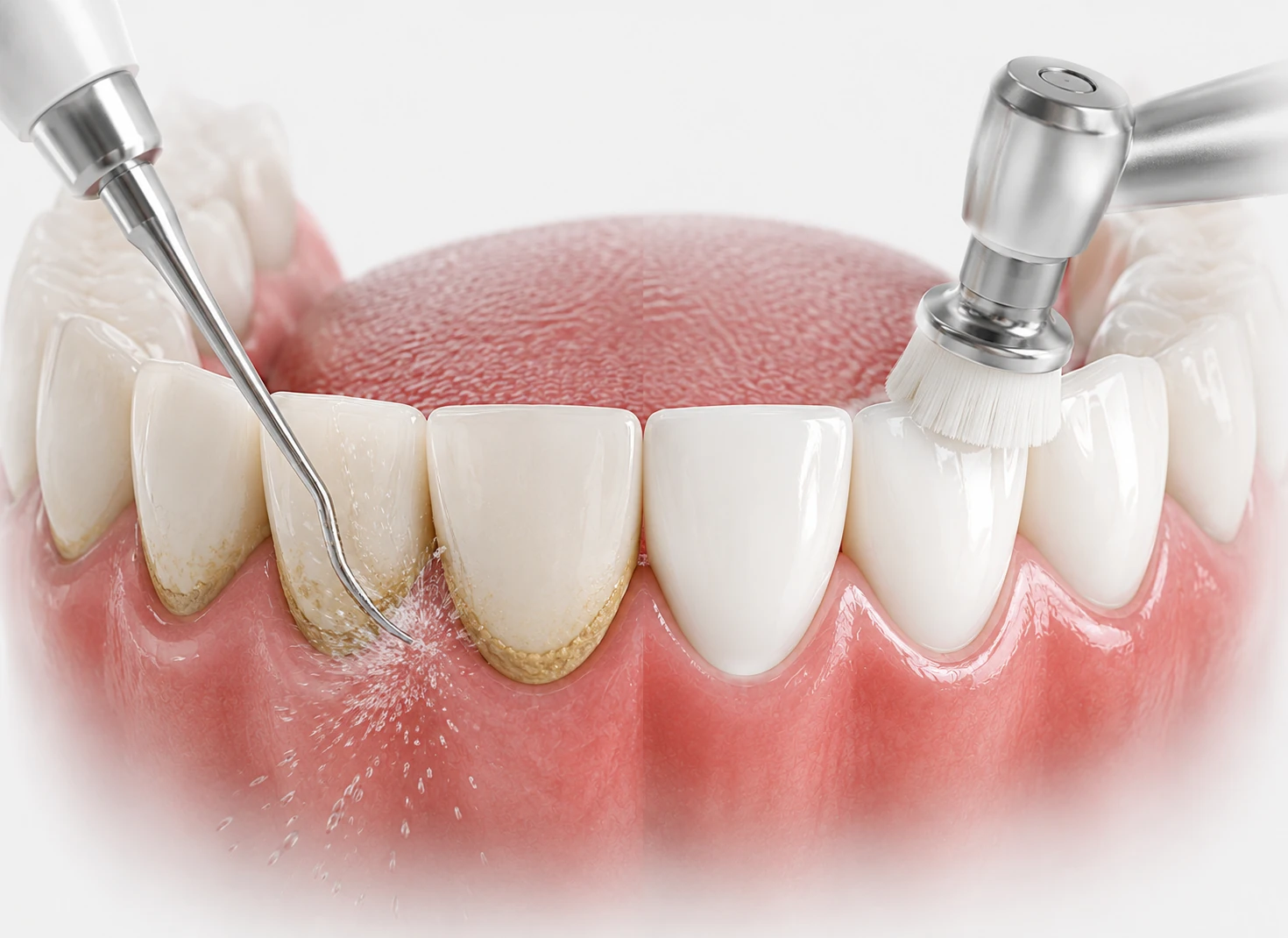
A dental hygiene appointment removes the hardened plaque and staining that brushing cannot reach, and assesses the health of the gums. It is the main treatment for preventing and controlling gum disease, which is the leading cause of tooth loss in adults. At Croft Dental on Manchester Road in Wilmslow, hygiene appointments start from £90 for thirty minutes, with Airflow stain removal available for £15 in addition. Airflow uses a jet of warm water, air and fine powder to lift staining from tea, coffee, red wine and tobacco. Most patients are seen every six months, though patients with gum disease, implants or diabetes are usually seen every three to four months.
So, why does a clean cost more than a filling?
Because it is doing considerably more than cleaning.
That is the honest answer to a question patients occasionally think but rarely ask, and it is worth addressing properly.
Gum disease is the leading cause of tooth loss in adults. Not decay. Gum disease. And it develops quietly, which is precisely the problem. Early gum disease causes bleeding when you brush and very little else. Most people assume bleeding gums are normal, or that they have been brushing too hard, and carry on.
They are not normal. Bleeding is inflammation, and inflammation is stage one. Left alone it progresses to periodontitis, where the bone holding the teeth in is gradually destroyed. Teeth become loose. By the time that is obvious, a substantial amount of bone has already gone, and bone does not come back.
Early gum disease is completely reversible. Professional cleaning and better home care resolve it entirely. Advanced gum disease is manageable but not reversible. Treatment stops it progressing and stabilises what remains, but the bone already lost stays lost.
The entire value of a hygiene appointment sits in that distinction. It is the difference between a routine forty five minutes twice a year and losing teeth in your sixties, and it is why the appointment is priced as clinical treatment rather than as a polish.
What happens at a hygiene appointment
- Assessment first: your gums are examined and measured where necessary, recording the depth of the spaces between gum and tooth. Healthy gums measure up to three millimetres. Deeper readings indicate where attachment has been lost. These are recorded so change can be tracked over time rather than guessed at.
- Removing plaque and tartar: plaque hardens into tartar within days if it is not removed. Once hardened it cannot be brushed off and requires professional instruments, above and below the gum line.
- Stain removal: surface staining from tea, coffee, red wine and tobacco is removed, either by polishing or with Airflow.
- Advice specific to you: not generic instruction. Where you are missing when you brush, which interdental brush size actually fits your gaps, and what to change. This part makes more difference to your long term gum health than the cleaning itself does.
- A plan for how often to return: some people need seeing every three months, others every six. It depends on your gums rather than on a standard schedule.
Airflow stain removal
Airflow uses a controlled jet of warm water, compressed air and a fine powder to lift staining and soft deposits from the tooth surface.
From £15 in addition to your hygiene appointment
How it differs from traditional polishing
It reaches places a polishing cup cannot, including between teeth, around the gum margin, in grooves and pits, and around braces, implants and other restorations.
It is generally more comfortable than scaling and polishing, particularly for patients with sensitive teeth, and many people find it quicker.
What it removes well
- Tea and coffee staining
- Red wine staining
- Tobacco staining
- Plaque and soft deposits, including in areas difficult to reach
What it does not do
Airflow removes surface staining. It does not change the natural colour of your teeth.
Teeth that are intrinsically darker will look cleaner but not whiter, and if you want them genuinely lighter, that requires whitening. We would rather say that now than have you expect one thing and get another.
It also does not replace scaling where hardened tartar is present. The two are frequently used together.
Suitability
Airflow is not appropriate for everybody. Patients with certain respiratory conditions, those on particular medications, or those with specific dietary restrictions may need an alternative approach depending on the powder used. Your hygienist will check before treatment.
Treatment for gum disease
Where gum disease has progressed beyond the early stage, more than a routine clean is needed.
Root surface debridement. Cleaning below the gum line to remove deposits from the root surfaces, usually carried out under local anaesthetic and often across several appointments treating different areas of the mouth.
Reassessment. Measurements are repeated after treatment to see how the gums have responded. Some areas resolve well, others need further attention.
Maintenance. Once stabilised, gum disease requires ongoing maintenance rather than a cure. That usually means hygiene appointments every three months rather than every six, indefinitely. Patients who stop attending generally relapse.
Your part in it. This matters more than anything done in the surgery. Professional cleaning removes what has accumulated. What determines whether it accumulates again is what happens at home twice a day, every day.
We will show you what to do specifically for your mouth. It is not complicated, but it does have to be consistent.
Smoking and gum health
Smoking is the single largest modifiable risk factor for gum disease after plaque itself.
It restricts blood flow to the gums, which suppresses the bleeding that would otherwise warn you something is wrong. Smokers frequently have advanced gum disease with fewer obvious symptoms, meaning it is picked up considerably later.
It also impairs healing, which makes gum treatment less effective, and it substantially increases the risk of implant failure.
We will not lecture you about it. But if you smoke and you have gum disease, stopping will do more for the outcome than anything we do at your appointments, and we will support you if you want to.
If you have implants
Worth a specific mention, since implant maintenance is not optional and a good number of our patients have had implant treatment here.
Implants do not decay, but the gum and bone around them can become infected in the same way as around natural teeth. This is called peri-implantitis, and it is the main reason implants are lost after successful placement.
It is largely preventable, and prevention is what hygiene appointments do.
What is different about cleaning around implants
Specific instruments are used, since standard metal scalers can damage implant surfaces. Cleaning around a full arch bridge requires particular technique, usually involving a water flosser and interdental brushes.
How often
Implant patients are generally seen more frequently than the standard interval. Your clinician will set this based on your case.
If you have had implant treatment at Croft Dental, hygiene maintenance is part of protecting that investment rather than an optional extra. A full arch case represents a considerable sum, and peri-implantitis is the most common way it gets undone.
How often should you come in?
- Every six months suits most people with healthy gums and no history of gum disease.
- Every three to four months is recommended where there is a history of gum disease, where measurements show deeper pockets, for smokers, for patients with diabetes, and for implant patients.
- Every three months, long term is standard maintenance following treatment for advanced gum disease. This does not reduce over time, because the susceptibility does not go away.
Your interval is set from your assessment rather than applied uniformly, and it can change as your gum health changes.
If your teeth are sensitive
Sensitivity is common and it is not a reason to avoid hygiene appointments.
What we can do:
- Airflow is often more comfortable than traditional scaling for sensitive patients
- Local anaesthetic can be used where cleaning below the gum line is needed
- Desensitising products can be applied during the appointment
- Work can be spread across shorter appointments rather than done all at once
What helps at home:
Sensitive toothpaste used consistently rather than occasionally, and brushing gently with a soft brush. Hard brushing causes recession, which exposes root surfaces and makes sensitivity worse.
Tell your hygienist at the start of the appointment rather than enduring it. There is almost always something that can be done.
Pricing and fees
Treatment | From |
Hygiene appointment, 30 minutes | £90 |
Hygiene appointment, 45 minutes | £135 |
Hygiene appointment, 60 minutes | £180 |
Airflow stain removal | £15 in addition |
Fluoride treatment | £30 |
Routine examination | £55 |
New patient examination, including x-rays | £85 (currently £40) |
Most patients with healthy gums have a thirty minute appointment. Longer appointments are recommended where there is more to remove, or where gum treatment is needed across several areas.
If you attend regularly, our practice plan spreads the cost of your examinations and hygiene appointments across fixed monthly payments rather than paying per visit.
Where to find us
Croft Dental sits at 64 Manchester Road, on the Handforth side of Wilmslow town centre. Coming up from The Carrs, we are north east along Manchester Road. If you reach Handforth Dean, you have gone too far.
We are around ten minutes on foot from Wilmslow station, five minutes from Handforth, and roughly ten minutes from Alderley Edge up the A34.
Patients come to us from Alderley Edge, Handforth, Styal, Prestbury, Mottram St Andrew, Knutsford, Macclesfield, Poynton, Bramhall, Cheadle and Hale.
Hygiene appointments are short, and we can usually arrange them alongside your check up to save a separate journey. Worth asking when you book, particularly if you are coming in from one of the villages.
Not sure where to start? Give us a ring.
Make an Enquiry
- DENTIST
Meet your hygienist
Diane Rochford
Diploma in Dental Hygiene, Guy’s Hospital London · BSc (Hons) Dental Studies, UCLan · GDC 5082
Diane qualified from Guy’s Hospital in London in 1996, where she was awarded the Hu-Friedy Scaling Prize. She served as President of the British Society of Dental Hygiene and Therapy from 2020 to 2022 and remains Immediate Past President.
Most practices have a hygienist. Rather fewer have one whose colleagues across the country elected her to lead their professional body.
Alongside her clinical work, Diane teaches tooth whitening and other subjects to dental professionals, writes for professional journals, and runs a study group for hygienists and therapists. She is also a member of the British Society of Periodontology and the British Dental Bleaching Society.
What patients say is rather simple. She is kind, she is thorough, and she explains things properly rather than telling you to floss more and moving on.
- Finance
Spread the cost of treatment with finance or dental plan
We offer finance on larger treatment plans through Tabeo so the cost can be spread across monthly payments. Interest-free options are available with no arrangement fees or hidden charges.
For routine hygiene appointments, our practice plan is generally the more sensible route, spreading the cost across fixed monthly payments rather than paying per visit.
- REGISTRATION
Register with Croft Dental as a New Patients
We warmly welcome new patients to our practice. If it’s been a while since your last visit, if dental visits make you feel anxious, if you’ve recently moved to Wilmslow, or if you’re simply seeking a team that truly listens to your concerns, you’ll find a supportive and gentle environment here with us.
During your first appointment, we take the time to conduct a complete evaluation of your teeth, gums, and overall oral health. We will listen carefully to your goals, answer any questions, and collaboratively create a treatment plan tailored specifically to you.
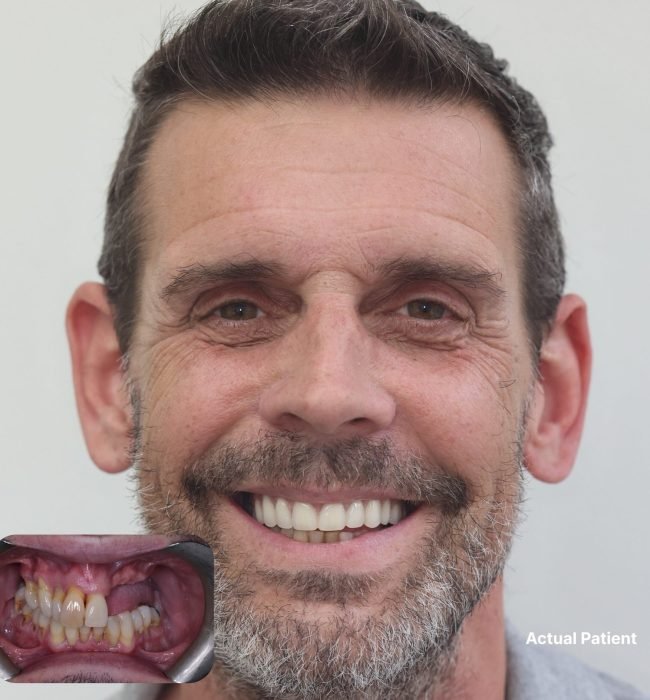
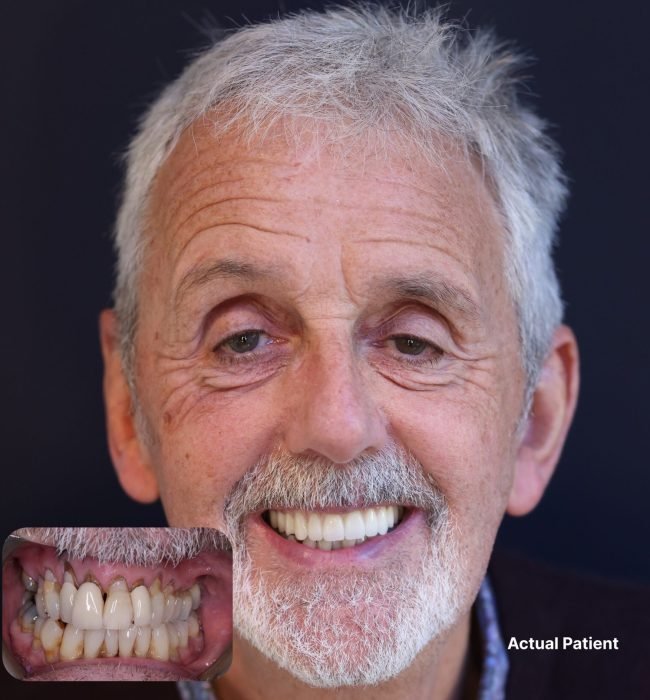
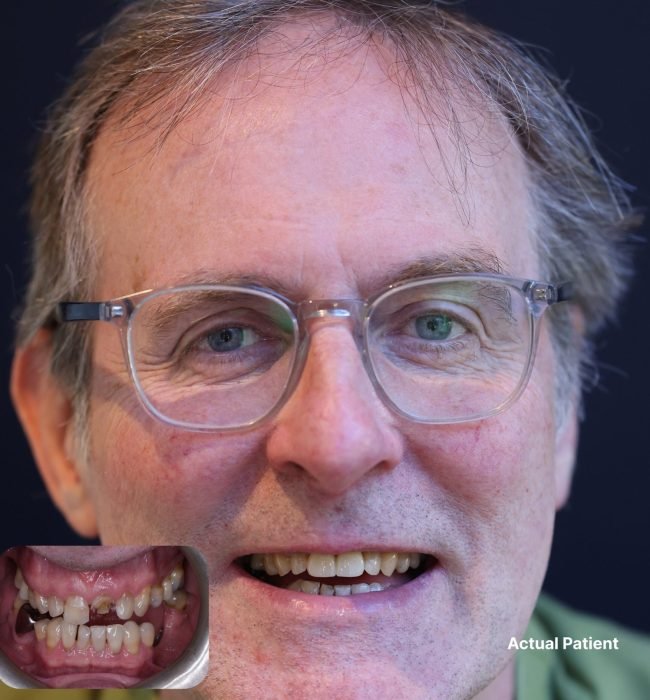
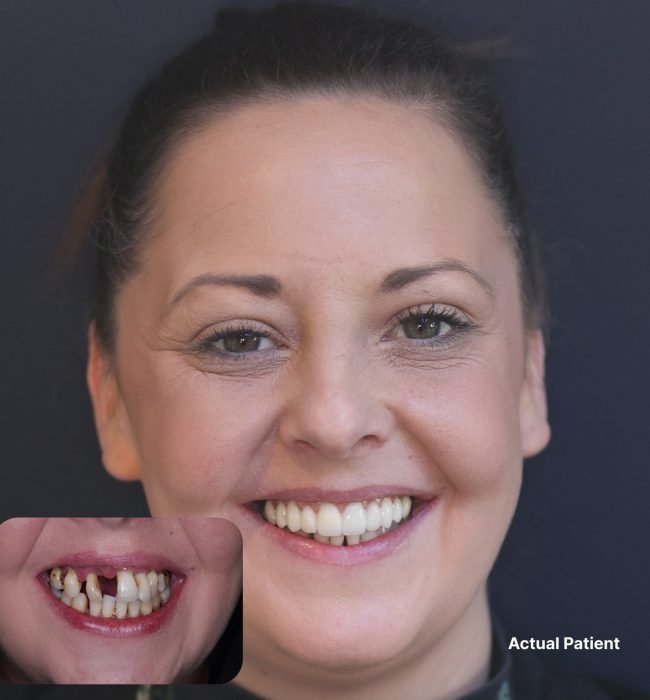
"I have my smile back thanks to the skill of the team here. All in all, a very happy patient."
★★★★★ - Sarah F. | Croft Dental & Implant Clinic
- FAQs
Frequently asked questions
Most people with healthy gums are seen every six months. Patients with a history of gum disease, smokers, those with diabetes and implant patients are generally seen every three to four months. Following treatment for advanced gum disease, three monthly maintenance appointments are usually recommended long term, since the underlying susceptibility remains.
Airflow uses a controlled jet of warm water, compressed air and fine powder to remove staining and soft deposits from the teeth. It reaches areas conventional polishing cannot, including between teeth, around the gum margin and around braces and implants, and it is generally more comfortable than traditional scaling. At Croft Dental it costs £15 in addition to the hygiene appointment.
No. Airflow removes surface staining caused by tea, coffee, red wine and tobacco, which makes teeth look cleaner and often lighter. It does not change the intrinsic colour of the tooth. Teeth whitening uses peroxide gel to lighten the natural shade of the tooth from within, which is a different treatment achieving a different result.
Bleeding when brushing or flossing usually indicates gum inflammation, which is the earliest stage of gum disease. It is not normal, though it is common. At this stage the condition is reversible with professional cleaning and improved daily cleaning. If left untreated it can progress to periodontitis, where the bone supporting the teeth is lost irreversibly.
Most hygiene appointments are comfortable. Some sensitivity is common, particularly where there is inflammation or exposed root surface. Where cleaning below the gum line is needed, local anaesthetic can be used. Airflow is often more comfortable than traditional scaling for patients with sensitive teeth. Patients should tell the hygienist about sensitivity at the start of the appointment.
Early gum disease, where only the gum is inflamed, is reversible with professional cleaning and effective daily cleaning. Advanced gum disease, where bone supporting the teeth has been lost, can be stabilised but not reversed, since the lost bone does not regenerate. Ongoing maintenance appointments are required indefinitely to prevent further progression.
Yes, and often more frequently than patients without implants. The gum and bone around an implant can become infected in a condition called peri-implantitis, which is the main cause of implant loss after successful placement. It is largely preventable through regular professional cleaning and good daily cleaning around the implant.
Hygiene appointments at Croft Dental start from £90 for thirty minutes, with forty five minute appointments at £135 and sixty minute appointments at £180. Airflow stain removal costs £15 in addition. Longer appointments are recommended where there is more to remove or where gum treatment is required across several areas.