
Dentures in Wilmslow
Made properly, fitted properly, and designed to look like teeth rather than like dentures.
Dentures are removable replacements for missing teeth, either a full denture replacing all the teeth in a jaw or a partial denture filling gaps where some natural teeth remain. At Croft Dental on Manchester Road in Wilmslow, acrylic partial dentures start from £400, full acrylic dentures from £450 and cobalt chrome dentures from £800 per arch. Treatment usually involves four or five appointments across several weeks. Where movement is a problem, dentures can be secured onto dental implants from £5,000 per arch. Denture work is supported by Dr Natasja Kashyap, who holds an MSc in Fixed and Removable Prosthodontics.
So, what are dentures actually like to live with?
Worth answering honestly, because a good many pages on this subject do not.
A well made denture does a considerable amount. It restores your appearance, frequently better than the natural teeth looked beforehand. It brings back a meaningful amount of chewing. It supports the lips and cheeks, which changes the shape of the face more than people expect. It requires no surgery, it costs a fraction of implant treatment, and it can be made for almost anybody.
For a great many people in Wilmslow and the villages round about, that is exactly the right answer, and there is nothing second rate about choosing it.
But there are things nobody tells you beforehand, and you should hear them now rather than in month three.
A denture does not chew like natural teeth. Expect roughly a quarter of natural biting force with a full one. It does not stay completely still, particularly the lower. And it does not stop the jawbone shrinking underneath, which is the one that matters most over time.
That last point is worth understanding properly.
When teeth are removed, the bone that held them starts to shrink, because nothing is stimulating it any more. A denture sits on top of that bone rather than stimulating it, so the shrinkage carries on regardless.
Over years this changes the fit. It is why dentures need relining periodically and eventually replacing, and why a denture worn for twenty years sits considerably less well than it did when it was made.
Implants are the only replacement that stops this, because they replace the root. That is worth knowing when you make the decision, even if implants are not the route you choose. Plenty of people weigh it up properly and go with a denture anyway, which is a perfectly reasonable conclusion to reach.
The types of denture we provide
Full dentures
Acrylic, from £450 per arch
Partial dentures
Acrylic, from £400. Cobalt chrome, from £800 per arch
Cobalt chrome is thinner, stronger and generally more comfortable than acrylic, which is why it costs more. For a partial denture you will be wearing daily for years, it is frequently worth the difference.
Immediate dentures
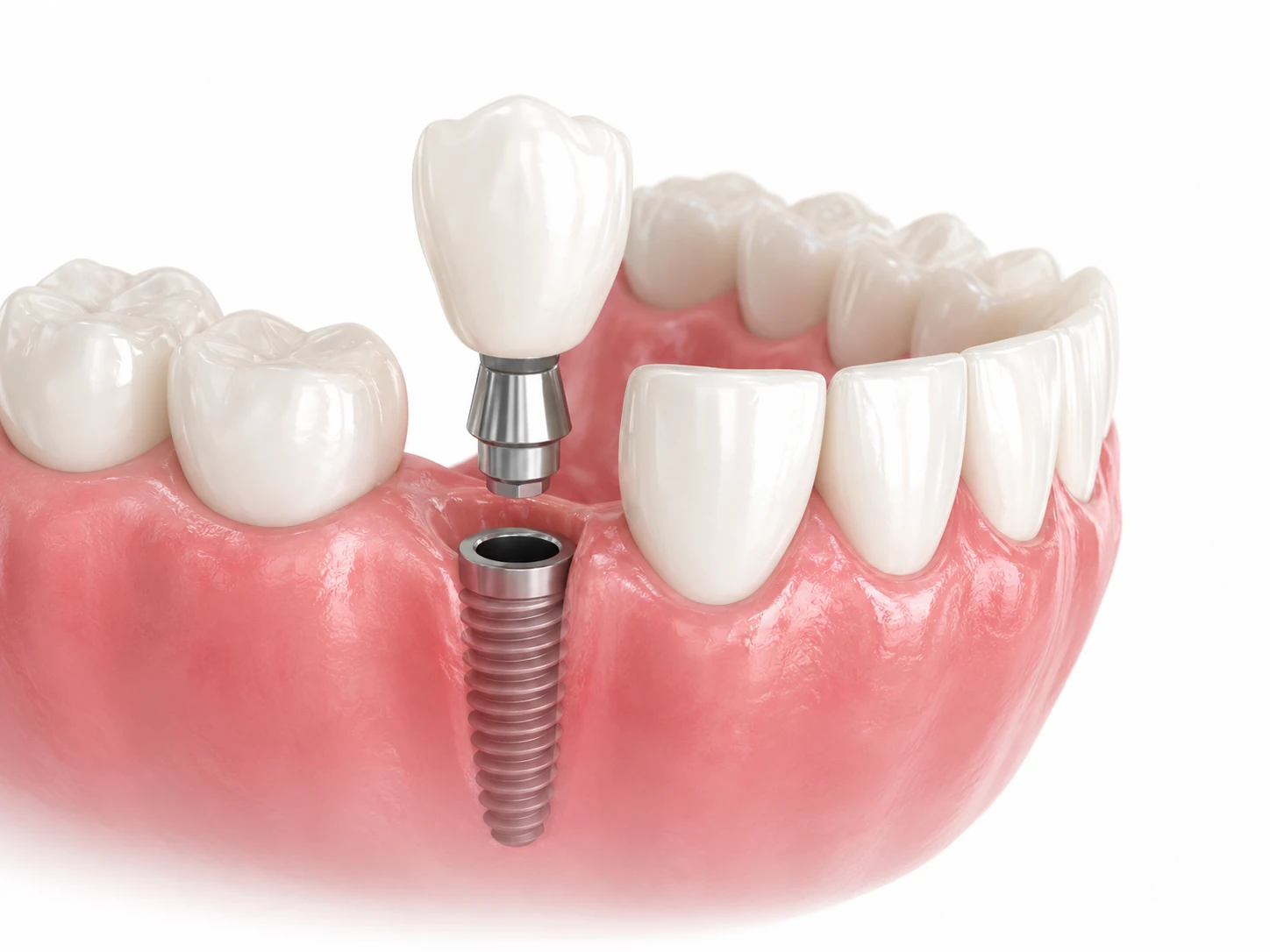
Implant-retained dentures
From £5,000 per arch
Your options for missing teeth
If you are missing a full arch, there are three main routes, and they differ considerably in cost, comfort and how much treatment is involved.
A conventional denture
- No surgery required and the least expensive option
- Rests on the gum, held by suction and sometimes adhesive
- Moves during eating and speaking, particularly in the lower jaw
- Does nothing to prevent jawbone shrinking, so the fit worsens over years
- Removed for cleaning and overnight
- From £400
An implant-retained denture
- Clips onto two to four implants and does not move while worn
- Still removable for cleaning
- Helps preserve jawbone at the implant sites
- Requires implant surgery, but fewer implants than a fixed bridge
- From £5,000 per arch
A fixed full arch bridge
- Permanently secured to four or more implants and never removed by you
- Feels closest to natural teeth, with the best chewing efficiency
- Best preservation of jawbone across the arch
- The most expensive option
- From £11,500 per arch
How to think about it
If cost is the deciding factor, or surgery is not something you want, a well made conventional denture is a sound choice.
If your denture moves and that is the thing that actually bothers you, implant retention solves it for considerably less than a fixed bridge.
If you want teeth that never come out at all, a fixed bridge is worth the difference.
We provide all three, so the recommendation is based on what suits you rather than on what we happen to offer.
Am I a suitable candidate?
Almost everybody missing teeth can wear dentures, which is one of their genuine advantages.
Usually suitable if you
- Are missing several or all of your teeth
- Want a non surgical option
- Are working to a budget that does not extend to implants
- Have medical circumstances that make surgery inadvisable
We will need to assess further if you
- Have remaining teeth that need treating or removing first
- Have significant bone loss, which makes a stable fit harder to achieve, particularly in the lower jaw
- Have a strong gag reflex, which affects upper denture design
- Have limited manual dexterity, which affects handling and cleaning
- Have dry mouth, since saliva contributes to denture retention and certain medications reduce it
If you have worn dentures before and struggled
Worth saying at the consultation rather than hoping the next one works out.
Sometimes the answer is a better made denture. Sometimes it is implant stabilisation. Occasionally the issue is the shape of the ridge rather than the denture itself, in which case expectations need setting accordingly.
We would rather tell you that at the outset than make you another denture that disappoints you in the same way the last one did.
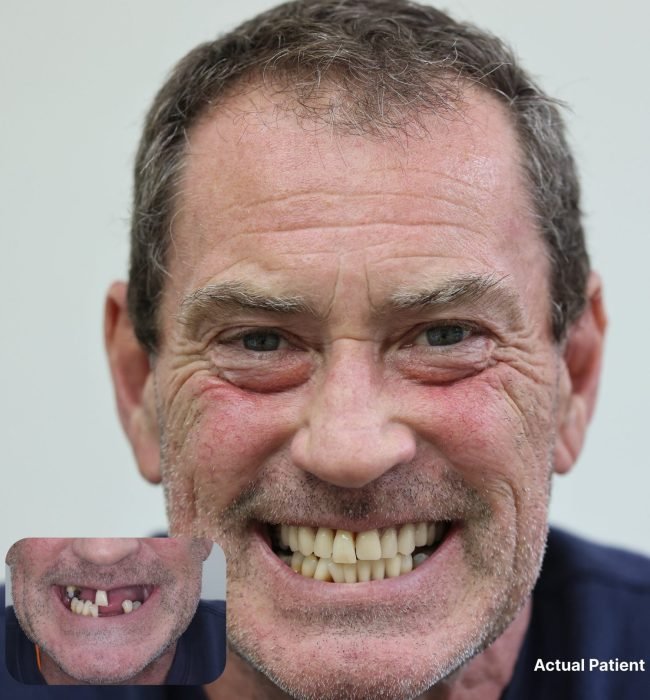
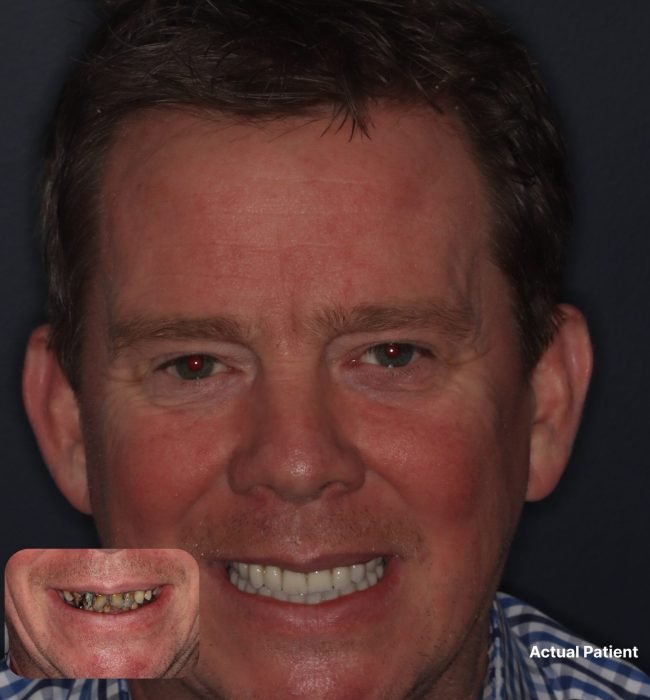
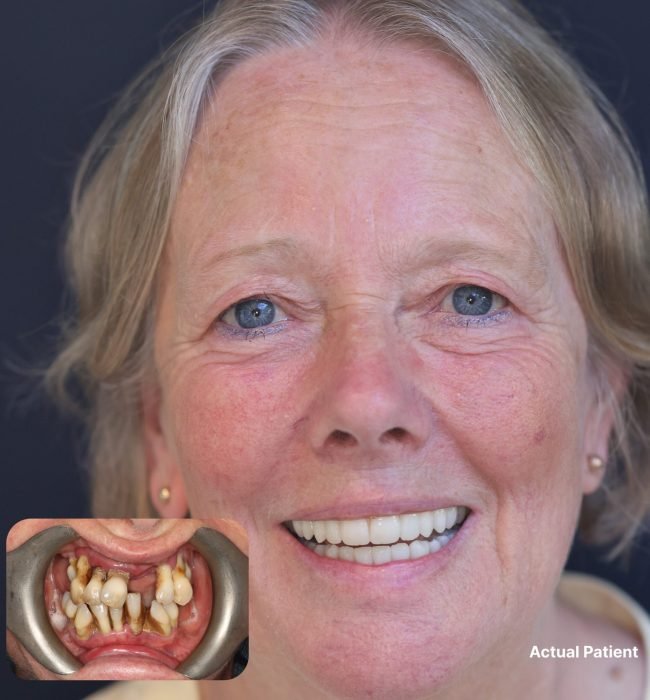
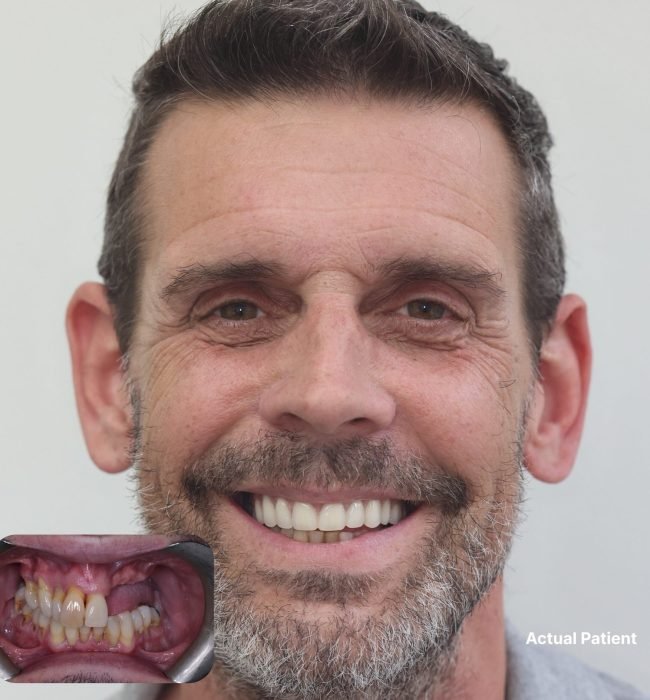
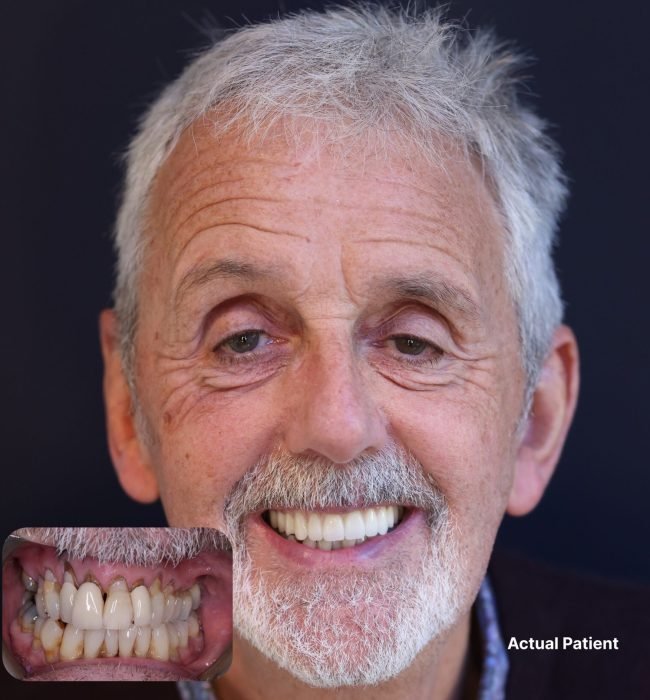
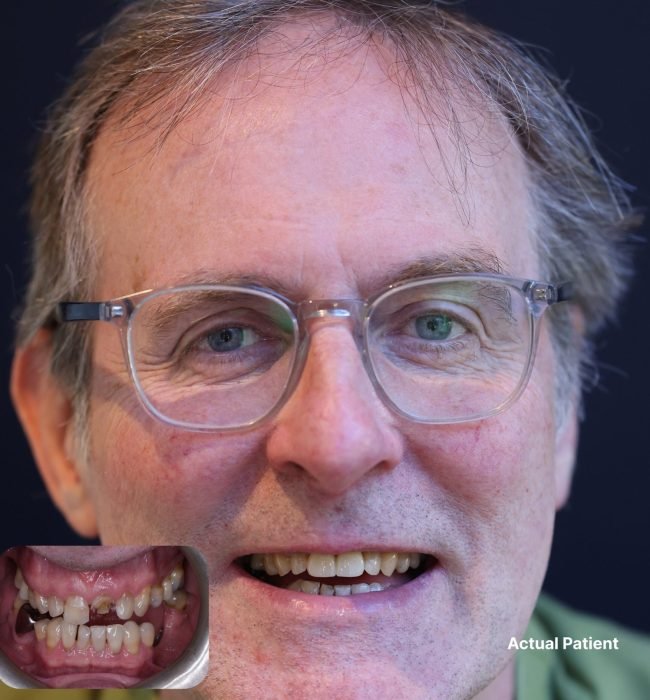
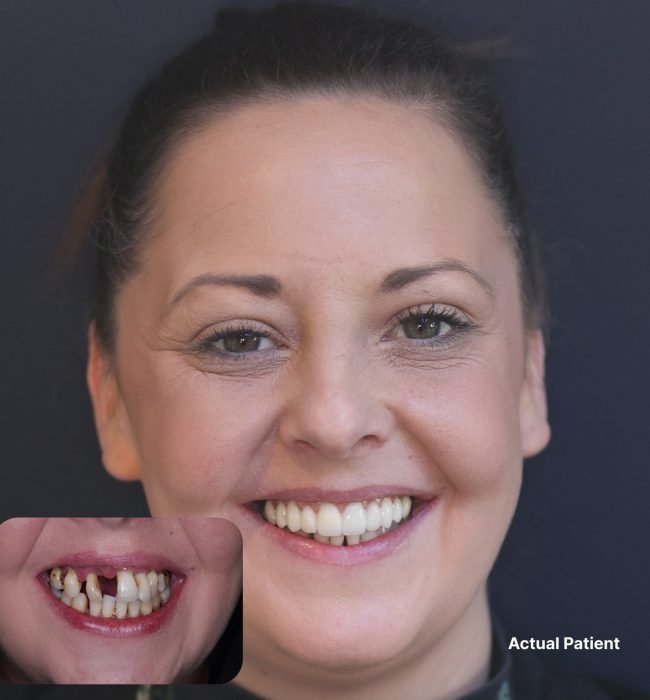
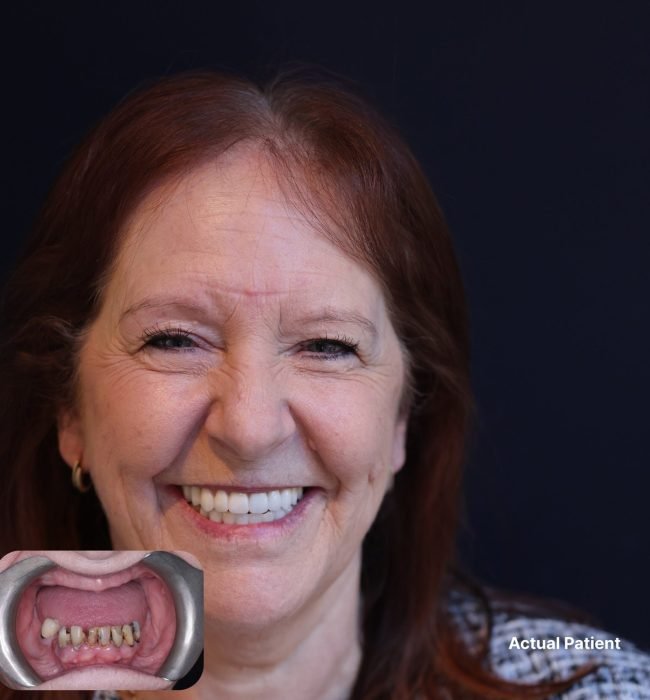
- Real Patient Results
Thousands of Smiles Transformed
Explore real patient results demonstrating the life-changing impact of expert implant dentistry at Croft Dental. From single tooth restorations to comprehensive full-mouth rehabilitations, our tailored treatment plans restore both function and natural aesthetics.
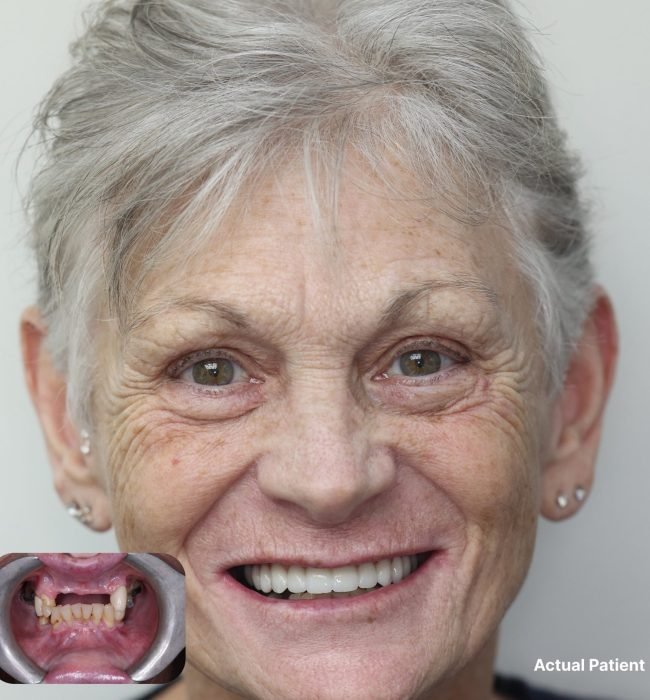
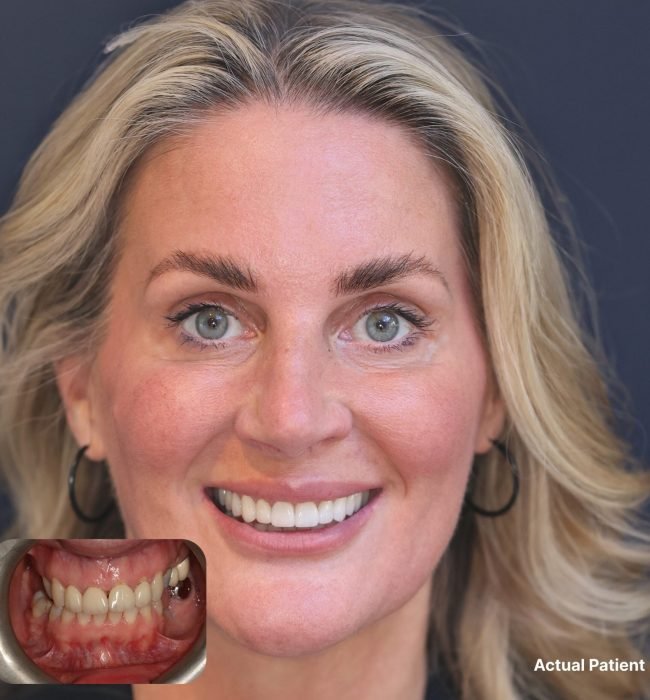
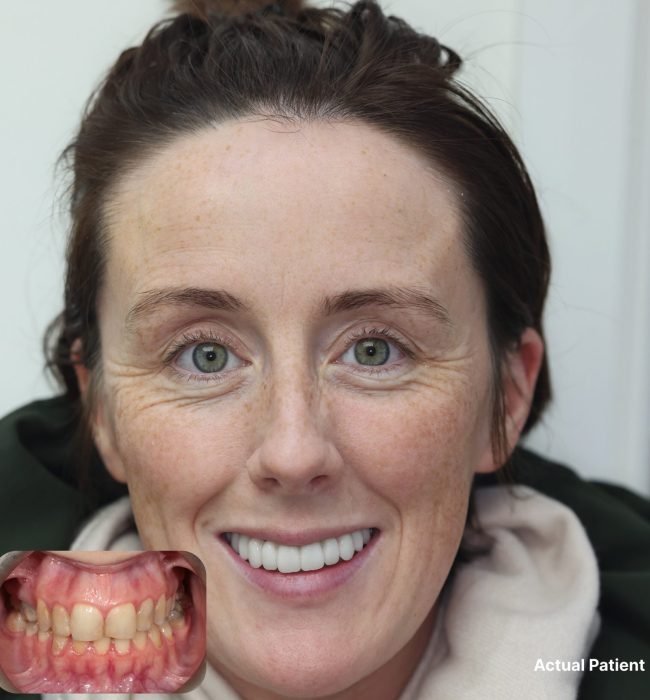
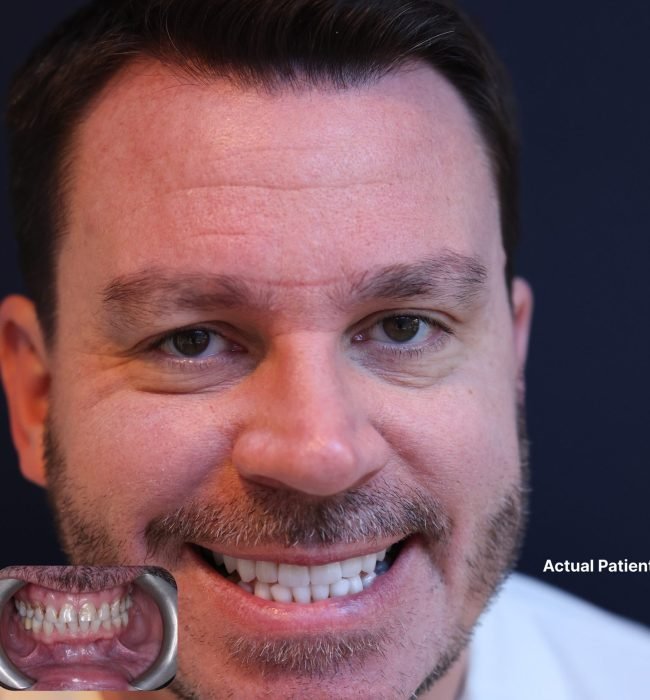
Be our Next Success Story!
All photographs show patients treated at Croft Dental and are published with their consent. Results shown are individual results.
Your treatment journey
-
1Step one: your consultationAn examination of your remaining teeth, gums and the shape of the ridge, and a conversation about what you want the result to look like and to do.
If any remaining teeth need treating or removing, that is planned at this stage. -
2Step two: your written planDenture type, material, number of appointments, timeline and full cost. Nothing proceeds until you have agreed.
-
3Step three: impressionsInitial impressions are taken, followed by more detailed ones in a custom tray made from the first set. Two stages, because accuracy of fit depends on it and a denture made from a rushed impression will never sit properly.
-
4Step four: bite registrationRecording how your jaws meet, which determines where the teeth sit. This is what stops a denture looking or feeling wrong even when it fits perfectly well.
-
5Step five: the try inA wax version with the teeth set in place, so you can see the shape, size, shade and position before the denture is finished.
This is the stage to say what you think. If something looks wrong, now is when it can be changed easily.
Bring a photograph of yourself with your natural teeth if you have one. It genuinely helps, and patients who bring one are consistently happier with the result. -
6Step six: fittingThe finished denture is fitted and adjusted. It will feel bulky at first. That is completely normal and it passes.
-
7Step seven: review and adjustmentAlmost every new denture needs adjusting once you have worn it and eaten with it. Sore spots are expected and easily relieved.
Come back rather than persevering. We would usually see you within a week of fitting and again afterwards as needed, and there is no limit on how many times. -
8Step eight: adjusting to itThe first few weeks: increased saliva, a feeling of bulk, and some difficulty with certain sounds are all normal and settled. Most people adapt within two to four weeks.
Eating: start with soft food cut small, chewing on both sides at once rather than one. Build up gradually. Certain foods remain difficult, particularly very hard or sticky things.
Speech: reading aloud at home for a few days helps considerably. The tongue adapts faster than people expect.
Sore spots: almost universal in the first fortnight and easily adjusted. Do not attempt to adjust a denture yourself.
Wearing at night: generally we advise taking dentures out overnight so the gums can rest, unless advised otherwise. Store them in water or denture solution so they do not dry out and distort.
Cleaning: brush the denture daily with a soft brush and denture cleaner rather than toothpaste, which is abrasive. Clean over a basin of water so it does not break if dropped. Brush your gums, tongue and any remaining teeth as well.
Adhesive: a small amount can help confidence, particularly early on. Needing large amounts to keep a denture in usually means the fit needs attention rather than more adhesive.
Longer term maintenance
Relines. As the bone shrinks beneath, the fit loosens. A reline adds material to the fitting surface to restore it. Typically needed every few years, and sooner after extractions.
Repairs. Dentures crack or break, usually from being dropped. Most repairs are straightforward.
Replacement. Dentures wear. The teeth wear down, the fit deteriorates and the material discolours. Most need replacing after around five to ten years.
Regular check ups. Denture wearers still need examinations. We check the fit, the health of the gums and ridge beneath, and screen the soft tissues for oral cancer.
That last point matters more than people realise. With no teeth to prompt attendance, denture wearers frequently stop coming in altogether, and oral cancer screening is one of the more valuable things a dental examination does.
If your denture starts moving more. It is usually the bone that has changed rather than the denture. A reline may solve it. If movement is a persistent problem, implant stabilisation is worth discussing.
When a denture will not stay put
Lower dentures in particular can be difficult, because there is very little for them to hold onto and the tongue works against them constantly.
If you are using adhesive daily, avoiding foods, or conscious of your denture when you speak, that is not something you simply have to live with.
Implant-retained dentures, from £5,000 per arch
Two or more implants are placed in the jaw and attachments fitted so the denture clips firmly onto them. It stays put while worn and comes out for cleaning as normal.
It requires implant surgery and costs more than a conventional denture, though considerably less than a fixed bridge. For many long term denture wearers it is the single change that makes the most difference.
Fixed implant bridges, from £11,500 per arch
Where you would rather have teeth that never come out at all.
Not everyone needs this. Plenty of people manage very well with a conventional denture, particularly an upper one. If yours is working, there is no reason to change it and we will not suggest otherwise.
Pricing and fees
Treatment | From |
Acrylic denture, partial | £400 |
Acrylic denture, full arch | £450 |
Cobalt chrome denture, per arch | £800 |
Implant-retained denture, per arch | £5,000 |
Full arch fixed bridge, per arch | £11,500 |
Tooth extraction, where required | £220 |
Denture reline | £[X] |
Denture repair | £[X] |
You receive a written quote before anything begins, including whether any remaining teeth need removing first.
Where to find us
Croft Dental sits at 64 Manchester Road, on the Handforth side of Wilmslow town centre. Coming up from The Carrs, we are north east along Manchester Road. If you reach Handforth Dean, you have gone too far.
We are around ten minutes on foot from Wilmslow station, five minutes from Handforth, and roughly ten minutes from Alderley Edge up the A34.
Patients come to us from Alderley Edge, Handforth, Styal, Prestbury, Mottram St Andrew, Knutsford, Macclesfield, Poynton, Bramhall, Cheadle and Hale.
Denture treatment involves four or five appointments across several weeks, and the try in stage in particular is worth not rushing. If you are travelling a distance, say so when you book and we will schedule sensibly around it.
Not sure where to start? Give us a ring.
Make an Enquiry
- DENTIST
Meet your clinician
Dr Natasja Kashyap
BDS · MSc Fixed and Removable Prosthodontics · MFDS RCS Edinburgh · GDC 150054
Dr Natasja’s Master’s degree is specifically in Fixed and Removable Prosthodontics, and that second word is the relevant one here.
Dentures are frequently treated as basic work, made quickly and fitted without much thought about the bite or the appearance. They are not basic work, and the difference between a well made denture and a poor one is considerable. Tooth shape, size, shade and position all need choosing to suit your face and your age. A denture that looks obviously like a denture is a design failure rather than an inevitability.
Where implant stabilisation is appropriate, she works alongside Dr Nikhil Oberai, whose Master’s in Implant Dentistry is from the University of Manchester and whose implant success rate is 99.5%.
Because conventional dentures, implant-retained dentures and fixed full arch treatment are all provided here, the recommendation is based on what suits you rather than on what the practice offers.
- Finance
Spread the cost of dentures with finance
We offer finance on larger treatment plans through Tabeo so the cost can be spread across monthly payments. Interest-free options are available with no arrangement fees or hidden charges.
Applications take a few minutes and you will know the outcome quickly. We will show you exactly what your treatment would cost per month at your consultation.
- REGISTRATION
We're Welcoming New Patients
We warmly welcome new patients to our practice. If it’s been a while since your last visit, if dental visits make you feel anxious, if you’ve recently moved to Wilmslow, or if you’re simply seeking a team that truly listens to your concerns, you’ll find a supportive and gentle environment here with us.
During your first appointment, we take the time to conduct a complete evaluation of your teeth, gums, and overall oral health. We will listen carefully to your goals, answer any questions, and collaboratively create a treatment plan tailored specifically to you.
"I have my smile back thanks to the skill of the team here. All in all, a very happy patient."
★★★★★ - Sarah F. | Croft Dental & Implant Clinic
- FAQs
Frequently asked questions
Denture costs vary according to type and material. At Croft Dental, acrylic partial dentures start from £400, full acrylic dentures from £450 and cobalt chrome dentures from £800 per arch. Implant-retained dentures start from £5,000 per arch. Patients receive a written quote following consultation, and finance is available on larger treatment plans.
Most dentures need replacing after around five to ten years. The teeth wear down, the material discolours, and the fit deteriorates as the jawbone shrinks underneath. Relines, which add material to the fitting surface to restore the fit, are usually needed every few years in between.
Most people adapt within two to four weeks. Increased saliva, a feeling of bulk and some difficulty with certain sounds are normal initially and settle. Sore spots are common in the first fortnight and are easily adjusted by the dentist. Eating takes longer to adapt to and improves with practice.
Lower dentures have considerably less to hold onto than upper ones. An upper denture covers the palate and is held partly by suction, while a lower denture sits on a narrow ridge with the tongue moving against it constantly. Movement of a lower denture is common and can be resolved by securing it onto two or more dental implants.
Dentures are generally best removed at night so the gums can rest and recover, unless a dentist has advised otherwise. They should be stored in water or denture solution to prevent them drying out and distorting. The gums, tongue and any remaining teeth should be brushed while the denture is out.
Chewing efficiency with a full denture is roughly a quarter of that with natural teeth, so some adaptation is needed. Starting with soft food cut into small pieces and chewing on both sides at once helps. Most foods become manageable with practice, though very hard and very sticky foods remain difficult. Implant-retained dentures provide considerably better chewing ability.
Yes. Check ups allow the dentist to assess the fit of the denture, the health of the gums and ridge beneath it, and to screen the soft tissues of the mouth for signs of oral cancer. Denture wearers have no natural teeth to prompt attendance, which makes regular examinations more important rather than less.
Acrylic dentures are made entirely from a plastic base and are the more affordable option. Cobalt chrome dentures use a thin metal framework, which allows the denture to be considerably thinner and stronger while covering less of the palate. Cobalt chrome is generally more comfortable and longer lasting, and costs more accordingly.