
Your Invisalign Journey
Every stage, in order, including the daily routine nobody explains before you commit.
Invisalign treatment at Croft Dental in Wilmslow follows a clear sequence, from the first free consultation and digital scan through to the fitting of retainers at the end. Most cases take between three and eighteen months depending on how much movement is required, with review appointments every six to ten weeks. Aligners are worn 20 to 22 hours a day and changed every one to two weeks. Treatment is provided by Dr Natasja Kashyap, a Platinum Invisalign Provider, and the ClinCheck digital plan at £325 shows the predicted final result before any commitment is made.
So, what are you actually signing up for?
Invisalign is a commitment measured in months rather than appointments, and most of the work happens at home rather than in the chair.
That is unusual for dental treatment, and it is the part people are least prepared for.
How often you change aligners. What the reviews involve. What the first few days after each change actually feel like. What you can and cannot drink. Whether a weekend away will ruin everything. What happens if you simply forget.
Nobody tells you any of that at the consultation, and it is precisely what determines whether treatment goes smoothly or drags on for an extra six months.
So this page sets it all out in order. Every stage, how long it takes, what happens in the chair, and what is expected of you between appointments. No vagueness and no unpleasant discoveries in month three.
If you would rather talk it through than read it, ring the practice on 01625 523 524. Somebody will happily go through it with you.
Your treatment journey
-
1Step one: your free consultationAround 45 minutes · Free of charge
Dr Natasja examines your teeth, gums and bite, and asks what you want to change. This part is a conversation as much as an examination.
She will tell you whether Invisalign is appropriate for your case, roughly which treatment type you would need, an approximate timeline and an approximate cost.
If your case would be better treated with fixed braces or by a specialist orthodontist, she will say so at this appointment rather than three months in.
She will also ask about wear time. Specifically, whether you can realistically keep aligners in for 20 to 22 hours a day. It is a fair question and worth answering honestly, because it determines whether the treatment will work at all. -
2Step two: your digital scan and ClinCheckAround 20 to 30 minutes for the scan · ClinCheck £325
A digital scanner is passed over your teeth, building a three dimensional model on screen as it goes. It takes a few minutes and is considerably more comfortable than the old impression trays.
From that scan, a stage by stage plan is produced showing how each tooth moves across the course of treatment, and how many aligners are needed to get there.
Seeing your predicted result
You are shown a simulation of the intended final position before committing to anything.
This is one of the genuine advantages of Invisalign over fixed braces. You see the endpoint before you start, and if it is not what you were picturing, that conversation happens now rather than at the end. -
3Step three: your written planPrepared after your scan · Free of charge
You receive a written plan setting out:
• The treatment type recommended and the number of aligners
• The estimated treatment time
• The full cost
• Whether refinements are included
• Whether initial retainers are included
• Retainer replacement costs afterwards
• Finance options with monthly figures
Nothing begins until you have read it and agreed. Take the time you need. There is no urgency being manufactured at this end. -
4Step four: any preparatory treatmentApplies to some patients, not all
Aligners are not fitted over untreated problems.
Decay: fillings are completed first, since a tooth changing shape mid treatment affects how the aligners fit.
Gum disease: treated and brought under control before teeth are moved, since moving teeth in unhealthy gums risks bone loss.
Existing restorations: crowns, bridges and implants do not move like natural teeth, and where these are present the plan accounts for it.
Hygiene appointment: usually recommended before starting, so treatment begins from a clean baseline. -
5Step five: fitting your first alignersAround 45 to 60 minutes
Attachments. Small tooth coloured bumps are bonded to some of your teeth, giving the aligners something to grip so pressure is applied in the right direction.
They are not painful to place, no drilling is involved, and they are removed at the end of treatment. They are noticeable close up if somebody is looking for them, though most people are not.
Interproximal reduction, where needed. In some cases a very small amount of enamel is polished between certain teeth to create the space needed for movement. It is measured in fractions of a millimetre, it does not weaken the tooth, and it is not painful. Where it forms part of your plan, it will have been explained beforehand.
Getting your aligners. You are given several sets at once and shown how to insert and remove them. Removing them is the fiddly part at first, and everybody gets the hang of it within a few days. -
6Step six: the treatment phaseThree to eighteen months depending on your case · Appointments every six to ten weeks
This is where the work happens, and most of it happens at home.
The daily routine
Aligners in for 20 to 22 hours a day. Out for eating, out for anything other than water, straight back in afterwards.
Brush your teeth before putting them back in. Food trapped under an aligner sits against the tooth for hours.
Rinse the aligners when they are out and keep them in the case rather than wrapped in a napkin, which is how most aligners end up in a bin.
Changing aligners
Every one to two weeks as instructed. Change them at night, so the first few hours of adjustment happen while you are asleep.
What the first couple of days feel like
Pressure and mild soreness for a day or two after each change. That is the teeth moving and it settles. Ordinary painkillers help if needed.
Some people notice a slight lisp with a new set. It passes as your tongue adjusts.
Drinks
Water only with aligners in. Anything hot can distort the plastic. Anything with sugar or acid gets held against the teeth by the aligner, which causes decay quickly. Coffee and tea stain the aligners themselves.
Review appointments
Every six to ten weeks. Progress is checked against the plan, the fit is assessed, and you collect your next sets. These are short appointments.
If you fall behind
Tell us rather than push on. Aligners that no longer fit properly will not track the teeth, and continuing regardless makes it worse. It is usually straightforward to correct if caught early and considerably less so if left. -
7Step seven: refinementsA few additional weeks · Applies to a good proportion of cases
Once the main series is complete, many cases need a short additional series of aligners to fine tune the result.
This is normal. Teeth do not always move exactly as predicted, and refinements bring the final position in line with the plan. It is not a sign that anything has gone wrong.
A new scan is taken and a short series produced. Your written plan will state whether refinements are included in your fee. -
8Step eight: removing attachments and finishingAround 30 minutes
The attachments are polished off the teeth, which is straightforward and painless. The teeth are polished and the final result reviewed against your starting position.
Where whitening or bonding forms part of a wider plan, it happens after this point, in that order, so the shade and shape are matched to the final tooth position rather than the original one. -
9Step nine: retainersOngoing, indefinitely
This is not the end of the process. It is the point at which the result starts being maintained rather than created.
Teeth drift back towards their previous position after any orthodontic treatment. Normal biology, and it happens to everybody. Retainers are what prevent it.
What you will have
Fixed retainer: a fine wire bonded behind the front teeth, £150 per arch
Removable retainer: clear trays worn at night, from £400 for Vivera retainers
Which combination suits you depends on your case, and many patients have both.
How long you wear them
Indefinitely. Most people reduce to a few nights a week after the first year, but the wearing does not stop entirely.
What it costs
Retainers wear out and need replacing periodically. Fixed retainers occasionally debond and need re-bonding. A modest ongoing cost, and it is the cost of keeping what you have paid for.
If you stop wearing them
Your teeth will move. Not immediately and not dramatically, but steadily. A large proportion of adult orthodontic patients are people who had braces years ago and stopped wearing retainers.
- Real Patient Results
Thousands of Smiles Transformed
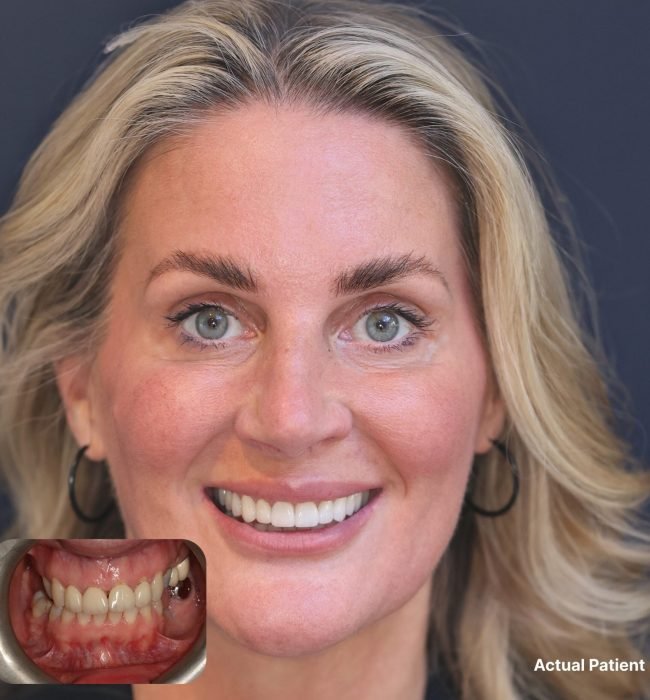
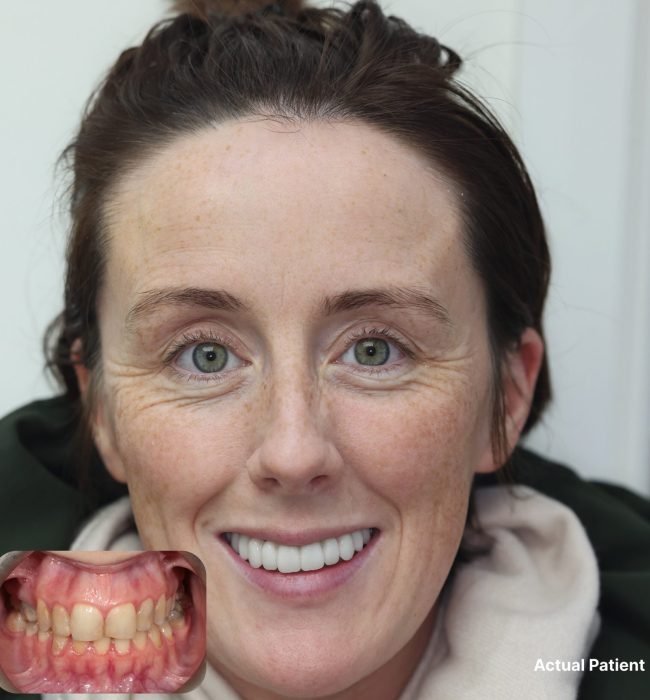
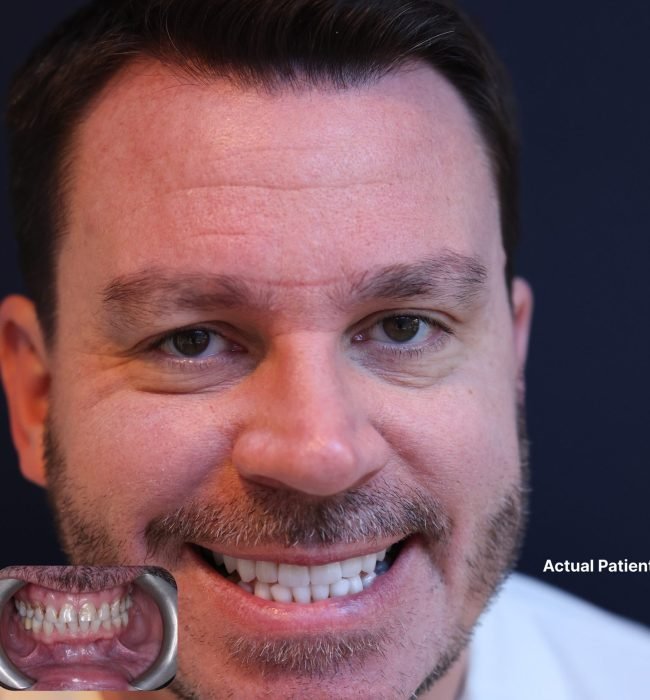
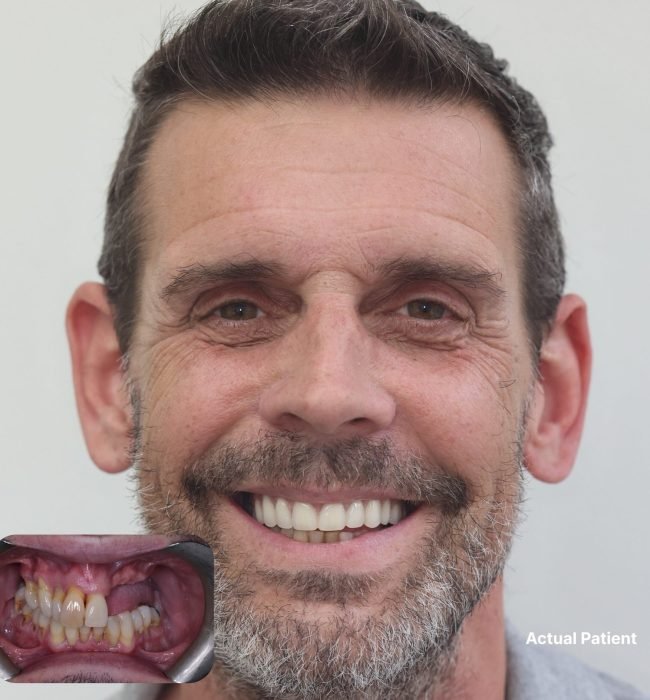
Explore real patient results demonstrating the life-changing impact of expert implant dentistry at Croft Dental. From single tooth restorations to comprehensive full-mouth rehabilitations, our tailored treatment plans restore both function and natural aesthetics.
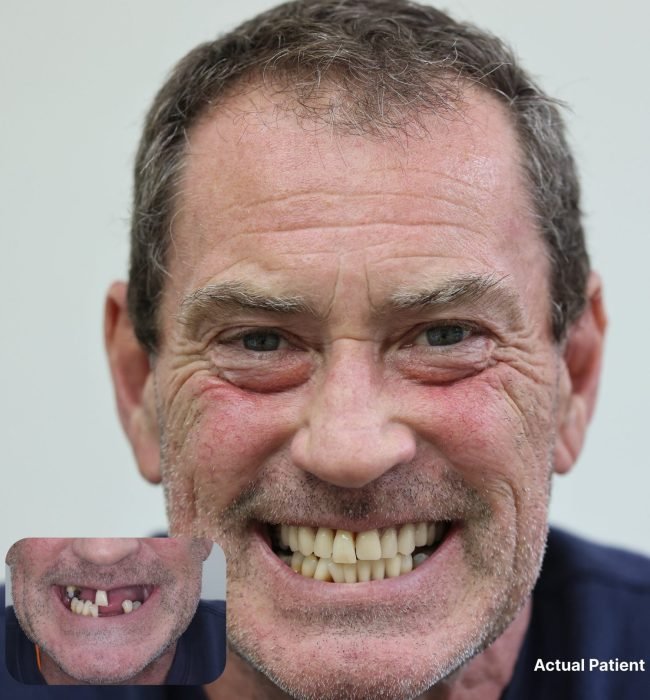
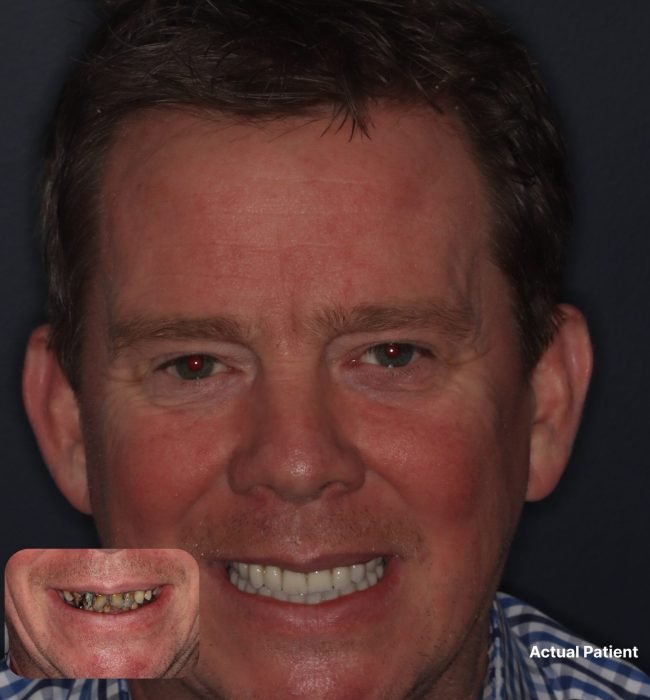
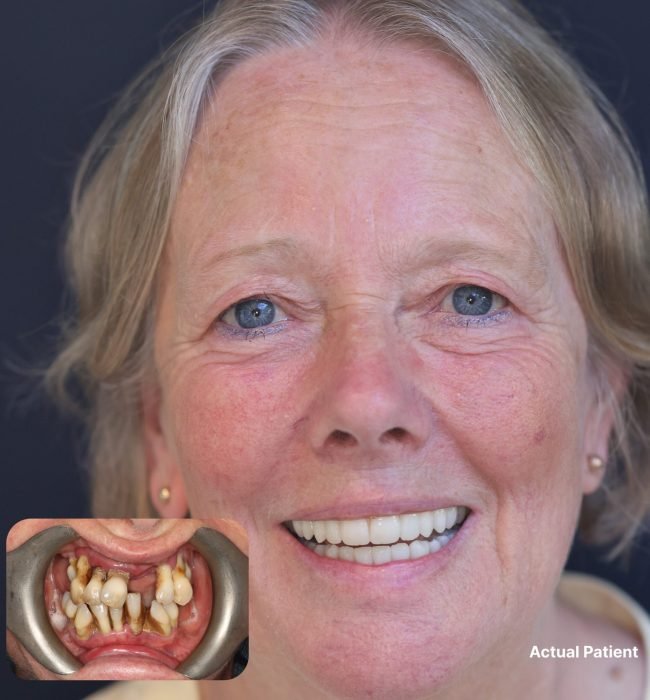
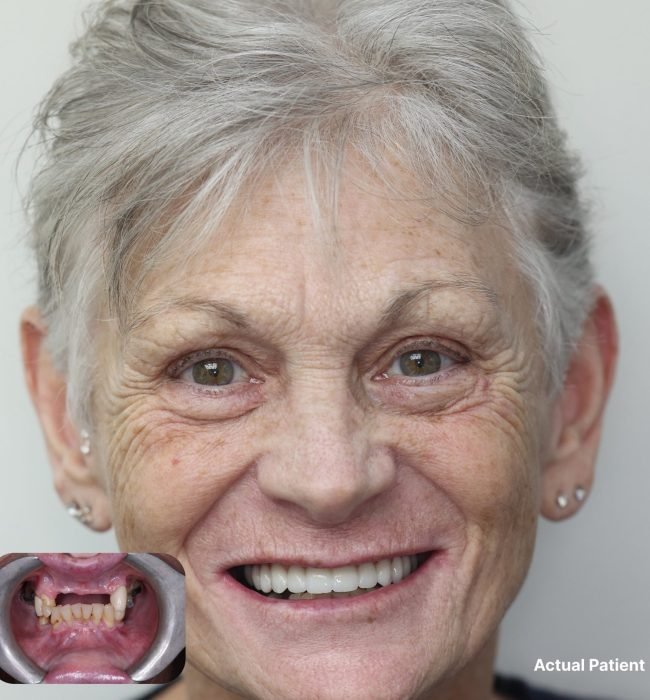
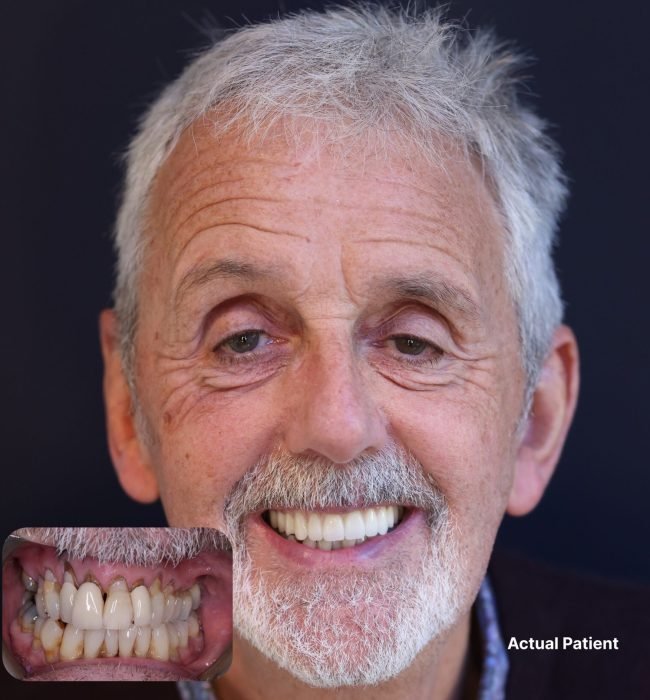
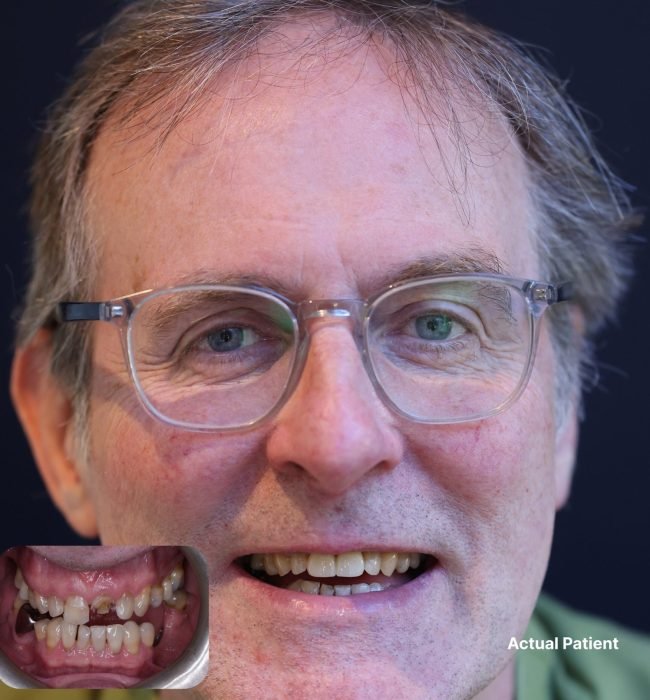
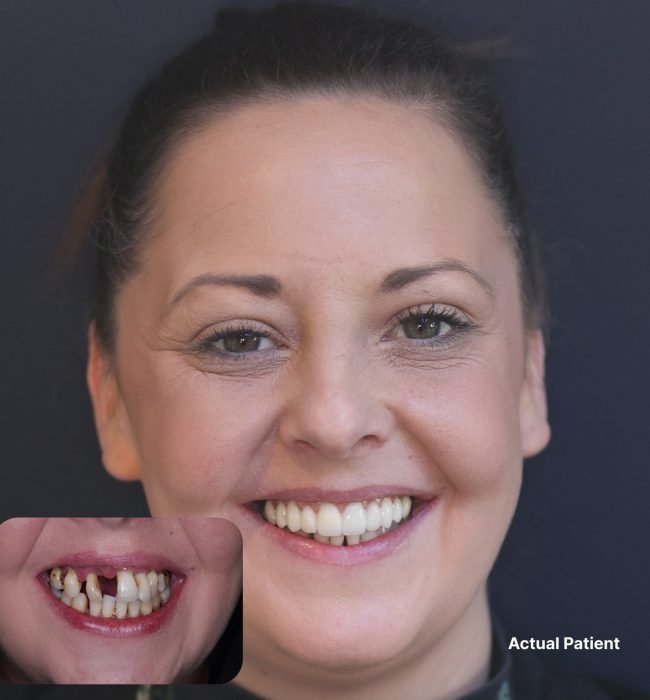
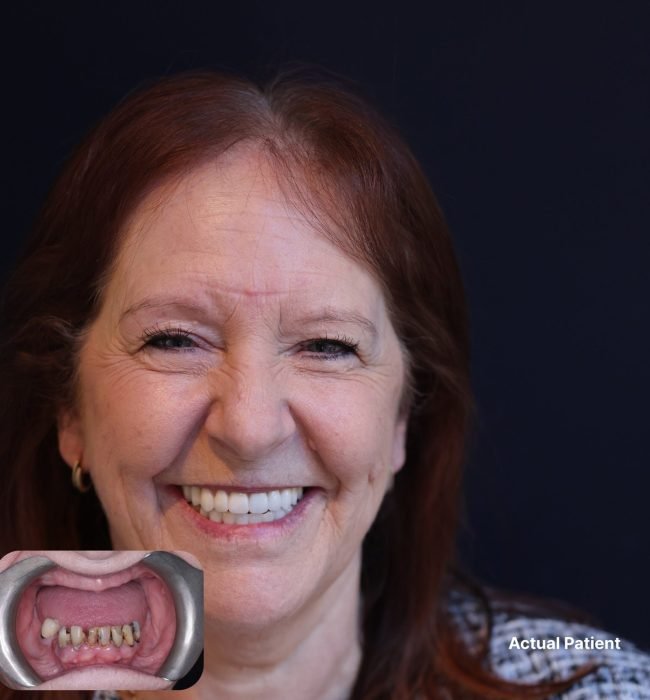
Be our Next Success Story!
All photographs show patients treated at Croft Dental and are published with their consent. Results shown are individual results.
How long treatment takes
Treatment | Typical aligners | Typical treatment time |
Invisalign i7 | 7 | Around 3 months |
Invisalign Lite | 14, both arches | Around 6 months |
Invisalign Full | No practical limit | 12 to 18 months, sometimes longer |
Invisalign Teen | Varies by case | 12 to 18 months typically |
Refinements, where needed | Short additional series | Add a few weeks |
These are typical ranges. Your written plan will give the timeline for your case, and consistent wear is what keeps treatment on schedule.
Pricing and fees
Treatment | From |
Consultation | Free |
Composite bonding, per tooth | £325 |
Composite bonding, four front teeth | £[X] |
Composite bonding, six front teeth | £[X] |
Composite edge bonding, per tooth | £[X] |
Repair or polish of existing bonding | £[X] |
Nightguard, where recommended | £[X] |
Bonding is priced per tooth, so the total depends on how many teeth are treated. Most patients treat either the front four or the front six.
You will receive a written quote before anything begins.
The things patients ask about most
Will people notice?
In most everyday situations, no. The aligners are clear and close fitting. Attachments are visible close up if somebody is looking, though most people are not.
Does it hurt?
Pressure and mild soreness for a day or two after each change, which is the teeth moving. It settles, and it is not what most people would describe as pain.
Will it affect my speech?
Some people notice a slight lisp for the first few days. It passes as the tongue adjusts.
Can I take them out for an evening?
Occasionally, for a specific occasion, without derailing treatment. Regularly, no. Time out of the mouth counts against the daily wear requirement and progress stalls.
What if I lose one?
Call us. Depending on where you are in the sequence we may advise going back to the previous aligner or moving forward to the next. Do not simply leave them out.
What if I go on holiday?
Take enough aligners for the trip and take the case. Tell us before you go and we will make sure you have what you need.
Can I whiten my teeth during treatment?
Whitening is usually done after alignment is complete rather than during, so the final shade is established once the teeth are in their finished position.
Pricing and fees
Treatment | From |
Consultation | Free |
ClinCheck treatment plan | £325 |
Invisalign i7 | £[X] |
Invisalign Lite | £[X] |
Invisalign Full | £[X] |
Invisalign Teen | £[X] |
Vivera retainers, both arches | £400 |
Fixed retainer, per arch | £150 |
Clear braces, per arch | £800 |
Quick Straight Teeth, per arch | £1,500 |
Your written plan at step three sets out every cost before anything begins, including whether refinements and initial retainers are included.
Where to find us
Croft Dental sits at 64 Manchester Road, on the Handforth side of Wilmslow town centre. Coming up from The Carrs, we are north east along Manchester Road. If you reach Handforth Dean, you have gone too far.
We are around ten minutes on foot from Wilmslow station, five minutes from Handforth, and roughly ten minutes from Alderley Edge up the A34.
Patients come to us for Invisalign from Alderley Edge, Handforth, Styal, Prestbury, Mottram St Andrew, Knutsford, Macclesfield, Poynton, Bramhall, Cheadle, Hale and Altrincham.
Because Invisalign runs across months rather than appointments, the practicalities of getting here matter more than they do for a one-off treatment. Review appointments are short, and we will schedule them around your commitments rather than ours.
Not sure where to start? Give us a ring.
Make an Enquiry
- DENTIST
Meet your Invisalign dentist
Dr Natasja Kashyap
BDS · MSc Fixed and Removable Prosthodontics · MFDS RCS Edinburgh · Platinum Invisalign Provider · GDC 150054
Dr Natasja provides Invisalign at Croft Dental as a Platinum Provider, a status awarded on the number of cases completed each year.
That volume matters for a page like this one, because most of what goes wrong in Invisalign treatment goes wrong between appointments rather than in the chair. Recognising early that a case is not tracking, and knowing how to correct it, comes from having seen it happen before.
She treats everything from minor corrections through to comprehensive cases, and will tell you honestly which your case requires. Her Master’s degree in Fixed and Removable Prosthodontics is relevant where alignment is the first stage of a wider cosmetic plan, since the movement is planned around the restorative work that follows.
- Finance
Spread the cost of Invisalign with finance
We offer finance on Invisalign through Tabeo so the cost can be spread across monthly payments. Interest-free options are available with no arrangement fees or hidden charges.
Applications take a few minutes and you will know the outcome quickly. We will show you exactly what your treatment would cost per month at your consultation, and the figures appear in your written plan at step three.
Because treatment runs over months anyway, monthly payments frequently align closely with the treatment period itself.
- REGISTRATION
We're Welcoming New Patients
We warmly welcome new patients to our practice. If it’s been a while since your last visit, if dental visits make you feel anxious, if you’ve recently moved to Wilmslow, or if you’re simply seeking a team that truly listens to your concerns, you’ll find a supportive and gentle environment here with us.
During your first appointment, we take the time to conduct a complete evaluation of your teeth, gums, and overall oral health. We will listen carefully to your goals, answer any questions, and collaboratively create a treatment plan tailored specifically to you.
"I have my smile back thanks to the skill of the team here. All in all, a very happy patient."
★★★★★ - Sarah F. | Croft Dental & Implant Clinic
- FAQs
Frequently asked questions
Aligners are usually changed every one to two weeks, following the schedule set out in the treatment plan. Changing them at night is generally recommended, so the initial period of adjustment happens during sleep. Each aligner moves the teeth a small amount, and the sequence builds to the planned final position.
Review appointments typically take place every six to ten weeks. At each appointment progress is checked against the treatment plan, the fit of the aligners is assessed, and the next sets are issued. These appointments are usually short, since most of the treatment happens between visits.
Attachments are small tooth coloured bumps bonded to certain teeth during Invisalign treatment. They give the aligners something to grip so that pressure is applied in the required direction, allowing movements that would not otherwise be possible. No drilling is involved, and they are polished off at the end of treatment.
Only water. Hot drinks can distort the plastic, and sugary or acidic drinks are held against the teeth by the aligner, which significantly increases the risk of decay. Coffee, tea and red wine also stain the aligners. Aligners should be removed for anything other than water and the teeth brushed before they are replaced.
Refinements are a short additional series of aligners provided at the end of treatment to fine tune the final position. They are common and are not an indication that anything has gone wrong, since teeth do not always move exactly as predicted. A new scan is taken and a short series produced.
Aligners need to be worn 20 to 22 hours a day. Insufficient wear means the teeth do not track as planned, the aligners stop fitting correctly, and treatment stalls or extends. Patients who fall behind should contact their dentist rather than continue, since the issue is usually straightforward to correct if identified early.
Interproximal reduction is the polishing of a very small amount of enamel between certain teeth to create the space needed for movement. It is measured in fractions of a millimetre, does not weaken the tooth and is not painful. It is not required in every case, and where it forms part of the plan it is explained before treatment begins.
Yes. Patients take enough aligners for the trip along with the case, and should inform the practice beforehand so the correct sets can be provided. Aligners must continue to be worn 20 to 22 hours a day while away, since time out of the mouth counts against the daily wear requirement regardless of location.