
Invisalign Teen in Wilmslow
Clear aligners designed for teenagers, with built-in wear indicators so you can see whether they are actually being worn.
Invisalign Teen is a version of clear aligner treatment designed for younger patients, with features accounting for teeth still erupting and for the realities of teenage life. Aligners include blue wear indicators that fade with use, so parents and clinicians can see whether they are being worn as instructed, and replacement aligners are included in case any are lost. At Croft Dental on Manchester Road in Wilmslow, treatment is provided by Dr Natasja Kashyap, a Platinum Invisalign Provider. Aligners must be worn 20 to 22 hours a day, and retainers are required afterwards. Suitability and treatment approach are assessed at a consultation attended by a parent or guardian.
So, will your teenager actually wear them?
This is the question parents ask, and it deserves a proper answer rather than reassurance.
Some teenagers wear them faithfully and treatment runs exactly to plan. Some do not, and treatment stalls. Any practice telling you otherwise is selling rather than advising.
The single biggest factor is whether your child wants the treatment or whether it is being arranged for them.
A teenager who has asked for it will generally wear the aligners. One who is being sent along frequently will not, and no amount of parental supervision fully solves that. It is not a discipline problem. It is simply that an appliance you can take out gets taken out.
What helps
- The wear indicators. Small blue dots on each aligner that fade gradually with use. If they are still blue at a review appointment, the aligners have not been worn enough. It removes the guesswork, and more usefully, it removes the argument at home.
- Regular review appointments, where progress is measured objectively against the plan rather than by report.
- Your child being part of the conversation at the consultation rather than sitting through it.
What we will tell you honestly
At the consultation, Dr Natasja will talk to your child as well as to you. If it becomes clear they are not engaged with the idea, she will say so, and fixed braces may be the more sensible route.
Fixed braces work regardless of enthusiasm, which for some teenagers is the deciding advantage rather than a drawback. Clear braces are available from £800 per arch.
That conversation is considerably better had at the start than nine months into a treatment that is not progressing.
What makes Invisalign Teen different
Invisalign Teen uses the same clear aligner system as adult Invisalign, with several features added for younger patients.
- Eruption tabs: space built into the aligners where adult teeth have not fully come through yet, so the aligner accommodates them as they erupt rather than blocking them.
- Wear indicators: small blue dots that fade gradually with wear, making compliance visible rather than a matter of trust.
- Replacement aligners included: a set number are provided as standard, because teenagers lose things. Without this, a lost aligner means a delay and a charge. With it, a replacement is issued and treatment continues.
Otherwise it is the same treatment. Same aligners, same technique, same requirement to wear them 20 to 22 hours a day.
What Invisalign Teen can correct
- Crowding: where there is not enough room in the arch and teeth overlap or sit rotated.
- Spacing and gaps: closing spaces between teeth.
- Overbite: where the upper front teeth sit too far over the lower ones.
- Underbite: milder cases respond well. More severe skeletal underbites usually need a different approach.
- Crossbite: where the upper and lower teeth do not meet correctly across the arch.
- Open bite: where the front teeth do not meet when the back teeth are together.
Where Invisalign is not the right answer for a teenager
- Cases requiring significant skeletal correction, which may need growth modification appliances or, in some cases, orthognathic surgery later
- Cases where compliance is genuinely unlikely, where fixed braces are more reliable
- Some complex movements better handled with fixed appliances
- Younger children whose adult teeth have not sufficiently erupted, who may need to wait or need interceptive treatment first
Where any of these apply, Dr Natasja will explain what would be more appropriate. In some cases that means referral to a specialist orthodontist, and she will arrange that rather than take on a case better treated elsewhere.
Is my child a suitable candidate?
Usually suitable if your child
- Has most or all of their adult teeth, or teeth erupting into positions that can be accommodated
- Has mild to moderate crowding, spacing or bite issues
- Has healthy teeth and gums, or issues that can be treated first
- Understands the treatment and wants it
- Will wear the aligners 20 to 22 hours a day
- Will wear retainers afterwards
We will need to assess further if your child
- Has active decay or gum disease, which must be treated first
- Has a significant skeletal discrepancy, which may need a different approach or specialist referral
- Plays contact sports, since a mouthguard needs fitting around treatment
- Is not engaged with the idea of treatment
- Has adult teeth still substantially unerupted
On oral hygiene
Aligners are removed for eating and cleaning, which is a genuine advantage over fixed braces for oral hygiene. Fixed braces trap food and make brushing considerably harder, and decalcification marks after brace removal are a well recognised consequence.
That advantage only works if the teeth are actually brushed before the aligners go back in.
Sugary drinks consumed with aligners are particularly damaging, since the liquid is held against the teeth rather than washed away. We will go through this properly with your child at the fitting appointment, and it is worth reinforcing at home.
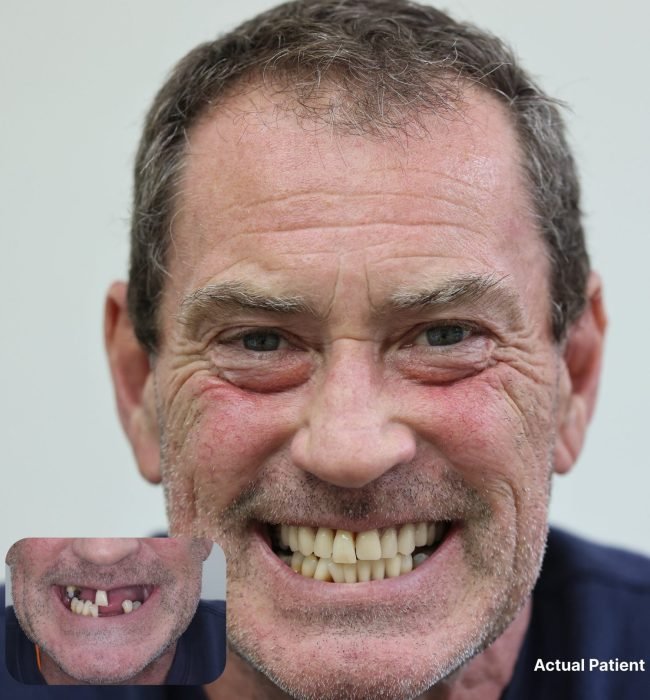
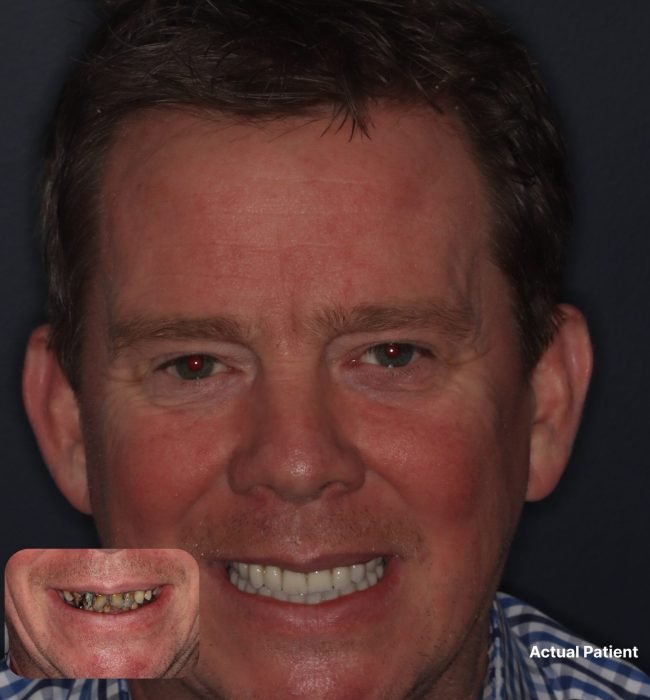
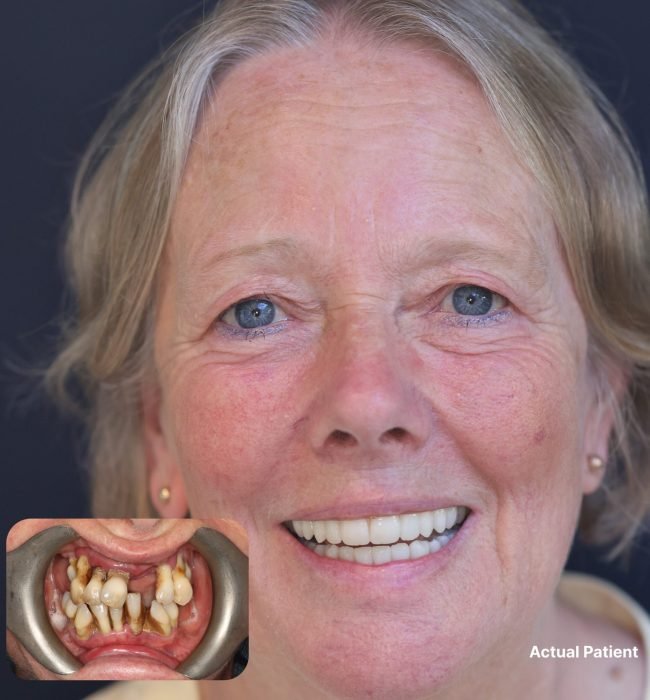
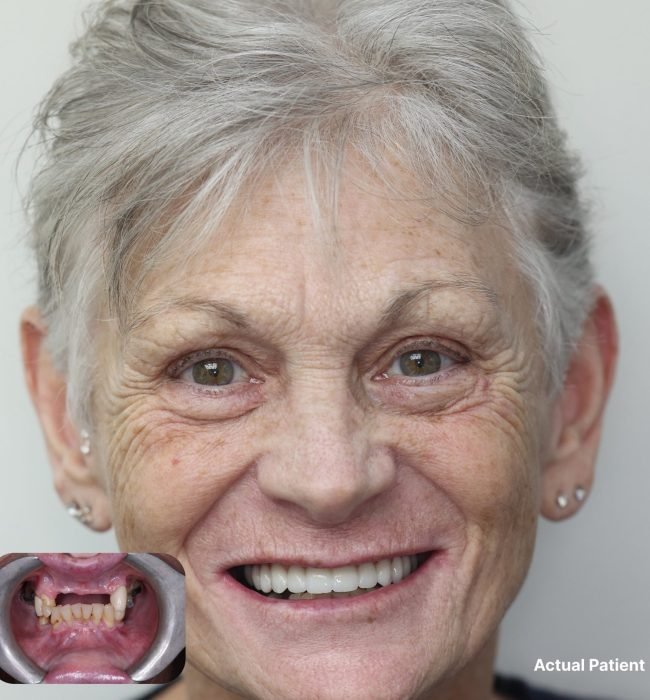
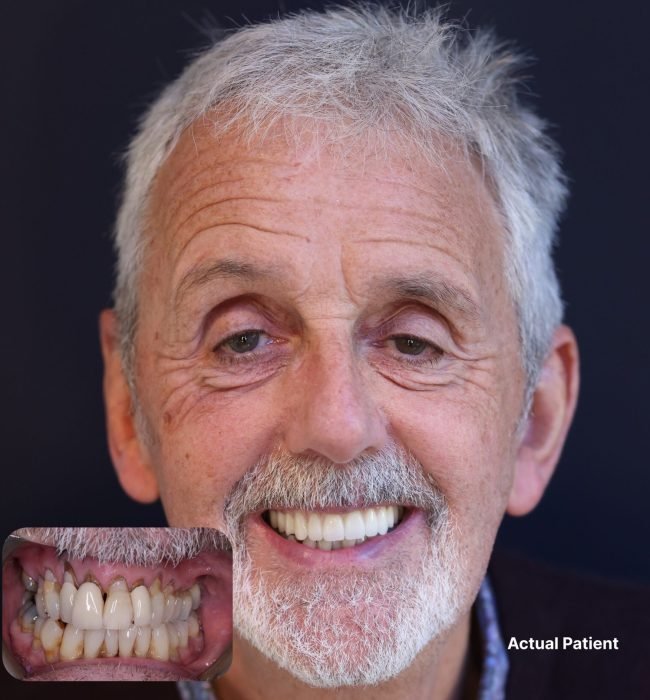
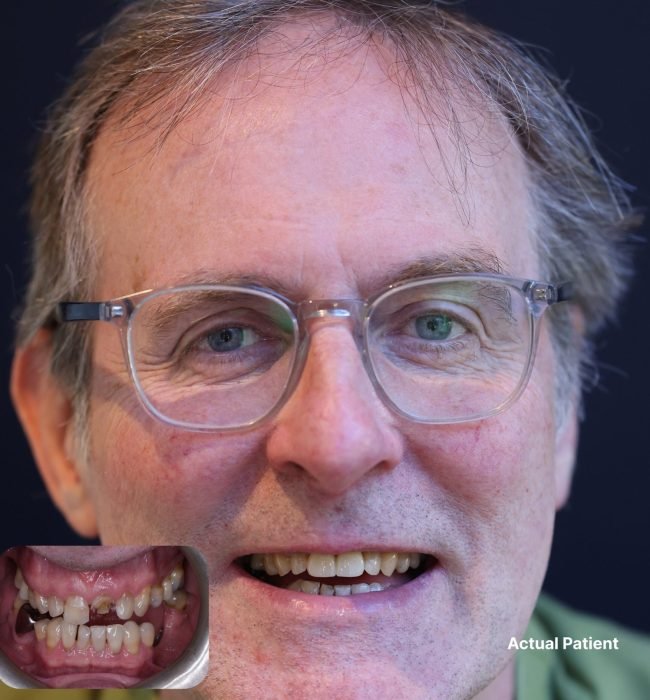
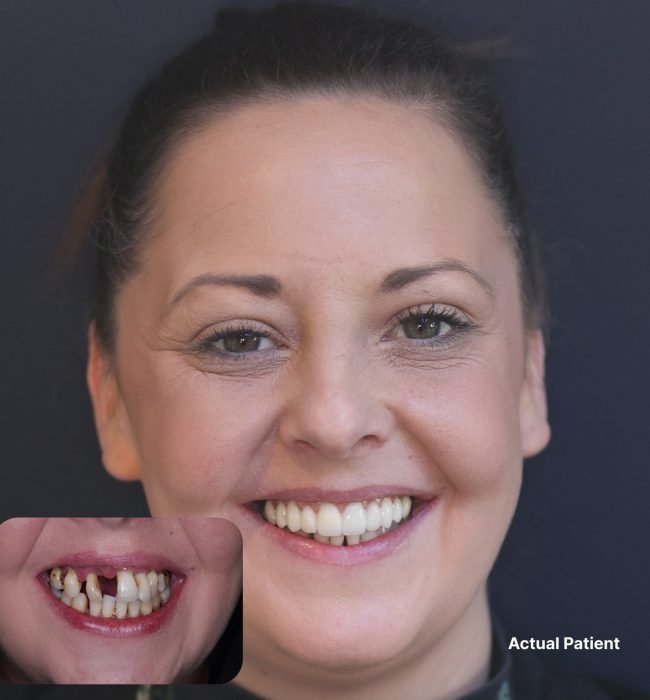
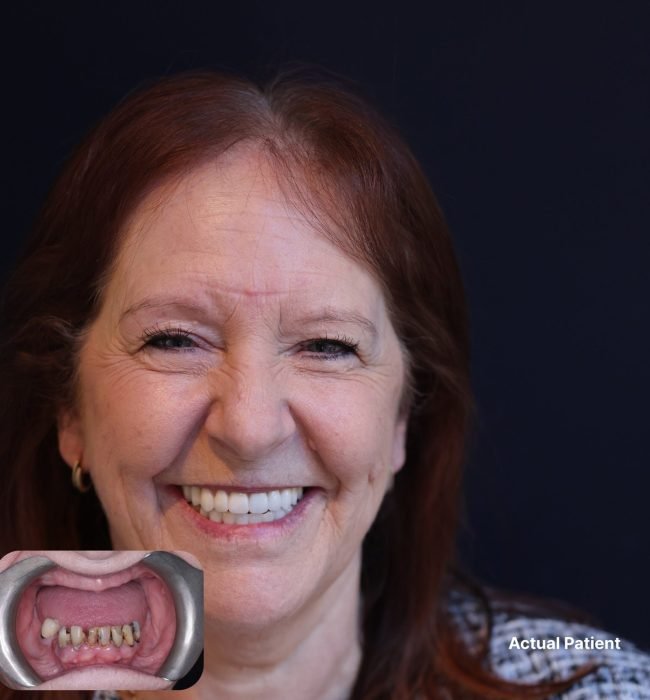
- Real Patient Results
Thousands of Smiles Transformed
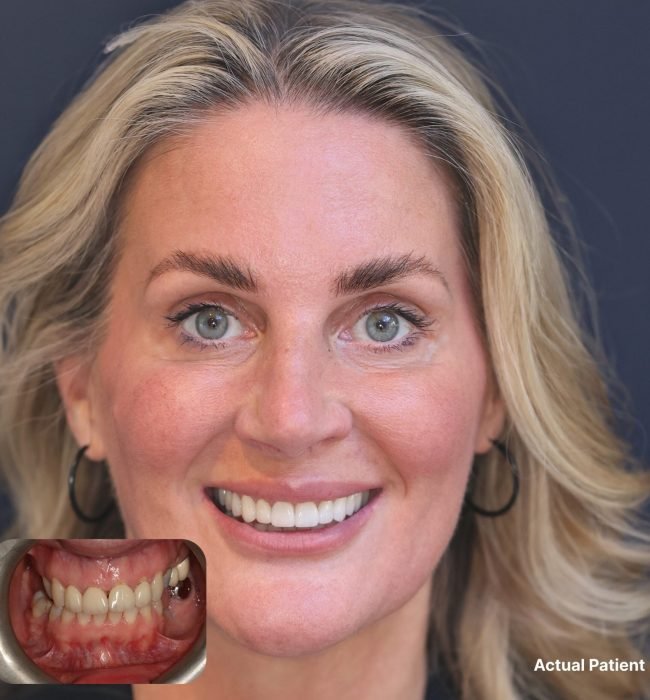
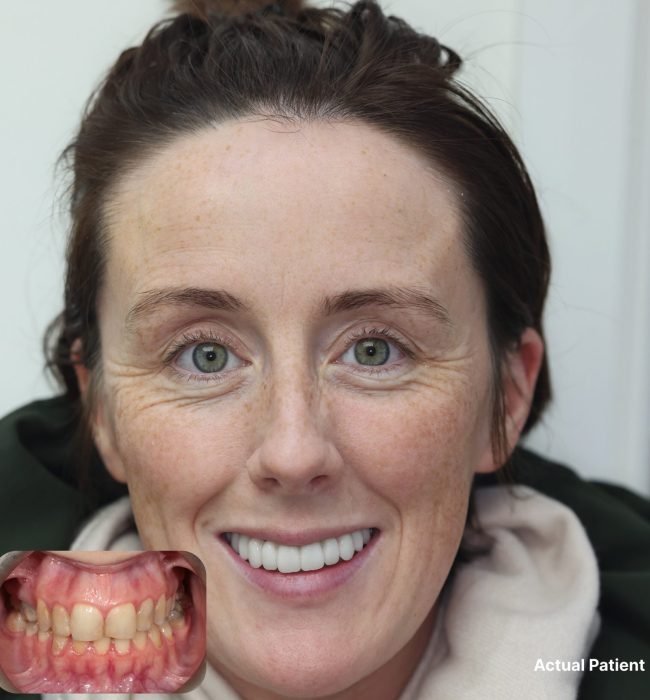
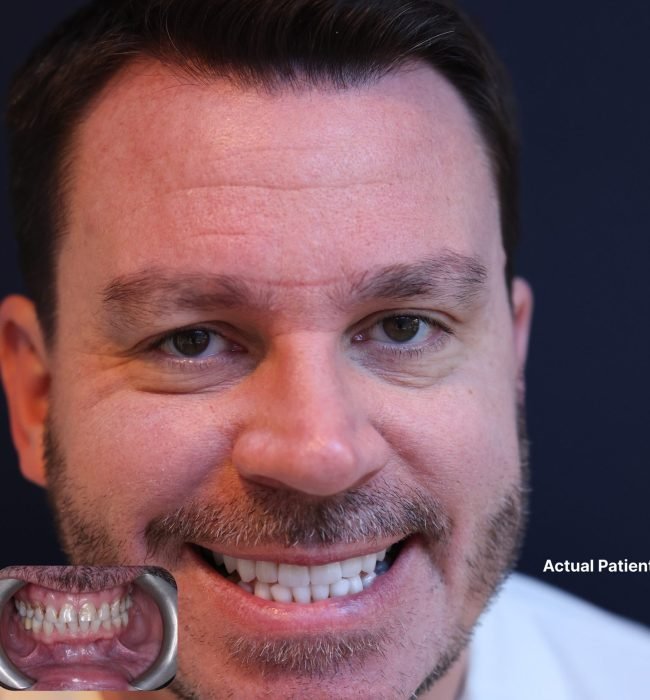
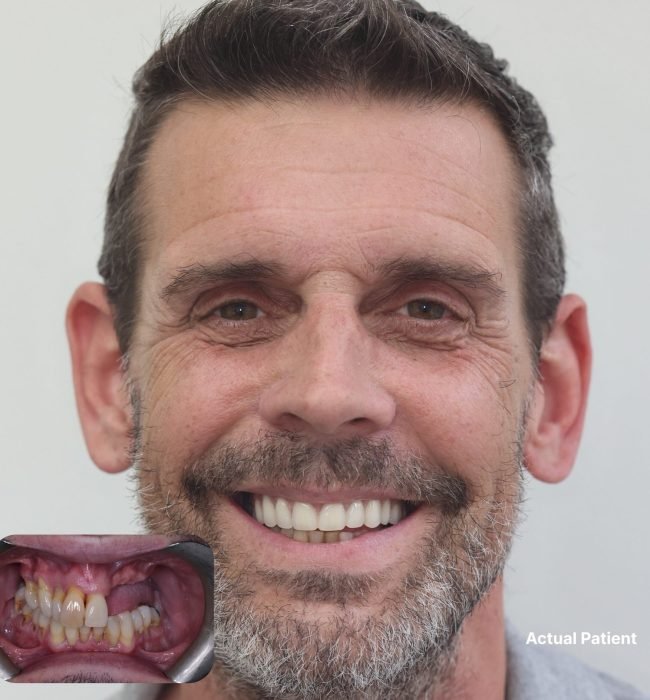
Explore real patient results demonstrating the life-changing impact of expert implant dentistry at Croft Dental. From single tooth restorations to comprehensive full-mouth rehabilitations, our tailored treatment plans restore both function and natural aesthetics.
Be our Next Success Story!
All photographs show patients treated at Croft Dental and are published with their consent. Results shown are individual results.
Your treatment journey
-
1Step one: your consultationAround 45 minutes, and we ask that a parent or guardian attends. Dr Natasja examines your child's teeth, gums and bite, and talks to both of you about what treatment would involve.
She will also talk directly to your child. Their view on whether they want the treatment matters, and it affects what she recommends. -
2Step two: digital scan and ClinCheckA digital scan is taken, quick and considerably more comfortable than putty impressions. From it, a stage by stage plan is produced showing how the teeth will move.
-
3Step three: seeing the predicted resultThe simulation shows the intended final position before any commitment is made.
Teenagers tend to engage with this considerably more than with a verbal explanation, and in practice it often makes the difference to whether they buy into the treatment at all. -
4Step four: your written planTreatment type, number of aligners, estimated timeline, total cost, retainer costs, how many replacement aligners are included, and finance options. Nothing proceeds until you have agreed.
-
5Step five: any preparatory treatmentDecay and gum disease are treated first. Aligners are not fitted over untreated problems.
-
6Step six: fitting the first alignersSmall tooth coloured attachments are usually bonded to some teeth so the aligners can apply pressure correctly.
Your child is shown how to insert and remove them, how to clean them, and what to do if one is lost. -
7Step seven: the treatment phaseAligners changed every one to two weeks. Review appointments every six to ten weeks, where wear indicators are checked and progress measured against the plan.
-
8Step eight: refinementsMany cases need a short additional series at the end to fine tune the result. This is normal rather than a sign anything has gone wrong.
-
9Step nine: retainersFitted at the end and worn long term.
Retention after treatment
Teeth drift back after orthodontic treatment. This is normal biology, and retainers are how the result is kept.
Why this matters particularly for teenagers
A result achieved at sixteen needs to hold for decades.
A meaningful proportion of adult orthodontic patients are people whose teeth were straightened as teenagers and who stopped wearing retainers in their twenties. If your child’s teeth are being straightened now, retention is what determines whether they are still straight at thirty.
What is involved
- Fixed retainer: a fine wire bonded behind the front teeth, £150 per arch
- Removable retainer: clear trays worn at night, from £400 for Vivera retainers
For how long
Long term. Most people reduce to a few nights a week after the first year, but it does not stop entirely.
Ongoing cost
Retainers wear out and need replacing periodically, and fixed retainers occasionally debond. Worth building into your expectations rather than discovering later.
Pricing and fees
Treatment | From |
Consultation | Free |
ClinCheck treatment plan | £325 |
Invisalign Teen | £[X] |
Vivera retainers, both arches | £400 |
Fixed retainer, per arch | £150 |
Clear braces, per arch, as an alternative | £800 |
Sports mouthguard, single colour | £80 |
Sports mouthguard, multi colour | £100 |
Invisalign Teen is priced according to the complexity of the case and the number of aligners required. Your exact quote is given at the ClinCheck, alongside the simulation.
What your quote includes
Your written plan will state clearly whether refinements and initial retainers are covered, and how many replacement aligners are provided.
Finance agreements are entered into by the parent or guardian, not the patient.
Where to find us
Croft Dental sits at 64 Manchester Road, on the Handforth side of Wilmslow town centre. Coming up from The Carrs, we are north east along Manchester Road. If you reach Handforth Dean, you have gone too far.
We are around ten minutes on foot from Wilmslow station, five minutes from Handforth, and roughly ten minutes from Alderley Edge up the A34.
Families come to us from Alderley Edge, Handforth, Styal, Prestbury, Mottram St Andrew, Knutsford, Macclesfield, Poynton, Bramhall, Cheadle, Hale and Altrincham.
Review appointments are short and occur every six to ten weeks. We will do our best to schedule them around school hours where possible, and it is worth mentioning at the outset which days suit you.
Not sure where to start? Give us a ring.
Make an Enquiry
- DENTIST
Meet your Invisalign dentist
Dr Natasja Kashyap
BDS · MSc Fixed and Removable Prosthodontics · MFDS RCS Edinburgh · Platinum Invisalign Provider · GDC 150054
Dr Natasja provides Invisalign at Croft Dental as a Platinum Provider, treating both adults and teenagers.
Her role in teenage cases is as much assessment as treatment. Judging whether aligner treatment suits a particular child, and being willing to say when it does not, is what prevents a family committing eighteen months and a considerable sum to a treatment that was never going to progress.
Where a case would be better handled by a specialist orthodontist, she arranges the referral rather than taking it on.
- Finance
Spread the cost of Invisalign Teen with finance
We offer finance on Invisalign through Tabeo so the cost can be spread across monthly payments. Interest-free options are available with no arrangement fees or hidden charges.
Applications take a few minutes and you will know the outcome quickly. We will show you exactly what your treatment would cost per month at your consultation.
- REGISTRATION
We're Welcoming New Patients
We warmly welcome new patients to our practice. If it’s been a while since your last visit, if dental visits make you feel anxious, if you’ve recently moved to Wilmslow, or if you’re simply seeking a team that truly listens to your concerns, you’ll find a supportive and gentle environment here with us.
During your first appointment, we take the time to conduct a complete evaluation of your teeth, gums, and overall oral health. We will listen carefully to your goals, answer any questions, and collaboratively create a treatment plan tailored specifically to you.
"I have my smile back thanks to the skill of the team here. All in all, a very happy patient."
★★★★★ - Sarah F. | Croft Dental & Implant Clinic
- FAQs
Frequently asked questions
Invisalign Teen is a version of clear aligner treatment designed for younger patients. It includes eruption tabs that accommodate adult teeth still coming through, blue wear indicators that fade with use so compliance can be monitored, and a number of replacement aligners in case any are lost. The treatment otherwise works in the same way as adult Invisalign.
Invisalign Teen aligners include small blue wear indicators that fade gradually with use. If the indicators remain blue at a review appointment, the aligners have not been worn for the required 20 to 22 hours a day. Progress is also measured objectively at each review appointment against the treatment plan.
Both are effective, and the right choice depends on the case and the individual. Invisalign is removable, considerably more discreet and allows easier tooth cleaning, but it relies on the patient wearing the aligners consistently. Fixed braces work continuously without relying on compliance, which makes them more reliable for teenagers unlikely to wear removable aligners as instructed.
Invisalign Teen is generally suitable once most adult teeth have erupted, typically from around twelve to fourteen, though this varies considerably between individuals. Eruption tabs allow the treatment to accommodate teeth still coming through. Suitability is determined by dental development rather than by age alone.
Invisalign Teen includes a number of replacement aligners as standard, so a lost aligner can usually be replaced without additional cost or significant delay. Patients are advised to keep the previous aligner rather than discard it, so it can be worn temporarily if the current one is lost.
Yes, long term. Teeth drift back towards their previous position after orthodontic treatment, and retainers are what prevent this. Retention usually involves a fixed wire bonded behind the front teeth at £150 per arch, removable retainers worn at night from £400, or both. Many adults seeking orthodontic treatment are people whose teeth were straightened as teenagers and who stopped wearing retainers.
Yes. Aligners are removed for contact sports and a mouthguard is worn instead, available from £80. This should be discussed at the consultation so a mouthguard can be fitted appropriately around treatment. Time with aligners out counts against the daily wear requirement, so it needs factoring into the routine.
Treatment time depends on how much movement is required, and typically runs from twelve to eighteen months for comprehensive cases. Simpler cases finish sooner. Wearing the aligners for the required 20 to 22 hours a day is the main factor determining whether treatment stays on schedule.