
Dental Check-Ups in Wilmslow
Twenty minutes, twice a year, on Manchester Road. It is the appointment that stops small problems becoming expensive ones.
A dental check up is a full examination of the teeth, gums, bite and soft tissues, including routine screening for oral cancer. X-rays are taken where there is a clinical reason rather than at every visit. At Croft Dental on Manchester Road in Wilmslow, a new patient examination is £85 including x-rays, currently available at £40, with routine examinations at £55 and children's examinations at £30. Most patients are seen every six months, though the appropriate interval depends on individual risk. The practice has carried out routine examinations at the same address since 1974 and is currently accepting new patients.
So, is a check up really worth bothering with?
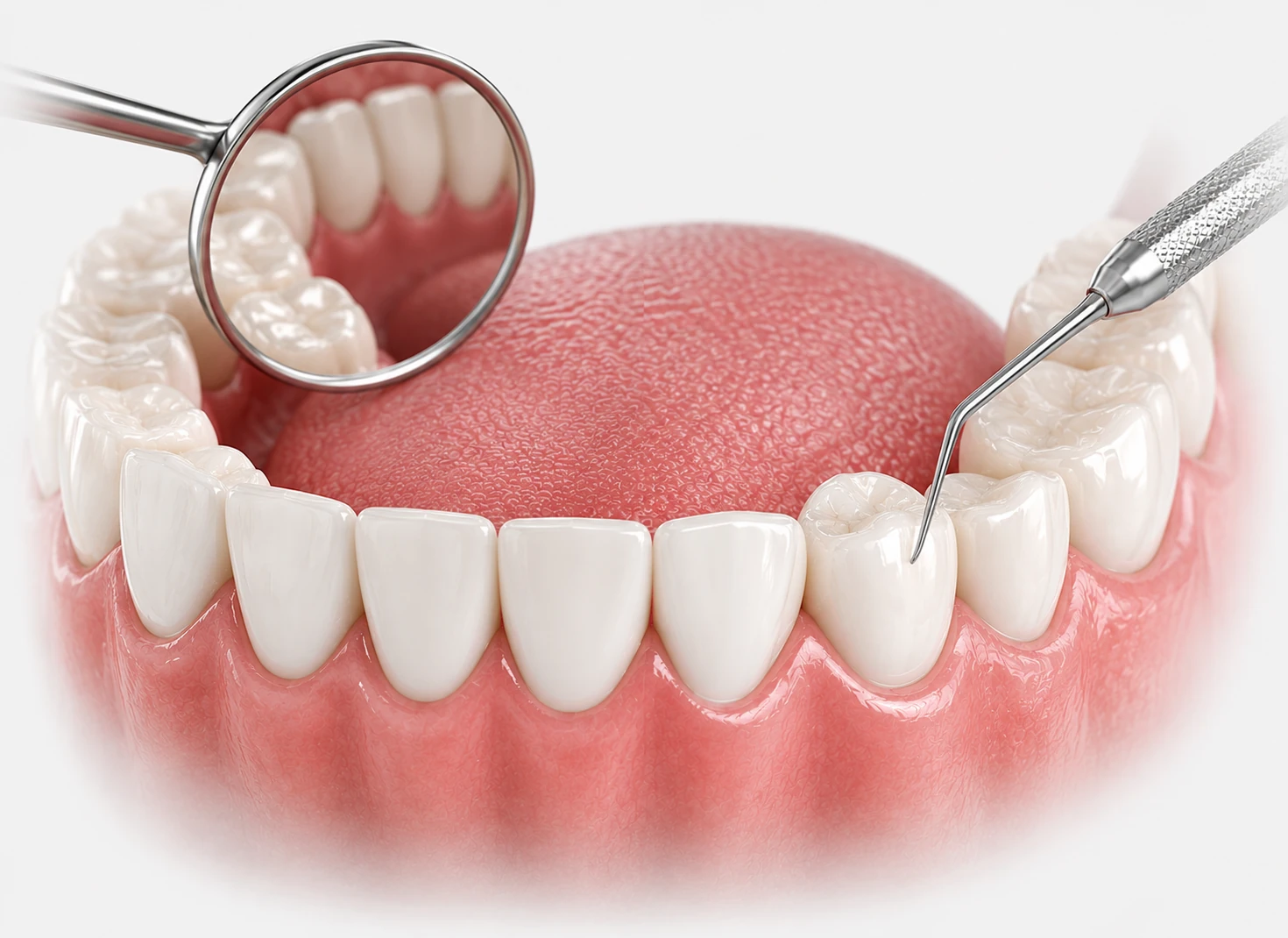
“If nothing hurts, it is a reasonable question.”
Here is the honest answer. Almost every expensive dental problem started as a cheap one. Decay found early is a filling at £175, done in one appointment, and you forget about it. Decay found late becomes root canal treatment at £650, then a crown at £750, and sometimes an extraction and an implant after that. Same tooth. Different decade. Considerably different sum.
“Gum disease follows the same pattern, only more quietly.”
Early gum inflammation is completely reversible with proper cleaning. Advanced gum disease destroys the bone that holds the teeth in, and that bone does not come back. It is the leading cause of tooth loss in adults, and it is almost entirely painless until it is not.
Every examination includes checking the soft tissues of the mouth, tongue, cheeks, throat and neck for signs of oral cancer. It takes under a minute. Mouth cancer detected early has a considerably better outcome than mouth cancer detected late, and most people have no idea their dentist is looking for it.
That is the argument. Twenty minutes twice a year against the alternatives, and it holds up rather well. If it has been years since your last visit, that is common and it needs no explanation. A significant proportion of our new patients have been away from dentistry for a long time, usually after a difficult experience somewhere else.
Nobody here will comment on the gap, and nobody will comment on what we find.
What happens at a routine examination
- Your history first: any changes to your health or medication since we last saw you, and anything you have noticed yourself. Sensitivity, bleeding gums, a tooth that feels different. Patients frequently spot things before we do.
- Examination of the teeth: checking for decay, wear, cracks and the condition of any existing fillings, crowns and other restorations. Old dental work does not last forever, and it is considerably easier to replace before it fails than afterwards.
- Examination of the gums: assessing gum health and measuring where necessary. Early gum disease is almost entirely painless, which is precisely why it needs looking for rather than waiting to be noticed.
- Oral cancer screening: a check of the soft tissues of the mouth, tongue, cheeks, throat and neck. Routine, quick, and one of the most valuable things a dental examination does.
- Bite assessment: how your teeth meet, and whether wear patterns suggest grinding. Grinding damages teeth steadily over years and most people who do it are entirely unaware.
- X-rays where needed: taken when there is a clinical reason, explained below.
- A conversation about what we found: in plain terms. If treatment is needed you will get a written plan with costs, and there is no expectation that you decide on the day.
Dental x-rays
Why they are taken
An examination cannot see everything.
X-rays show decay between teeth where the surfaces touch, decay beneath existing fillings, infection at the tip of a root, the level of bone supporting the teeth, and unerupted or impacted teeth.
A good number of the problems we find are only visible on an x-ray.
How often
When there is a clinical reason, not automatically at every visit.
Patients at higher risk of decay may need them more frequently than those at low risk. National guidance supports basing the interval on individual risk rather than applying a routine schedule, and a practice x-raying everybody at every appointment is not following it.
Are they safe?
Dental x-rays use very low doses of radiation. A single dental x-ray delivers a dose comparable to a small fraction of the natural background radiation everybody is exposed to over the course of a normal week.
That said, no dose is taken without reason. We take them when the information will change what we do, and not otherwise.
The types we use
- Small x-rays taken inside the mouth, showing individual teeth or the contacts between them. £15
- Panoramic x-rays, or OPGs, showing both jaws in a single image. £60
- CBCT 3D scans for implant planning and complex cases, showing anatomy in three dimensions. Available on site. From £80
If you are pregnant
Tell us. Routine x-rays are usually deferred during pregnancy as a precaution, though they can be taken safely where there is an urgent clinical need.
How often should you come in?
- Every six months suits most people. It is a sensible default rather than a rule.
- More frequently, every three to four months, where there is a history of gum disease, a high rate of decay, extensive restorative work to monitor, or for smokers and patients with diabetes.
- Less frequently for some patients with consistently excellent oral health and no history of problems.
Your interval is set from your assessment rather than applied uniformly. It can change as your circumstances change, and it will be explained to you rather than simply appearing on a recall letter.
Check ups for children
Children benefit from attending early, before anything is wrong. A first visit that involves nothing more than a ride in the chair and a count of the teeth shapes how they feel about dentistry for the rest of their lives, and that is worth considerably more than it costs.
- Children’s examinations are £30.
We treat children alongside adults and families can be registered together, so appointments are arranged on the same day where possible. Anyone who has tried to get two children to separate dental appointments in one week will appreciate why that matters.
Pricing and fees
Treatment | From |
New patient examination, including x-rays | £85 (currently £40) |
Routine examination | £55 |
Children’s examination | £30 |
Single x-ray | £15 |
OPG x-ray | £60 |
CBCT 3D scan, single arch | £80 |
Hygiene appointment, 30 minutes | £90 |
Fluoride treatment | £30 |
If you attend regularly, our practice plan spreads the cost of your examinations and hygiene appointments across fixed monthly payments rather than paying per visit. For most patients attending every six months it works out sensibly.
Where to find us
Croft Dental sits at 64 Manchester Road, on the Handforth side of Wilmslow town centre. Coming up from The Carrs, we are north east along Manchester Road. If you reach Handforth Dean, you have gone too far.
We are around ten minutes on foot from Wilmslow station, five minutes from Handforth, and roughly ten minutes from Alderley Edge up the A34.
Patients register with us from Alderley Edge, Handforth, Styal, Prestbury, Mottram St Andrew, Knutsford, Macclesfield, Poynton, Mobberley, Bramhall and Cheadle.
For routine care, proximity genuinely matters. A practice you can get to easily is a practice you will actually attend, and over twenty years that is worth considerably more than any individual treatment. If you have recently moved to the area, registering with a dentist is one of the more easily forgotten jobs on the list. It takes a phone call.
Not sure where to start? Give us a ring.
Make an Enquiry
- Finance
Spread the cost of treatment with finance or dental plan
We offer finance on larger treatment plans through Tabeo so the cost can be spread across monthly payments. Interest-free options are available with no arrangement fees or hidden charges.
For routine examinations and hygiene appointments, our practice plan is generally the more sensible route, spreading the cost across fixed monthly payments instead.
- REGISTRATION
Register with Croft Dental as a New Patients
We warmly welcome new patients to our practice. If it’s been a while since your last visit, if dental visits make you feel anxious, if you’ve recently moved to Wilmslow, or if you’re simply seeking a team that truly listens to your concerns, you’ll find a supportive and gentle environment here with us.
During your first appointment, we take the time to conduct a complete evaluation of your teeth, gums, and overall oral health. We will listen carefully to your goals, answer any questions, and collaboratively create a treatment plan tailored specifically to you.
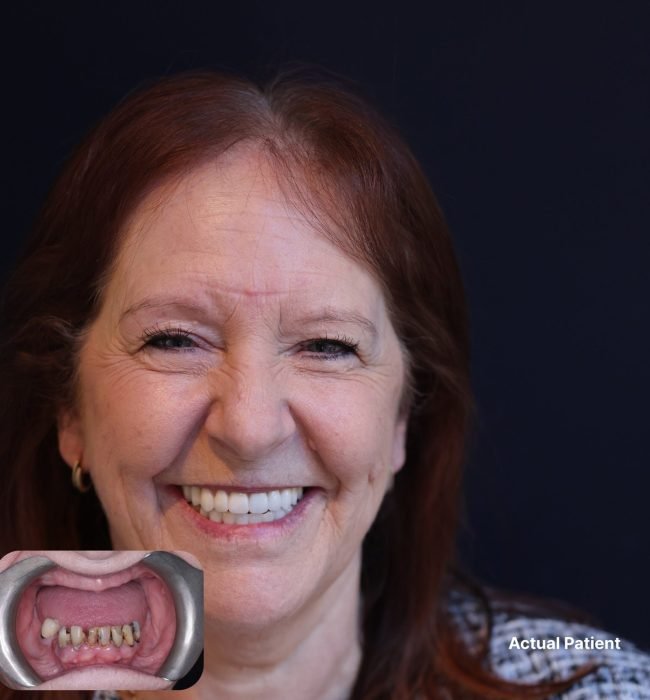
"I have my smile back thanks to the skill of the team here. All in all, a very happy patient."
★★★★★ - Sarah F. | Croft Dental & Implant Clinic
- FAQs
Frequently asked questions
Most patients are seen every six months, though the appropriate interval varies by individual risk. Patients with a history of gum disease, high decay rates, extensive restorative work, diabetes, or who smoke may need examinations every three to four months. Those with consistently good oral health may safely attend less frequently. National guidance supports setting the interval according to individual risk rather than applying a fixed schedule.
A dental examination includes a review of medical history, examination of the teeth for decay, wear and cracks, assessment of gum health, screening of the soft tissues for signs of oral cancer, and assessment of the bite. X-rays are taken where clinically necessary. Findings and any recommended treatment are then explained along with costs.
At Croft Dental a new patient examination is £85 including any x-rays taken at that appointment, currently available at £40. Routine examinations for existing patients are £55 and children's examinations are £30. A practice plan is available spreading the cost of examinations and hygiene appointments across monthly payments.
Dental x-rays use very low doses of radiation and are considered safe when taken appropriately. They reveal problems an examination cannot detect, including decay between teeth, decay beneath existing fillings, infection at the root tip and bone levels supporting the teeth. They are taken when there is a clinical reason rather than routinely at every appointment, and the frequency is based on individual risk.
Routine dental x-rays are usually deferred during pregnancy as a precaution, though the radiation dose is very low and x-rays can be taken safely where there is an urgent clinical need. Patients should tell the practice if they are or may be pregnant before any x-ray is taken.
Yes. A routine dental examination includes checking the soft tissues of the mouth, tongue, cheeks, throat and neck for any changes. This takes under a minute and is one of the main reasons regular attendance matters, since mouth cancer detected early has a considerably better outcome than mouth cancer detected late.
No referral is required to register as a new patient at a dental practice. Patients can contact the practice directly by phone, email or online. Referrals are only needed when one dentist sends a patient to another for a specific piece of treatment, such as complex implant or endodontic work.
Book an examination. Long gaps are common and require no explanation. The dentist will assess the current condition of the teeth and gums and set out what treatment is needed, which can usually be staged over a period rather than completed all at once. Booking an examination does not commit you to any treatment.