
Root Canal Treatment in Wilmslow
Carried out by a clinician with a Master’s degree in Endodontics, which most general practices do not have. It is also considerably less unpleasant than its reputation suggests.
Root canal treatment removes infected or damaged tissue from inside a tooth, cleans and shapes the canals, and seals them, allowing the tooth to be kept rather than extracted. It is carried out under local anaesthetic and is not usually painful. At Croft Dental on Manchester Road in Wilmslow, root canal treatment starts from £650 and is carried out by Dimitris Mataras, who holds a Master's degree in Endodontics. Retreatment of failed root canals adds £150, and apicectomy is available at £595. A crown is usually recommended afterwards on back teeth, from £750. Most cases are completed in a single sixty to ninety minute appointment.
So, is root canal treatment really that bad?
No. And the reputation is worth taking apart properly, because it stops people getting treatment they need.
Ask anyone what dental procedure they dread most and root canal comes up more than anything else. It has become a shorthand for suffering in a way no other treatment has. People use it as a metaphor.
That reputation was earned decades ago, with different anaesthetics, different instruments and considerably less understanding of the anatomy inside a tooth. It has not been accurate for a very long time.
What it is actually like now
You are numb throughout. Modern local anaesthetic is effective and given time to work properly. Patients frequently say afterwards it was no worse than having a filling, and considerably better than the toothache that brought them in.
That last part matters. The pain people associate with root canal treatment is usually the pain of the infection beforehand. The treatment is what relieves it. People remember the agony and attach it to the appointment that ended it, which is understandable and completely backwards.
Where the reputation does persist
Root canal treatment carried out without specialist training, particularly on molars with complex canal anatomy, is more likely to be uncomfortable, take longer and fail.
That is a training issue rather than a problem with the procedure. At Croft Dental it is carried out by a clinician with a Master’s degree in the field, which most general practices in Cheshire do not have on site.
What root canal treatment actually is
Inside every tooth is a soft tissue called the pulp, containing nerves and blood vessels, running from the crown down through canals in the roots.
When bacteria reach the pulp, usually through deep decay, a crack or trauma, it becomes inflamed and then infected. The infection cannot resolve on its own, because the pulp is enclosed within the tooth and the body simply cannot reach it.
Root canal treatment removes that infected tissue, cleans and shapes the canals, disinfects them, and seals them so bacteria cannot re-enter.
The tooth is kept. It no longer has a living pulp, but it remains anchored in the bone and continues to function normally.
The alternative
The alternative to root canal treatment is extraction. There is no third option.
And the infection will not clear with antibiotics alone. They may settle an acute flare up temporarily, but the source remains inside the tooth. This is worth knowing, because a good many people take a course from their GP, feel better, and assume it has resolved.
Signs you may need root canal treatment
- Persistent toothache, particularly pain that keeps you awake or comes on spontaneously rather than only when you eat
- Prolonged sensitivity to hot or cold, where the sensation lingers for many seconds or minutes after the stimulus is removed rather than passing straight away
- Pain on biting, which can indicate infection at the tip of the root
- A darkened tooth, where a single tooth becomes greyer than its neighbours, sometimes years after an injury
- Swelling of the gum or face, including a gum boil, tenderness over the root, or facial swelling
- No symptoms at all, which is worth knowing. Some infected teeth cause no pain whatsoever and are found on a routine x-ray. A pulp can die quietly, and the absence of pain does not mean the absence of infection
If you have facial swelling, difficulty swallowing or difficulty opening your mouth, contact us urgently or seek emergency medical care.
Root canal or extraction?
A fair comparison, since this is the decision you are actually making.
Keeping the tooth
- Your own tooth, in your own socket, with its own bone support
- No gap, and no replacement needed
- Neighbouring teeth left untouched
- Total cost is the root canal from £650 plus a crown from £750 where needed
- The tooth may still be lost later if treatment fails or it fractures
Extraction and replacement
- Removes the source of infection definitively
- Requires replacement in most cases, meaning an implant, bridge or denture
- An implant plus crown from £2,300, more than root canal treatment plus a crown
- Bone shrinks where the tooth was removed
- A bridge requires cutting down the adjacent teeth
Extraction with no replacement
Sometimes reasonable, particularly for a rear molar. It is not automatically the wrong choice, and we will say so where it applies.
Our general position
Keeping your own tooth is usually preferable where the prognosis is reasonable, and it is frequently the cheaper option once replacement is factored in.
That said, there is no point treating a tooth that is likely to fail, and we will tell you honestly which situation you are in.
If a previous root canal has failed
Teeth that have had root canal treatment elsewhere and remain symptomatic, or where infection is visible on an x-ray, can frequently be retreated rather than extracted.
Why treatment fails
- Canals missed during the original treatment, particularly in molars with complex anatomy
- Incomplete cleaning or sealing
- Bacteria re-entering through a leaking filling or crown
- A crack developing in the tooth
What retreatment involves
The existing filling material is removed, the canals are cleaned and shaped again, any missed anatomy is located and treated, and the tooth is resealed. It takes longer than initial treatment and requires more experience.
From £650 plus £150 retreatment supplement
Why the training matters most here
Retreatment is where the difference between general practice and postgraduate endodontic training shows most clearly. Many practices recommend extraction at this point, not because the tooth cannot be saved but because retreatment is beyond what they can offer.
If you have been told a root treated tooth needs removing, it is worth a second opinion before you agree to it.
Apicectomy
Where retreatment through the crown is not possible or has not resolved the infection, minor surgery at the root tip can be carried out instead. This is called an apicectomy and it is available here rather than referred out.
From £595
Am I a suitable candidate?
Usually suitable if you
- Have an infected or inflamed tooth that is otherwise structurally sound
- Have enough remaining tooth structure to restore afterwards
- Have healthy gums, or gum disease that can be treated
- Want to keep your own tooth where reasonably possible
We will need to assess further if you
- Have a tooth that is severely broken down, where there may be too little left to restore
- Have a vertical root fracture, which usually cannot be saved
- Have advanced gum disease around the tooth, which affects long term prognosis
- Have had previous root canal treatment that has failed, which is treatable but requires assessment
- Have limited mouth opening, which affects access to back teeth
We will be honest about the prognosis
Some teeth are worth treating and some are not.
Where the prognosis is poor, we will say so rather than take payment for treatment unlikely to succeed. In those cases extraction and replacement may be the more sensible investment, and we would rather tell you that at the consultation than after two appointments and £650.
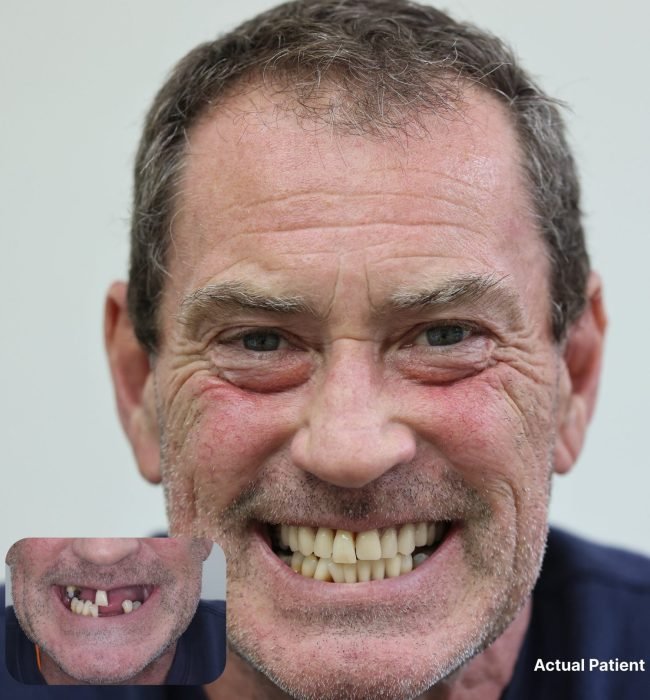
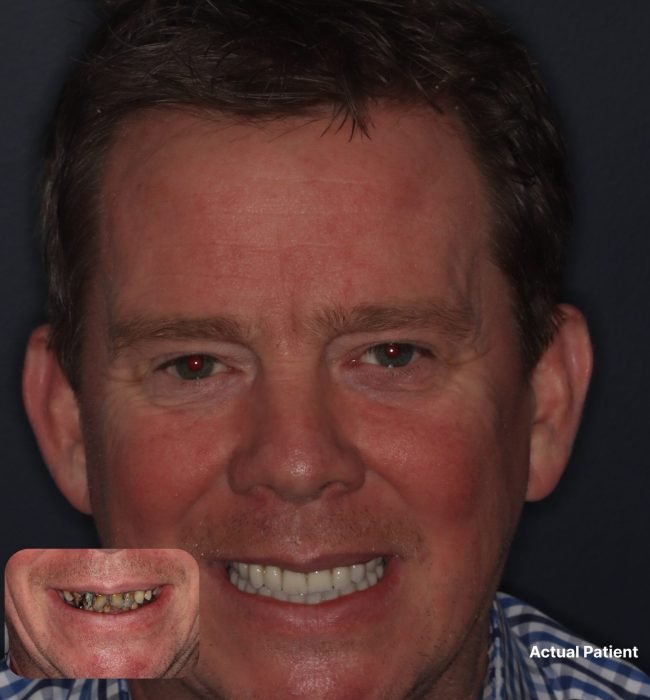
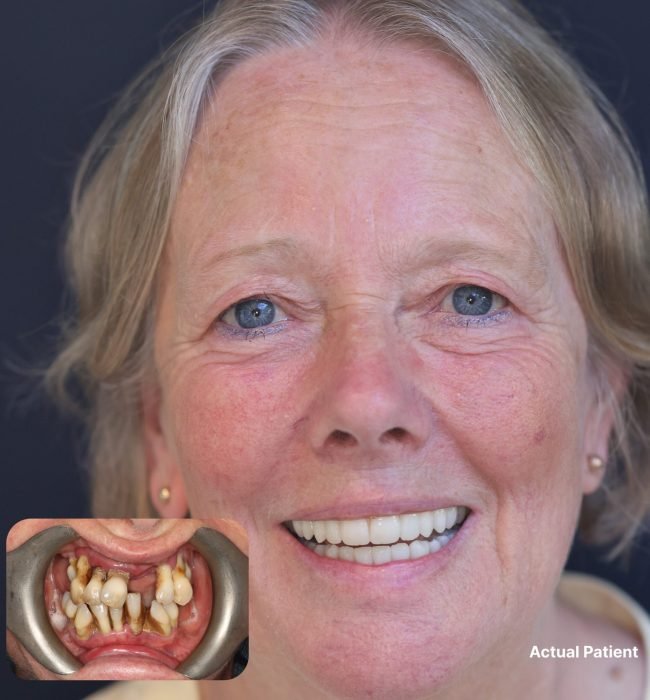
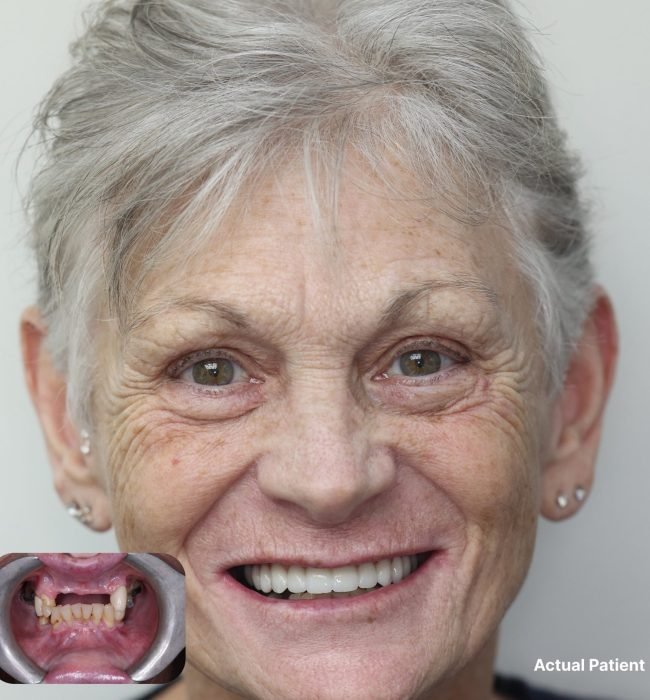
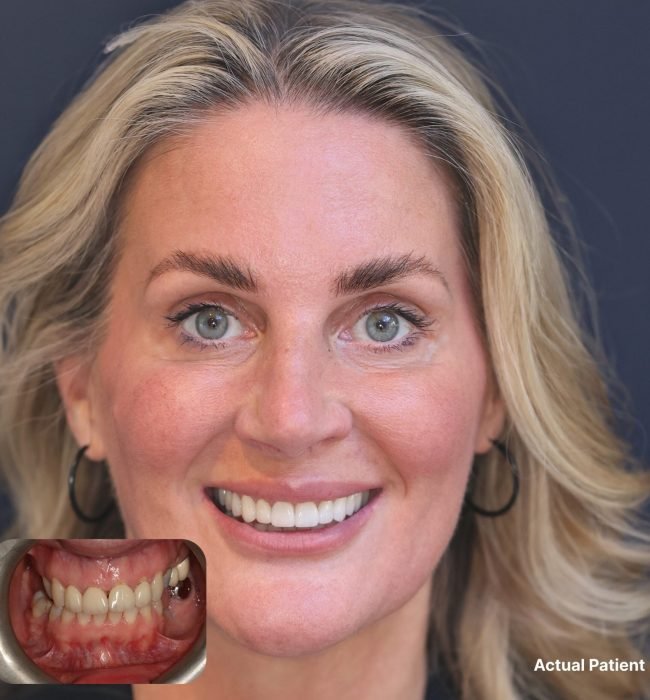
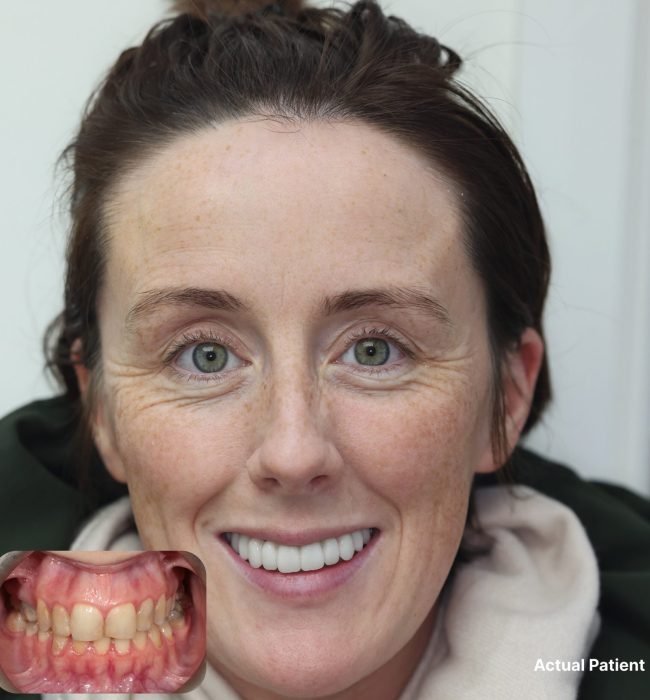
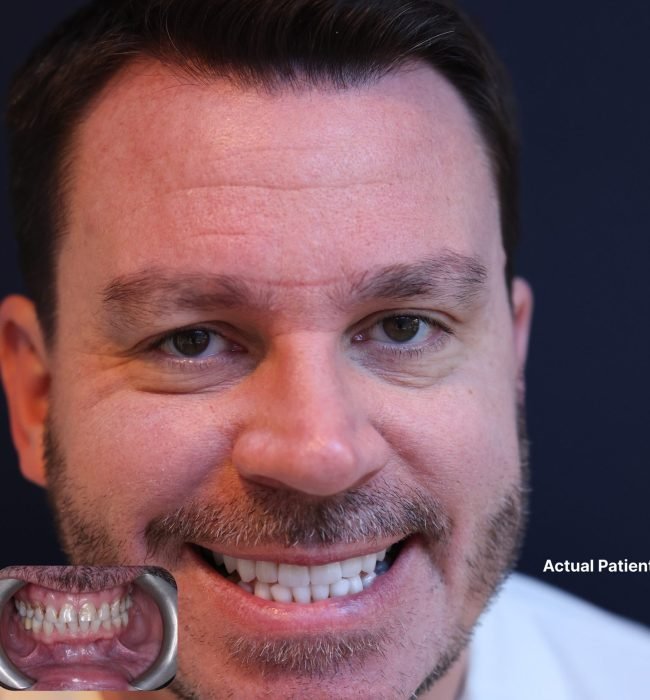
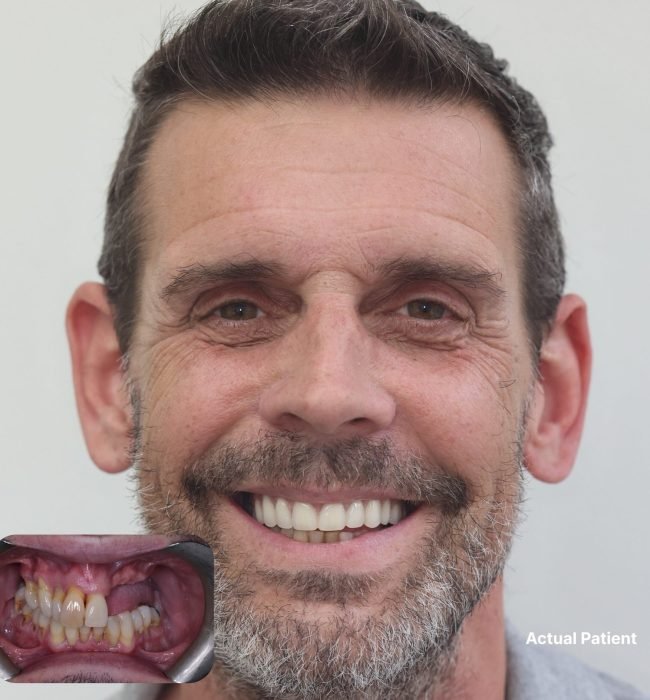
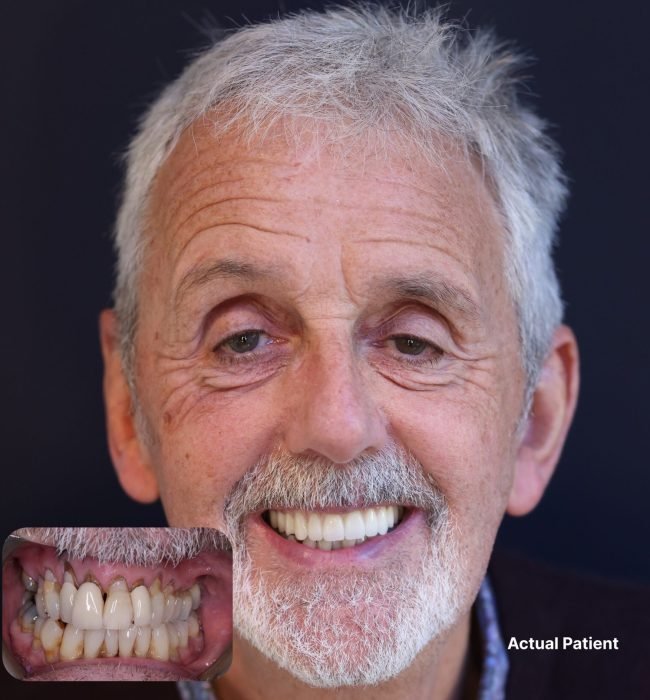
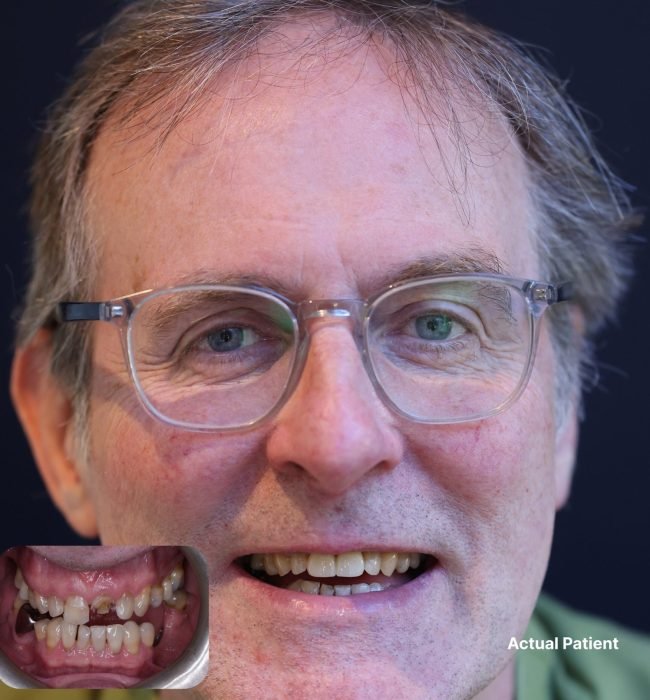
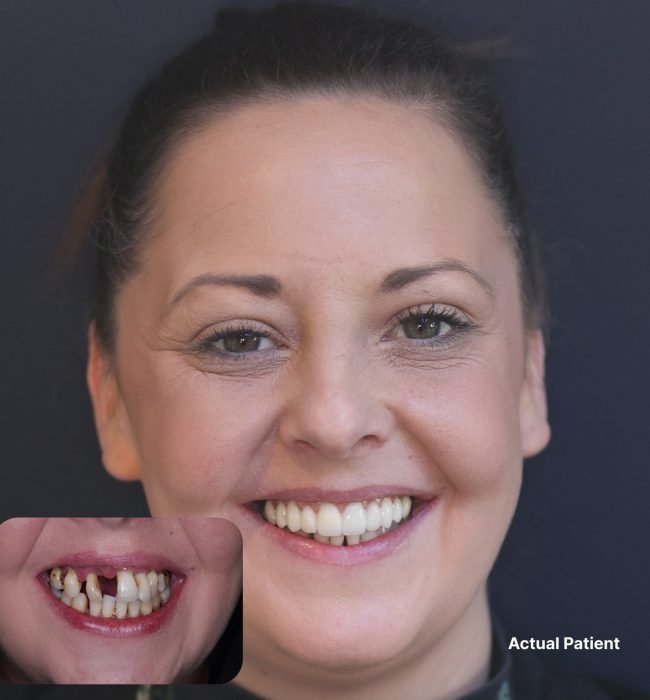
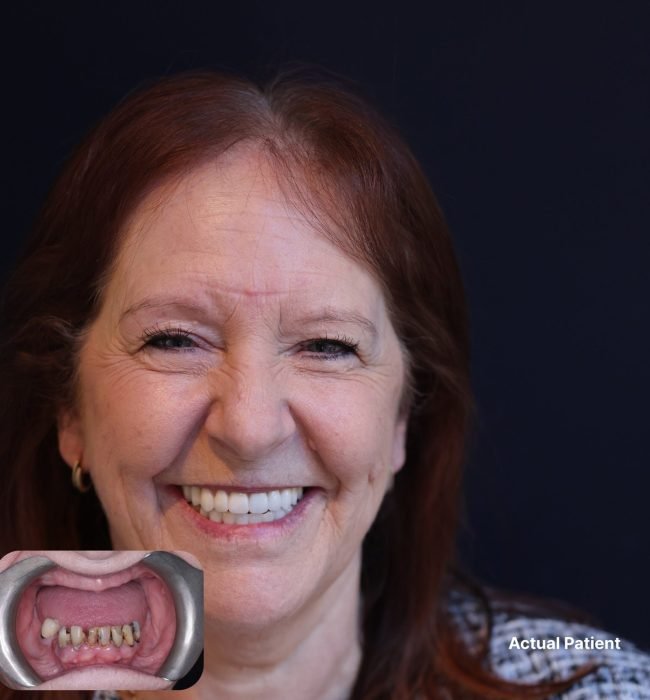
- Real Patient Results
Thousands of Smiles Transformed
Explore real patient results demonstrating the life-changing impact of expert implant dentistry at Croft Dental. From single tooth restorations to comprehensive full-mouth rehabilitations, our tailored treatment plans restore both function and natural aesthetics.
Be our Next Success Story!
All photographs show patients treated at Croft Dental and are published with their consent. Results shown are individual results.
Your treatment journey
-
1Step one: assessmentAn examination and x-rays to confirm the diagnosis and assess the root anatomy. For complex cases a CBCT 3D scan may be taken, which shows canal anatomy a standard x-ray cannot.
-
2Step two: anaestheticLocal anaesthetic is given and given time to work properly. You should feel nothing sharp.
If you do, say so and more will be given. That is not a failure and it is not an inconvenience. -
3Step three: isolationA rubber dam, a thin sheet placed over the tooth, isolates it from the rest of the mouth. This keeps the tooth dry and free of saliva during treatment, which is essential for success.
It also means nothing goes anywhere you would not want it to, which patients tend to find reassuring once it is explained. -
4Step four: accessing the canalsA small opening is made through the top of the tooth to reach the pulp chamber and canals.
-
5Step five: cleaning and shapingThe infected tissue is removed and the canals cleaned and shaped using fine instruments, with disinfecting solutions used throughout.
This is the part that takes the time, and it is where training and equipment make the greatest difference. Molars in particular have complex and variable canal anatomy, and canals that are missed are the most common reason treatment fails later. -
6Step six: filling and sealingThe canals are filled with a rubber like material and sealed so bacteria cannot re-enter.
-
7Step seven: restoring the toothA filling is placed. On back teeth a crown is usually recommended afterwards, explained below.
-
8Step eight: afterwardsThe first few days. Tenderness when biting is normal, particularly if there was infection beforehand. It settles over a few days and is generally managed with ordinary painkillers.
Eating. Avoid chewing on the tooth until it has been permanently restored, particularly if a temporary filling is in place.
Temporary fillings. Take care with sticky foods, which can pull them out. Contact us if it comes away.
When to call us. Pain that worsens rather than improves after the first few days, swelling that develops or increases, a temporary filling coming out, or the tooth feeling high when you bite.
Long term. The tooth is cleaned and examined like any other. It still needs brushing, flossing and regular check ups. A root treated tooth can still develop decay around the restoration, and it can still be lost to gum disease.
How many appointments? Most cases are completed in a single sixty to ninety minute appointment. Some, particularly where there is significant infection, are completed across two visits with a dressing placed in between.
Why a crown is usually recommended afterwards
This is frequently glossed over and it matters, both clinically and to the total cost.
A tooth that has had root canal treatment is more brittle than a living tooth. It has lost its blood supply, and accessing the canals removes structure from the middle, which weakens it.
Back teeth take heavy biting forces. A root treated molar left with only a filling has a meaningfully higher chance of fracturing, and a fractured root treated tooth often cannot be saved. Which means the root canal treatment was wasted.
What we recommend
A crown on root treated back teeth in most cases, from £750. Front teeth, which take lighter forces, can sometimes be restored with a filling alone.
The cost implication
Root canal treatment plus a crown costs considerably more than root canal treatment alone. That total is what should be compared against extraction and replacement, and we will set out both figures so you can make a proper comparison rather than a partial one.
Does it work?
Yes, in the large majority of cases. Well executed root canal treatment has high success rates, and a treated tooth restored properly can last many years, frequently for life.
What affects the outcome
- How much sound tooth structure remains
- Whether the canals could be fully cleaned and sealed, which depends on anatomy and on training
- Whether the tooth is restored properly afterwards, which is where the crown matters
- Gum health around the tooth
- Whether infection had spread significantly before treatment
When it does not work
Sometimes infection persists or recurs, which can happen months or years later. Where that occurs, the options are retreatment, apicectomy, or extraction. Retreatment is often successful, particularly where the original treatment did not reach the full canal anatomy.
If this is the treatment you have been dreading
Root canal treatment frightens people more than anything else in dentistry, and a good number of patients delay it until the pain becomes unbearable.
- We allow longer appointments so nothing is rushed
- We explain each step before it happens
- We make sure you are properly numb before starting, and add more anaesthetic if you feel anything
- We agree a hand signal so you can stop at any point without having to speak
- We will never comment on how long you left it
Tell us when you book and it will be noted before you arrive.
Pricing and fees
Treatment | From |
Root canal treatment | £650 |
Root canal retreatment supplement | £150 in addition |
Post removal | £150 |
Apicectomy | £595 |
Porcelain crown | £750 |
Emergency appointment | £50 |
Single x-ray | £15 |
CBCT 3D scan, single arch | £80 |
When comparing against extraction, compare root canal treatment plus a crown against extraction plus replacement. We will provide both figures so the comparison is a fair one rather than a partial one.
Where to find us
Croft Dental sits at 64 Manchester Road, on the Handforth side of Wilmslow town centre. Coming up from The Carrs, we are north east along Manchester Road. If you reach Handforth Dean, you have gone too far.
We are around ten minutes on foot from Wilmslow station, five minutes from Handforth, and roughly ten minutes from Alderley Edge up the A34.
Patients come to us from Alderley Edge, Handforth, Styal, Prestbury, Mottram St Andrew, Knutsford, Macclesfield, Poynton, Bramhall, Cheadle and Hale.
We also see patients referred by other practices across the North West for complex endodontic cases and retreatment, which is not something every practice in the area can offer.
Not sure where to start? Give us a ring.
Make an Enquiry
- DENTIST
Meet your endodontic clinician
Dimitris Mataras
MSc Endodontics · GDC 180398
Dimitris carries out root canal treatment and endodontic retreatment at Croft Dental.
His Master’s degree is specifically in endodontics, covering the anatomy, the techniques and the micro-endodontic equipment needed to treat complex canal systems successfully. Most general practices do not have that on site, which is why they refer these cases out or, in a good number of instances, recommend extraction instead.
That distinction has a practical consequence. Teeth that would be removed elsewhere can frequently be saved here, particularly molars with awkward anatomy and teeth where a previous root canal has failed.
He works alongside Dr Natasja Kashyap, whose Master’s in Fixed and Removable Prosthodontics covers the crown work that follows, and Dr Nikhil Oberai, whose implant expertise means that where a tooth genuinely cannot be saved, the replacement is planned by somebody who does that work every week.
- Finance
Spread the cost of treatment with finance
We offer finance on larger treatment plans through Tabeo so the cost can be spread across monthly payments. Interest-free options are available with no arrangement fees or hidden charges.
Applications take a few minutes and you will know the outcome quickly. Root canal treatment combined with a crown generally qualifies, and we will show you the monthly figures at your appointment.
- REGISTRATION
We're Welcoming New Patients
We warmly welcome new patients to our practice. If it’s been a while since your last visit, if dental visits make you feel anxious, if you’ve recently moved to Wilmslow, or if you’re simply seeking a team that truly listens to your concerns, you’ll find a supportive and gentle environment here with us.
During your first appointment, we take the time to conduct a complete evaluation of your teeth, gums, and overall oral health. We will listen carefully to your goals, answer any questions, and collaboratively create a treatment plan tailored specifically to you.
"I have my smile back thanks to the skill of the team here. All in all, a very happy patient."
★★★★★ - Sarah F. | Croft Dental & Implant Clinic
- FAQs
Frequently asked questions
Root canal treatment is carried out under local anaesthetic and is not usually painful. Most patients describe it as comparable to having a filling. The pain associated with root canal treatment is generally the pain of the infection beforehand, which the treatment relieves. Tenderness when biting for a few days afterwards is normal and settles.
Most cases are completed in a single appointment lasting between sixty and ninety minutes. Some cases, particularly where there is significant infection or complex canal anatomy, are completed across two appointments with a dressing placed in between. Molars take longer than front teeth because they have more canals.
Root canal treatment at Croft Dental starts from £650, with retreatment of a failed root canal adding £150. A crown is usually recommended afterwards on back teeth, from £750, and this should be included when comparing the cost against extraction and replacement.
A crown is usually recommended on back teeth following root canal treatment. Root treated teeth are more brittle than living teeth and lose structure during treatment, which makes fracture more likely under heavy biting forces. A fractured root treated tooth often cannot be saved. Front teeth, which take lighter forces, can sometimes be restored with a filling alone.
A tooth that has had successful root canal treatment and been restored properly, usually with a crown on back teeth, can last many years and frequently for life. Longevity depends on how well the canals were cleaned and sealed, how the tooth was restored afterwards, and ongoing oral hygiene and gum health.
Keeping a natural tooth is generally preferable where the prognosis is reasonable, since it preserves the bone and avoids the need for replacement. Root canal treatment plus a crown typically costs less than extraction plus an implant. Where a tooth is severely broken down, fractured or has poor prognosis, extraction may be the more sensible option.
Yes. Root canal retreatment involves removing the existing filling material, cleaning and reshaping the canals, locating any anatomy missed during the original treatment, and resealing the tooth. It is more complex than initial treatment and generally requires additional training. Many teeth recommended for extraction after a failed root canal can be saved through retreatment.
No. Antibiotics may temporarily reduce the symptoms of a dental infection but do not resolve it, because the source remains inside the tooth. Definitive treatment requires either root canal treatment or extraction. Antibiotics are prescribed only where clinically indicated and alongside treating the underlying cause.