
Tooth Extractions in Wilmslow
Carried out calmly, under local anaesthetic, with sedation available. And only after we have told you honestly whether the tooth could be saved.
A tooth extraction is the removal of a tooth that cannot be saved, usually because of severe decay, advanced gum disease, fracture, or infection that cannot be treated. Extractions at Croft Dental on Manchester Road in Wilmslow start from £220 and are carried out under local anaesthetic, with sedation available from £350. The appointment typically takes twenty to forty minutes and most patients return to normal activities within a day or two. Before removing any tooth we discuss whether it can be saved and what would replace it afterwards, since planning the replacement before extraction usually produces a better and less expensive outcome.
So, does the tooth definitely have to come out?
That is where we start, and it is not a formality.
Teeth are worth keeping wherever it is reasonable to keep them. A natural tooth, even a heavily restored one, generally functions better than anything that replaces it, and removing one has consequences that continue for years afterwards.
So before anything happens, we look at whether it can be saved.
- Root canal treatment, from £650, where the tooth is infected but structurally sound
- A crown, from £750, where the tooth is broken down but the root is healthy
- Gum treatment, where the problem is the supporting bone rather than the tooth itself
- Repair or replacement of a failed filling or crown
Sometimes extraction genuinely is the right answer. A tooth split below the gum. A root fractured through. Advanced gum disease with insufficient bone remaining. Decay that has destroyed too much of the tooth to restore.
In those cases, attempting to save it means more appointments, more cost and the same outcome eventually. We will tell you plainly which situation you are in.
And if a tooth can be saved and you want it saved, that is what we will try to do. Root canal treatment plus a crown costs less than extraction plus an implant, and keeps your own tooth in your own jaw. That is frequently the better decision on both counts.
Why teeth sometimes need removing
- Severe decay: where too little sound tooth remains to hold a filling or crown.
- Advanced gum disease: where the bone supporting the tooth has been lost and the tooth is loose. One of the most common reasons adults lose teeth.
- Fracture: a tooth cracked below the gum line or a root split through cannot usually be repaired.
- Infection that cannot be treated: where root canal treatment is not possible, or has been attempted and failed.
- Wisdom teeth: where they are impacted, causing repeated infection, or damaging the tooth in front. Not all wisdom teeth need removing, and current guidance is against removing them without a clear reason.
- Retained baby teeth: where a baby tooth has not come out and is preventing or deflecting the adult tooth beneath.
- Before orthodontic treatment: occasionally teeth are removed to create space for the remaining teeth to be aligned properly.
- As part of full arch implant treatment: where failing teeth are removed as part of a planned implant case.
What happens to the gap
Worth thinking about before the extraction rather than after, because the decision is considerably easier and cheaper to make now.
The bone changes. When a tooth is removed, the bone that supported it is no longer being stimulated and begins to shrink. Most of that change happens in the first year, and it does not reverse.
That matters if you might want an implant later. Bone lost after extraction often needs rebuilding through grafting, from £450, before an implant can be placed. Planning ahead avoids that entirely.
Neighbouring teeth move. Teeth on either side of a gap tend to tilt into it over time, and the opposing tooth can drift down or up into space. This changes the bite and complicates replacement later.
Chewing changes. People compensate by chewing on the other side, which loads those teeth more heavily.
Front teeth. The appearance consequences are obvious. What is less obvious is that bone in the front of the jaw is thinner and changes shape more visibly, which affects how a replacement looks later.
Not every gap needs filling. A missing back molar, particularly a wisdom tooth, often needs no replacement at all. We will tell you when that applies rather than recommending treatment for its own sake.
Your options for replacing the tooth
Discussed before extraction, so the plan is in place from the start.
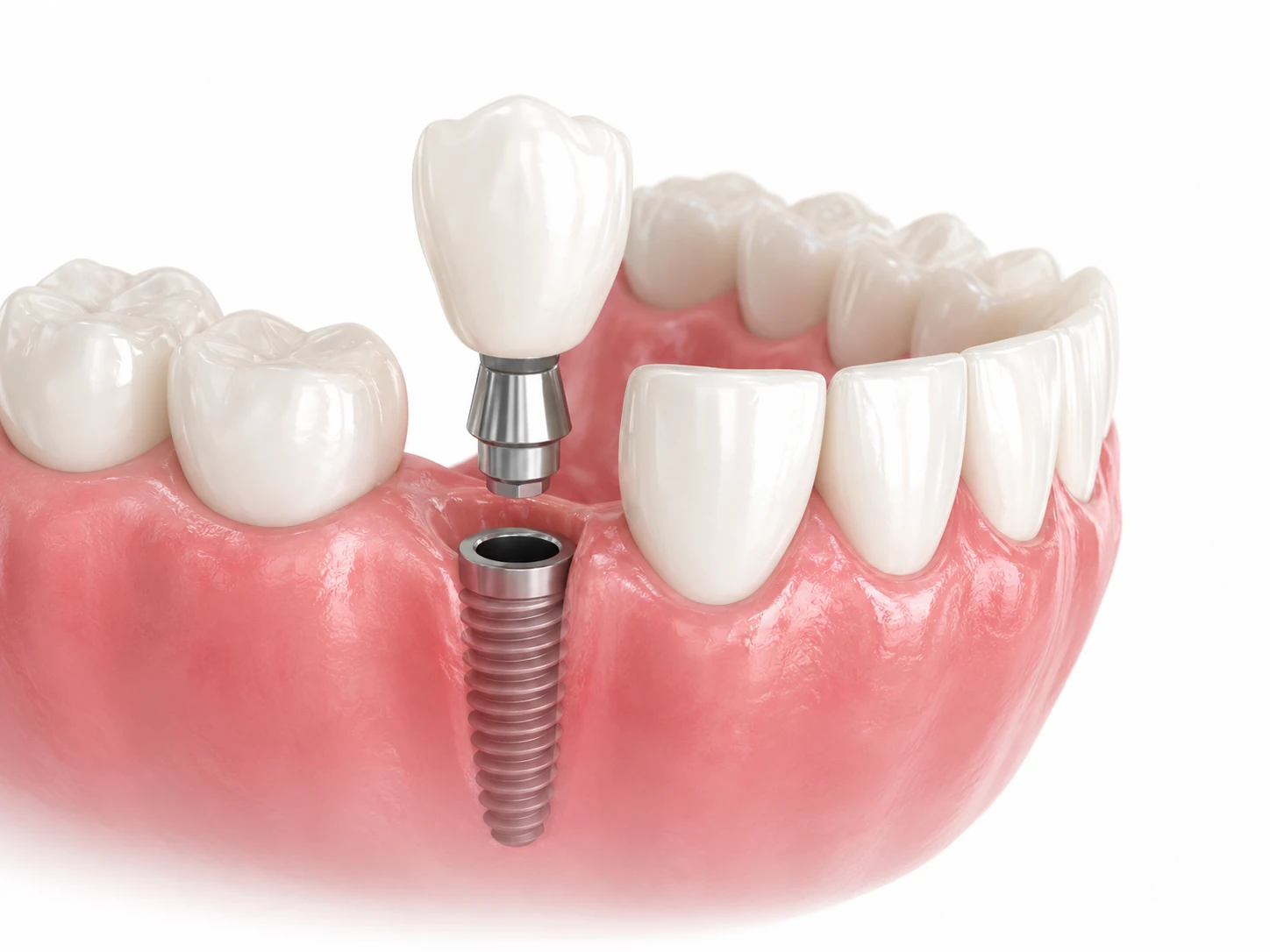
Dental implant
From £2,300 complete
Bridge
From £750 per unit
Denture
From £400
Implant-retained denture
From £5,000 per arch
Socket preservation
Leaving the gap
Assessment before extraction
We will need to know about
- Any medical conditions, particularly those affecting healing or bleeding
- All medications, especially blood thinners and bisphosphonates
- Any history of radiotherapy to the head or neck
- Whether you are pregnant
- Any previous problems with dental anaesthetic or extractions
Specific considerations
- Blood thinning medication: most extractions can be carried out without stopping anticoagulants, using local measures to control bleeding. Never stop prescribed medication before dental treatment without medical advice. Tell us what you take and we will plan around it.
- Bisphosphonates and bone medications: drugs such as alendronic acid, taken for osteoporosis, affect bone healing and carry a small risk of a condition called medication related osteonecrosis of the jaw. This requires assessment and sometimes liaison with your doctor.
- Diabetes: well controlled diabetes is not a problem. Poorly controlled diabetes affects healing and infection risk.
Where referral is appropriate
Some extractions are more complex than others, including certain impacted wisdom teeth and roots sitting close to the sinus or nerve. Where a case would be better handled in a specialist setting, we will arrange a referral rather than proceed.
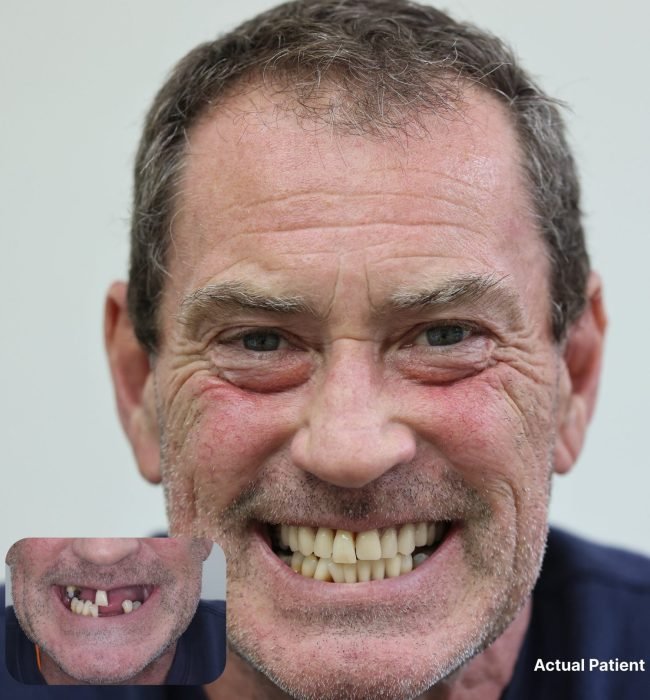
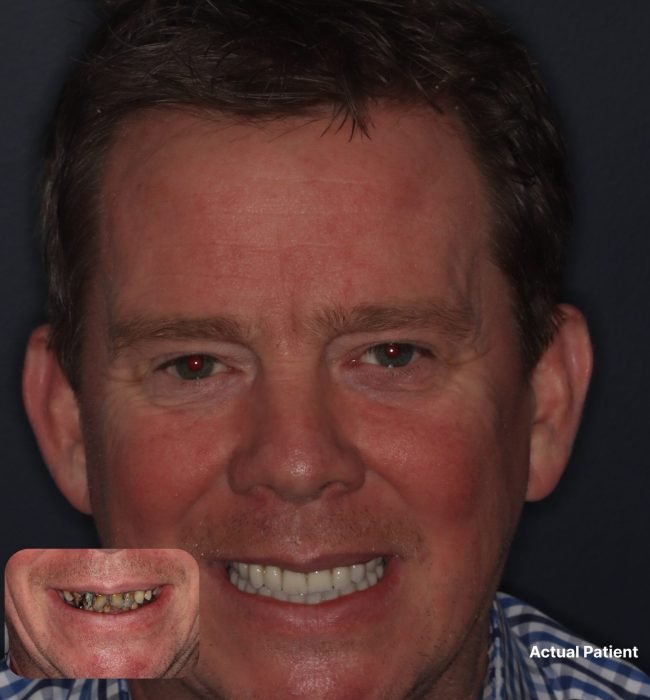
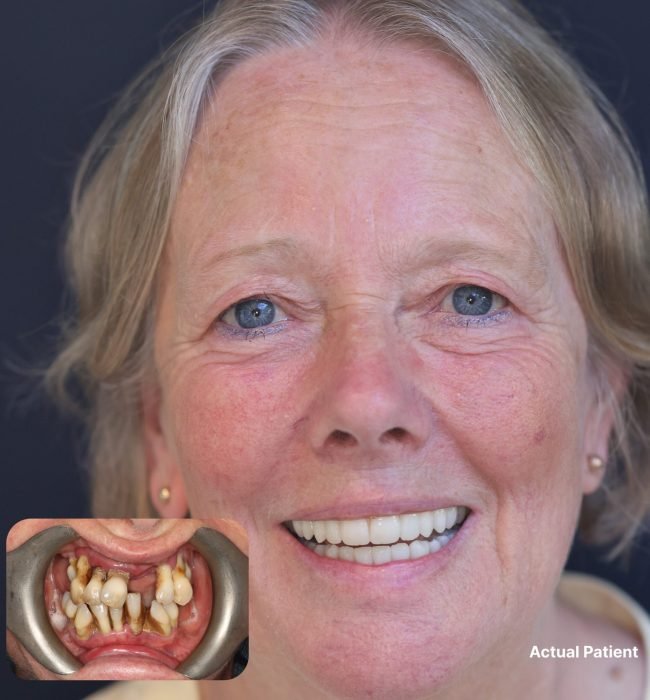
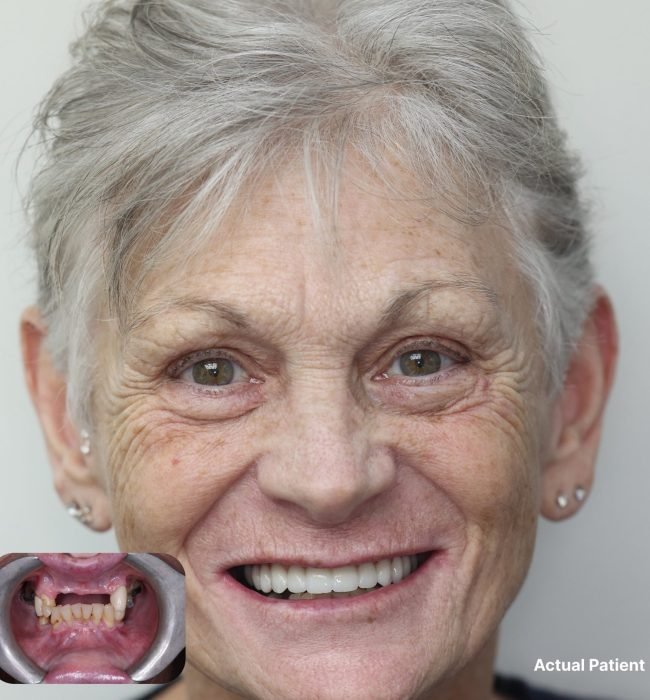
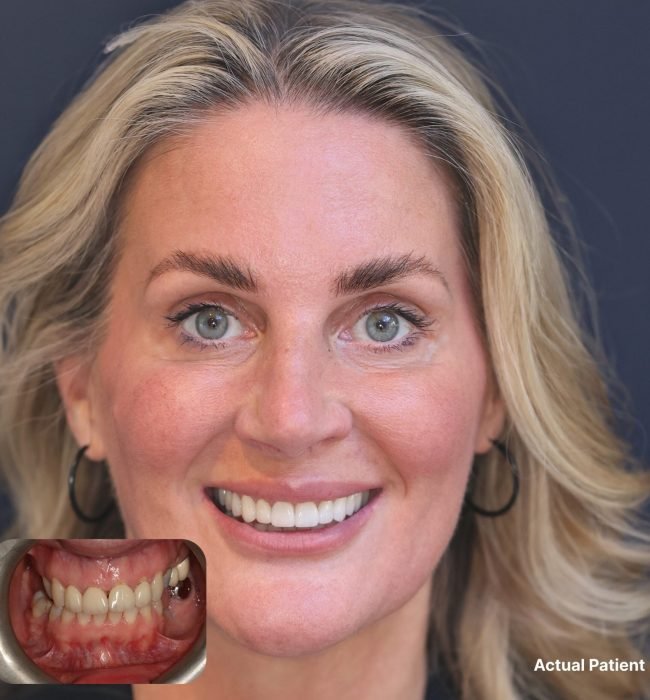
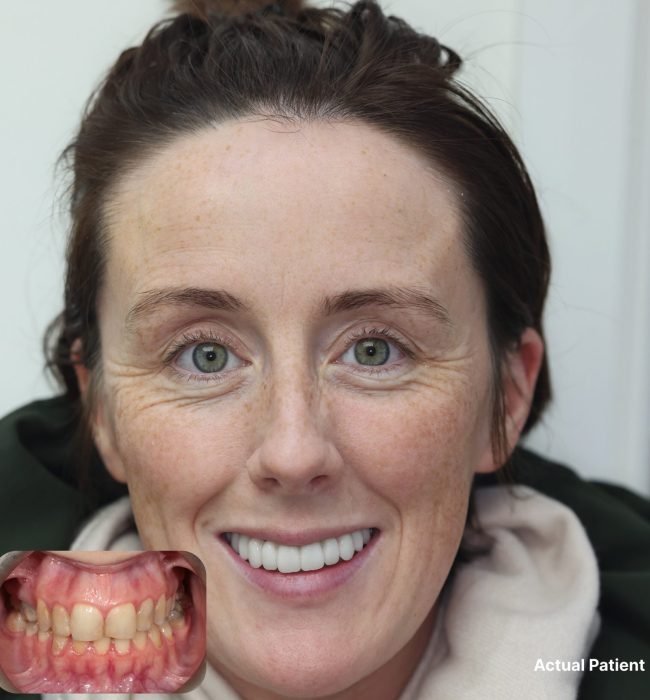
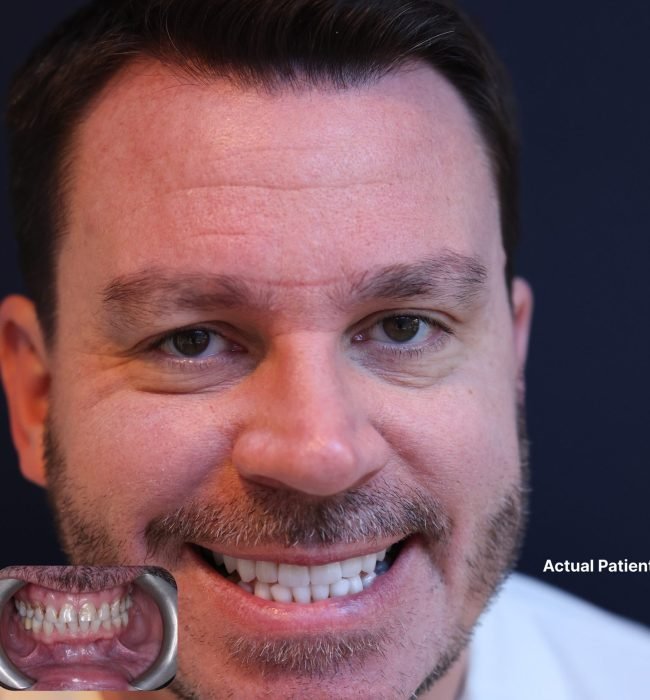
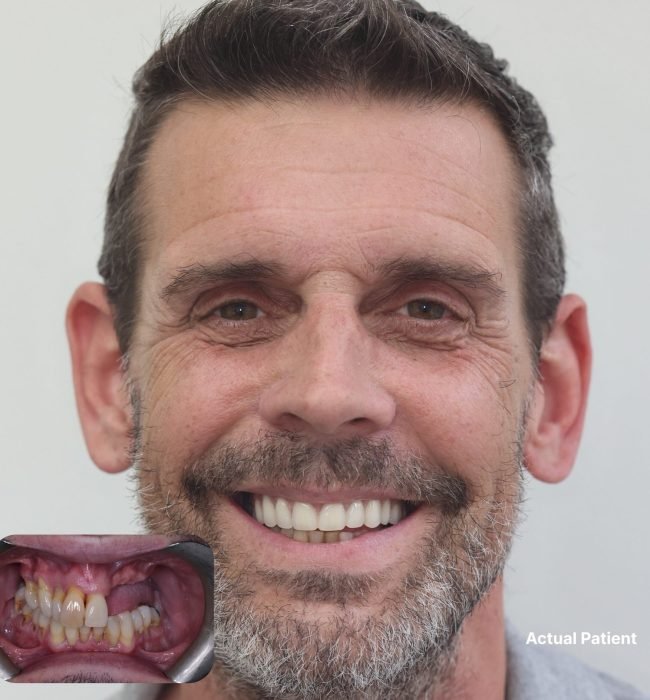
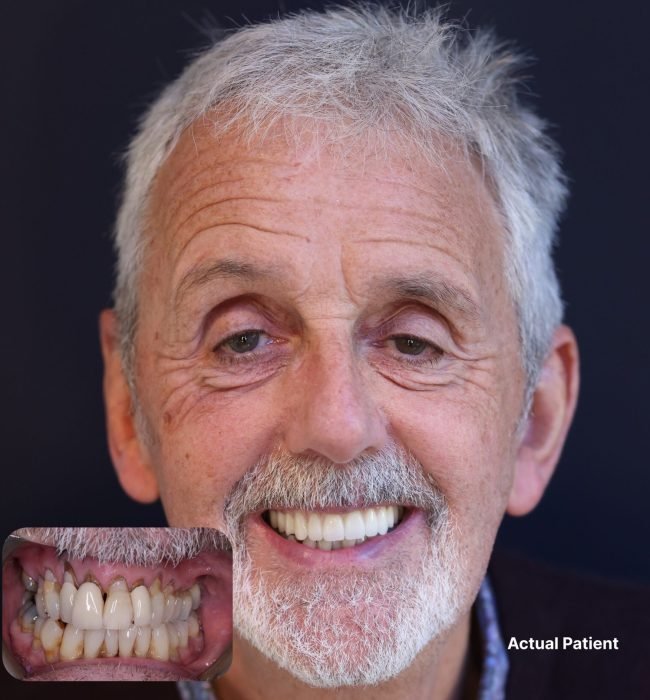
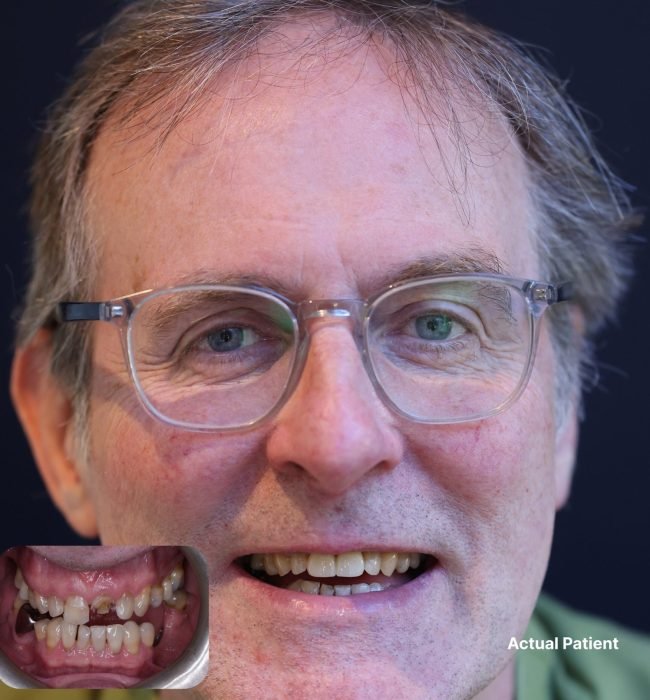
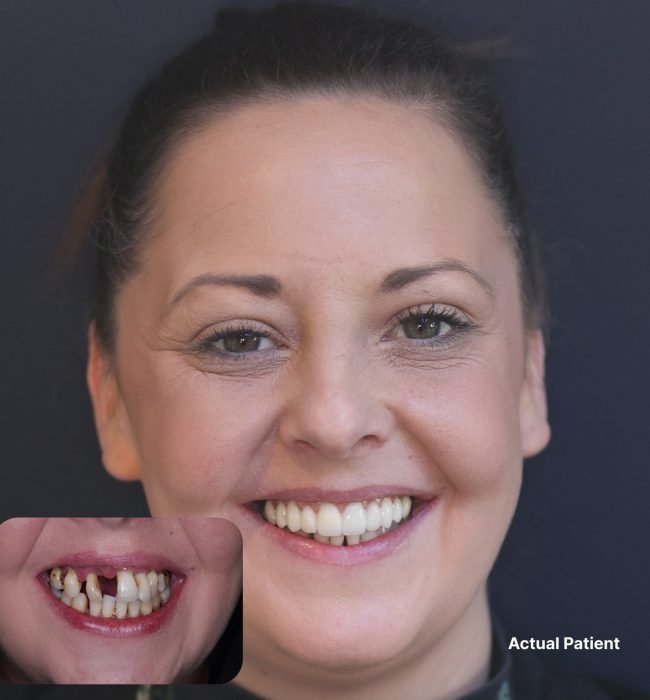
- Real Patient Results
Thousands of Smiles Transformed
Explore real patient results demonstrating the life-changing impact of expert implant dentistry at Croft Dental. From single tooth restorations to comprehensive full-mouth rehabilitations, our tailored treatment plans restore both function and natural aesthetics.
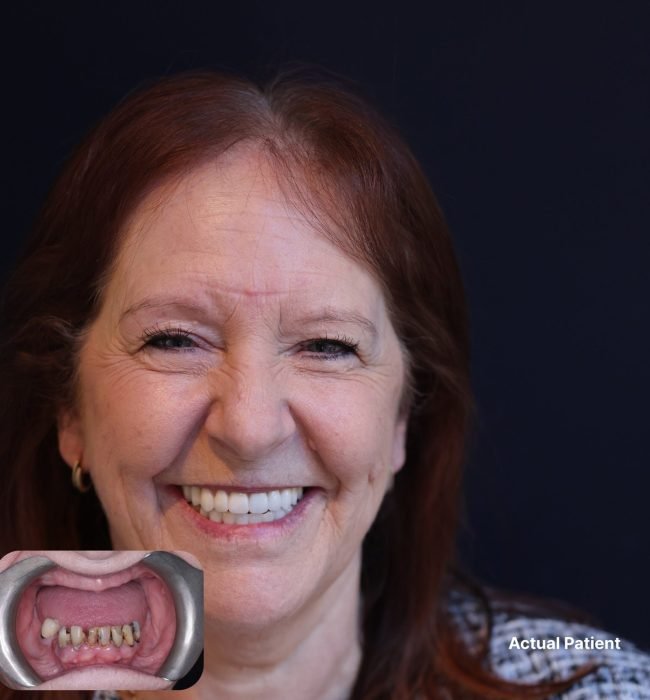
Be our Next Success Story!
All photographs show patients treated at Croft Dental and are published with their consent. Results shown are individual results.
Your treatment journey
-
1Step one: assessment and planningYour medical history and medication are reviewed. An x-ray or, for more complex cases, a CBCT 3D scan shows the shape and position of the roots.
What will happen and what will replace the tooth are both explained before we begin. -
2Step two: anaestheticLocal anaesthetic is given and given time to work properly. You will be numb before anything starts. You will feel pressure and movement during the procedure, but not pain.
If you feel anything sharp at any point, say so and more anaesthetic will be given. That is not a failure and it is not an inconvenience.
Sedation is available from £350 if you would prefer it. You will need somebody to take you home afterwards. -
3Step three: the extractionThe tooth is loosened and removed. Straightforward extractions take a few minutes. More complex ones, where a tooth is broken down or the roots are curved, take longer and may involve removing the tooth in sections or making a small incision in the gum.
Stitches are sometimes used, particularly where an incision was made. Dissolving stitches are usual and do not need removing. -
4Step four: immediately afterwardsYou will be asked to bite on gauze for a period to allow a clot to form. Written aftercare instructions are given before you leave, along with a contact number.
-
5Step five: recoveryThe first 24 hours. Bite on the gauze as instructed until bleeding stops. Do not rinse, spit forcefully, or drink through a straw, since any of these can dislodge the clot. Avoid hot food and drink while numb, avoid alcohol, and do not smoke.
Take painkillers before the anaesthetic wears off rather than waiting for discomfort to start.
Days two to three. Discomfort and swelling usually peak around this point and then improve. Warm salt water rinses can begin after the first day, held gently in the mouth rather than swilled. Keep to softer foods and chew on the other side.
The first week. Discomfort settles steadily. Keep the area clean, brushing the surrounding teeth gently and avoiding the socket itself for the first few days.
Two weeks. The gum has usually closed. Bone healing continues for several months.
Smoking substantially increases the risk of a painful complication called dry socket, and it slows healing. Not smoking for at least 48 hours afterwards makes a genuine difference, and longer is better. -
6Step six: when to call us• Bleeding that does not settle
• Pain that worsens after day three rather than improving, which can indicate dry socket
• Swelling that increases after day three
• Fever, or difficulty swallowing or opening the mouth
• A bad taste or smell that does not clear
Call the practice on 01625 523 524. These are things we would rather see early.
Dry socket
Worth explaining properly, since it is the complication patients most often experience and most often worry about.
Dry socket occurs when the blood clot in the socket is lost or fails to form, exposing the bone underneath. It typically appears three to five days after extraction, presenting as pain that worsens rather than improves, often radiating to the ear or jaw, sometimes with a bad taste.
What increases the risk
- Smoking
- Rinsing or spitting too soon
- Drinking through a straw
- Lower wisdom tooth extractions
- Oral contraceptive use
What to do
Call us. It is treated by cleaning the socket and placing a dressing, which relieves the pain quickly. It is unpleasant but it is not dangerous and it resolves with treatment.
Pricing and fees
Treatment | From |
Simple extraction | £220 |
Surgical extraction | £250 |
Surgical or complex extraction | £260 |
Socket preservation graft | £450 |
Sedation | £350 |
Emergency appointment | £50 |
Single x-ray | £15 |
OPG x-ray | £60 |
CBCT 3D scan, single arch | £80 |
Extraction is quoted in writing before treatment. Where the tooth might be saved instead, the cost of that option is quoted alongside so you can compare properly.
Replacement options are priced separately and discussed before extraction.
Where to find us
Croft Dental sits at 64 Manchester Road, on the Handforth side of Wilmslow town centre. Coming up from The Carrs, we are north east along Manchester Road. If you reach Handforth Dean, you have gone too far.
We are around ten minutes on foot from Wilmslow station, five minutes from Handforth, and roughly ten minutes from Alderley Edge up the A34.
Patients come to us from Alderley Edge, Handforth, Styal, Prestbury, Knutsford, Macclesfield, Poynton, Bramhall, Cheadle and Hale.
If you are having an extraction, arrange for somebody to collect you if you would rather not travel alone afterwards. If you are having sedation, that is not optional and you will need somebody with you.
Not sure where to start? Give us a ring.
Make an Enquiry
- DENTIST
Meet your implant dentist
Dr Nikhil Oberai
BDS · MSc Implant Dentistry, University of Manchester · ADI Member · GDC 150126
Extractions at Croft Dental are carried out with the whole picture in mind rather than as an isolated procedure, and that is largely a function of what else the practice does.
Because root canal treatment is carried out here by a clinician with a Master’s in Endodontics, some teeth we can save would be extracted elsewhere. That is worth knowing before anybody removes anything.
Because implant treatment is led by Dr Nikhil, whose Master’s in Implant Dentistry is from the University of Manchester, the replacement can be planned before the extraction rather than afterwards. In suitable cases that means an implant placed at the same appointment, or socket preservation to protect the bone.
And because CBCT 3D imaging is available on site, complex extractions where root position relative to nerves or sinuses matters can be assessed properly rather than approximately.
Where a case would be better handled in a specialist setting, we refer rather than attempt it.
- Finance
Spread the cost of treatment with finance
We offer finance on larger treatment plans through Tabeo so the cost can be spread across monthly payments. Interest-free options are available with no arrangement fees or hidden charges.
Applications take a few minutes and you will know the outcome quickly. We will show you exactly what your treatment would cost per month at your consultation.
A single extraction usually falls below the finance threshold, though extraction combined with replacement treatment generally does not.
- REGISTRATION
We're Welcoming New Patients
We warmly welcome new patients to our practice. If it’s been a while since your last visit, if dental visits make you feel anxious, if you’ve recently moved to Wilmslow, or if you’re simply seeking a team that truly listens to your concerns, you’ll find a supportive and gentle environment here with us.
During your first appointment, we take the time to conduct a complete evaluation of your teeth, gums, and overall oral health. We will listen carefully to your goals, answer any questions, and collaboratively create a treatment plan tailored specifically to you.
"I cried at my first appointment. Over 22 weeks my teeth improved beyond recognition."
★★★★★ - Melissa Wilde | Croft Dental & Implant Clinic
- FAQs
Frequently asked questions
Tooth extraction is carried out under local anaesthetic, so the procedure itself is not painful. Patients feel pressure and movement rather than pain. If anything sharp is felt during the procedure, further anaesthetic can be given. Sedation is available from £350 for patients who would prefer it. Discomfort afterwards is usual for a few days and is generally managed with ordinary painkillers.
A simple extraction at Croft Dental starts from £220, with surgical extractions from £250. Where a tooth is broken down, the roots are curved or an incision is required, it becomes a surgical extraction and costs more because it takes longer. Costs are quoted in writing before treatment begins.
Most people return to normal activities within a day or two. Discomfort and swelling typically peak around two to three days after extraction and then improve. The gum usually closes within about two weeks, while bone healing beneath the socket continues for several months.
Dry socket occurs when the blood clot in the extraction socket is lost or fails to form, exposing the underlying bone. It typically develops three to five days after extraction and causes pain that worsens rather than improves, often radiating to the ear or jaw. It is treated by cleaning the socket and placing a dressing, which relieves the pain quickly.
Soft foods for the first few days, chewing on the opposite side. Hot food and drink should be avoided while the mouth is numb. Drinking through a straw should be avoided for the first 24 hours, since the suction can dislodge the blood clot and cause dry socket. Normal eating usually resumes within a week.
It depends which tooth. Front and most back teeth generally benefit from replacement, since bone shrinks where a tooth has been removed and neighbouring teeth tend to tilt into the gap over time. A missing rear molar, particularly a wisdom tooth, often needs no replacement. Options include dental implants from £2,300, bridges from £750 per unit and dentures from £400, and are best discussed before extraction.
In some cases an implant can be placed at the same appointment as the extraction, which preserves bone and shortens overall treatment time. Suitability depends on the condition of the bone and whether infection is present, and is determined by a CBCT 3D scan. Where immediate placement is not possible, a socket preservation graft from £450 can reduce bone loss during healing.
Most extractions can be carried out without stopping anticoagulant medication, using local measures to control bleeding. Patients should never stop prescribed medication before dental treatment without medical advice. The dentist should be told what medication is being taken so the procedure can be planned appropriately.