Zygomatic Implants in Wilmslow
For patients who have been told there is not enough bone. Anchored into the cheekbone rather than the jaw, carried out by one of very few clinicians offering it in the North West.
Zygomatic implants are longer dental implants anchored into the zygomatic bone, or cheekbone, rather than the upper jaw. They are used where the upper jaw has lost too much bone to support conventional implants, offering a fixed solution to patients who would otherwise face extensive bone grafting or be told implants are not possible. Treatment is completed in a single surgical stage, with fixed teeth usually fitted within days rather than after months of graft healing. At Croft Dental on Manchester Road in Wilmslow, zygomatic implants are placed by Dr Nikhil Oberai, who holds an MSc in Implant Dentistry from the University of Manchester and has a 99.5% success rate. Consultations are free and cases are priced individually.
So, what happens when you have been told no?
Most people who end up having zygomatic implants arrive here having heard the same sentence somewhere else.
There is not enough bone. You would need extensive grafting first. Implants are not really an option for you.
Usually it is delivered kindly, and usually the person saying it believes it. You go home, you accept it, and you get on with the denture. Perhaps you look into grafting and decide eighteen months of surgery is more than you have the appetite for. Either way, a door closes.
That advice is frequently correct as far as conventional implants go. The upper jaw loses bone quickly once teeth are gone, particularly at the back where the sinuses expand downwards into space. After years in a denture, there genuinely can be very little left to work with.
What it misses is that the jaw is not the only bone available.
A zygomatic implant is a longer implant that anchors into the cheekbone instead. The cheekbone does not shrink when teeth are lost. It stays dense and stable regardless of how long you have been without teeth, which makes it a reliable anchor point when the jaw no longer offers one.
Rather than spending a year rebuilding bone that has gone, the implant engages bone that was never affected in the first place.
Why so few practices offer it
It is a more demanding procedure requiring specific training, and most general practices do not provide it. That is a legitimate reason to be told no, but it is a different reason from the one usually given.
If you were turned away at a practice that does not offer zygomatic implants or advanced grafting, you were told what that practice could do. Not what is possible.
How zygomatic implants work
A conventional implant is around ten to thirteen millimetres long and sits within the jawbone. A zygomatic implant is considerably longer, typically thirty to fifty-five millimetres, passing through or alongside the sinus area and engaging the dense bone of the cheek.
How they are used
Zygomatic implants are almost always part of a full arch upper solution rather than replacing a single tooth.
Typically two zygomatic implants are placed at the back, where bone loss is greatest, combined with two conventional implants at the front where some bone usually remains. In cases of very severe loss, four zygomatic implants may be used.
A fixed bridge is then secured across all of them, giving a full upper arch of teeth that does not move and does not come out.
Your options for severe upper bone loss
Where the upper jaw has insufficient bone, there are two realistic routes to a fixed result.
Extensive bone grafting
- Bone is taken from elsewhere or sourced from graft material and built up in the upper jaw, often combined with a sinus lift
- The graft must heal before implants can be placed, and the implants must integrate before teeth can be fitted
- Realistically nine to eighteen months from start to finish, across multiple surgical stages
- A removable denture is worn throughout
- Graft outcomes become less predictable as bone loss becomes more severe
Zygomatic implants
- Bypasses grafting entirely by anchoring into bone that is already there
- Completed in a single surgical stage
- Fixed teeth usually fitted within days rather than after months of healing
- Fewer procedures and a considerably shorter timeline
- In severe cases, a more predictable result
Which is right for you
Grafting remains the better option in some cases, particularly where bone loss is moderate rather than severe, and where you are not in a hurry.
Dr Nikhil will tell you honestly which he would recommend after reviewing your 3D scan, including the reasons and the trade-offs. Both are carried out here, so th
Am I a suitable candidate?
Zygomatic implants are a solution to a specific problem rather than a general implant option.
May be suitable if you
- Are missing all or most of your upper teeth
- Have been told you have insufficient bone for conventional upper implants
- Have been told you would need extensive bone grafting
- Have had a failed graft or failed upper implants previously
- Wear an upper denture and want a fixed alternative
- Are in reasonable general health
We will need to assess further if you
- Have active sinus disease or chronic sinusitis, which must be assessed before surgery
- Have uncontrolled diabetes, which affects healing
- Smoke, as this raises the risk of implant failure considerably
- Take bisphosphonates or other medications affecting bone
- Have other medical conditions affecting healing or bone quality
Implant treatment is contraindicated during pregnancy. We can plan your case and begin once it is appropriate.
What actually determines suitability
A CBCT 3D scan, and nothing else can substitute for it.
It shows the volume and density of your remaining jawbone, the position and health of your sinuses, and the anatomy of the cheekbone itself. Dr Nikhil will only recommend zygomatic implants where the scan supports it.
And where conventional implants would work, he will recommend those instead. Zygomatic treatment is more involved and it is not used where something simpler would achieve the same result.
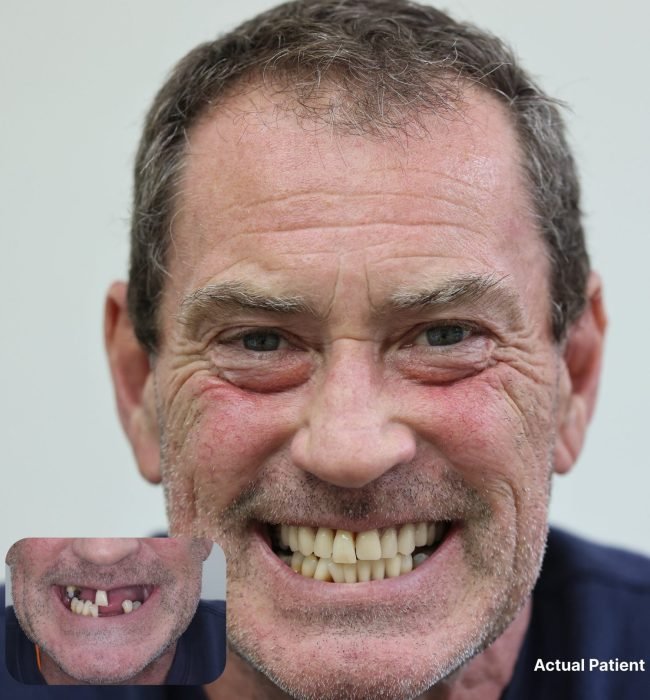
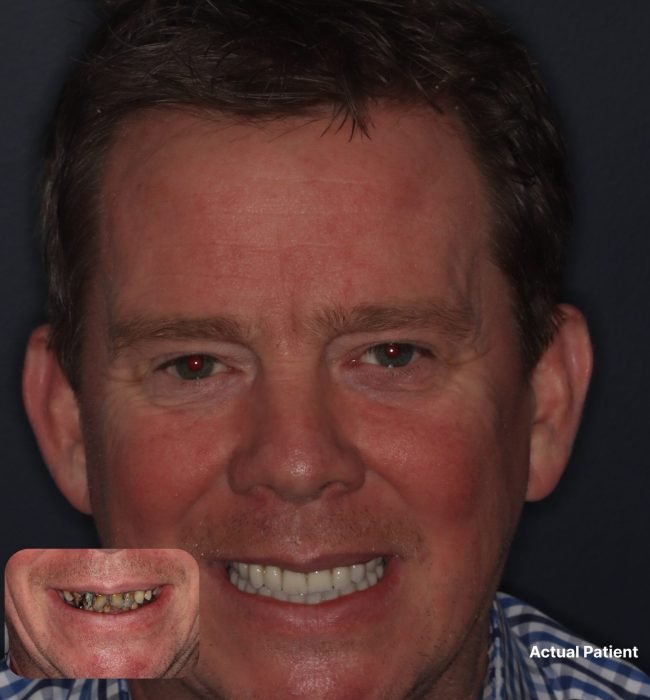
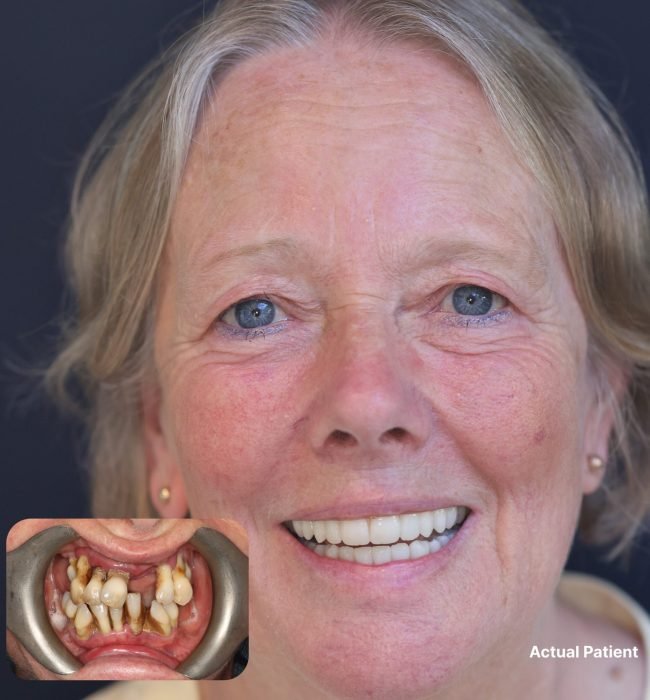
- Real Patient Results
Thousands of Smiles Transformed
Explore real patient results demonstrating the life-changing impact of expert implant dentistry at Croft Dental. From single tooth restorations to comprehensive full-mouth rehabilitations, our tailored treatment plans restore both function and natural aesthetics.
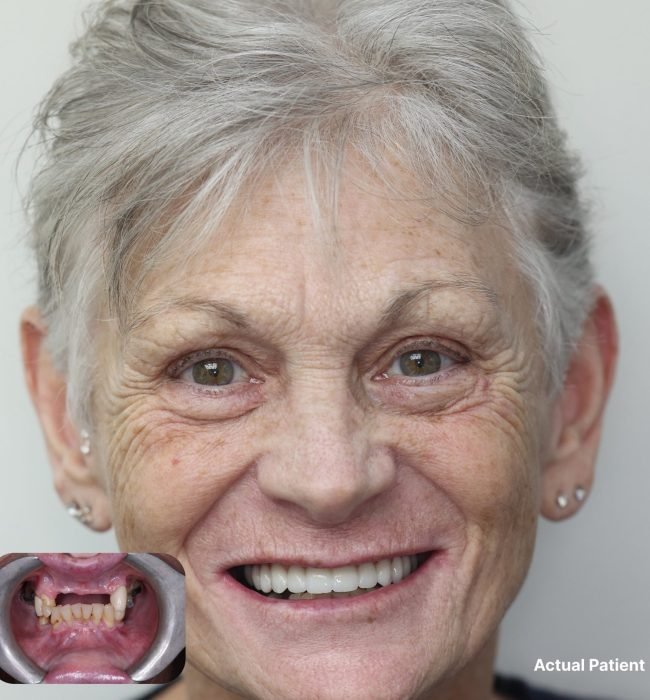
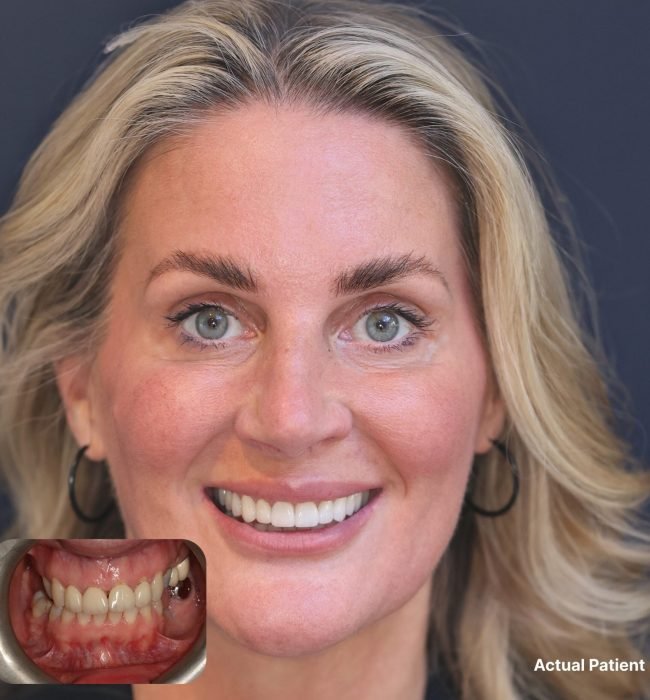
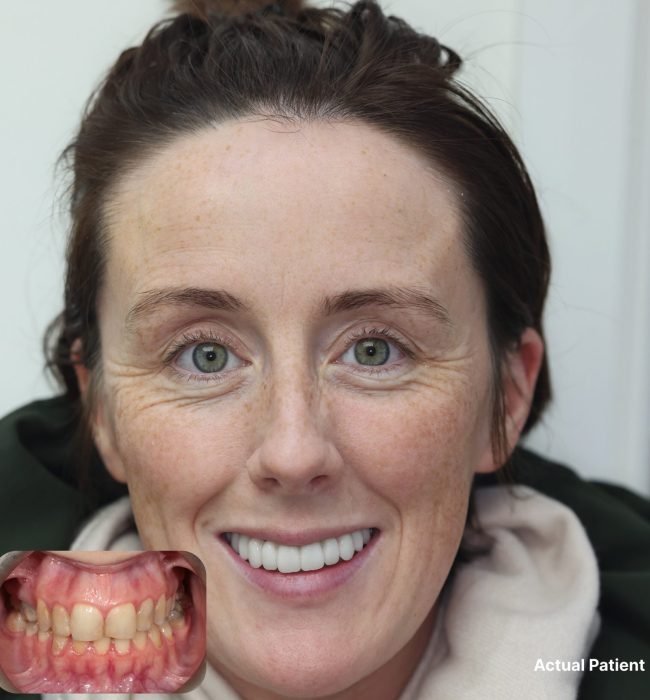
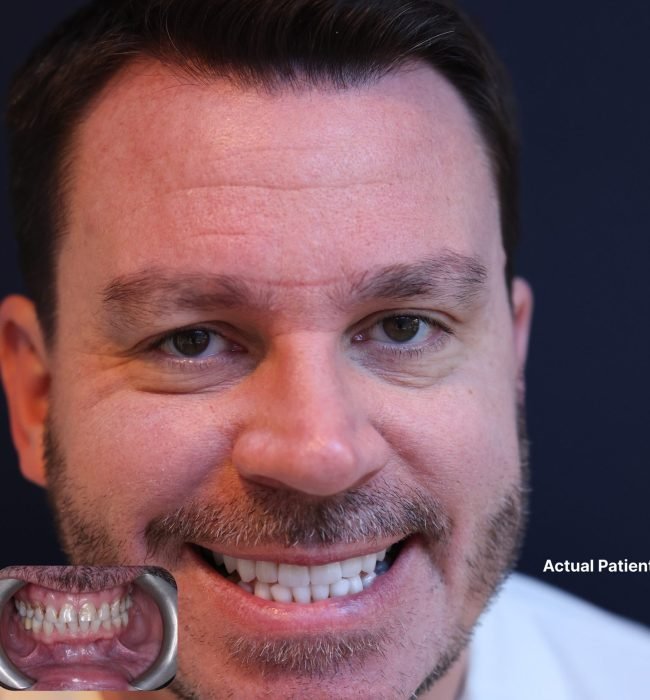
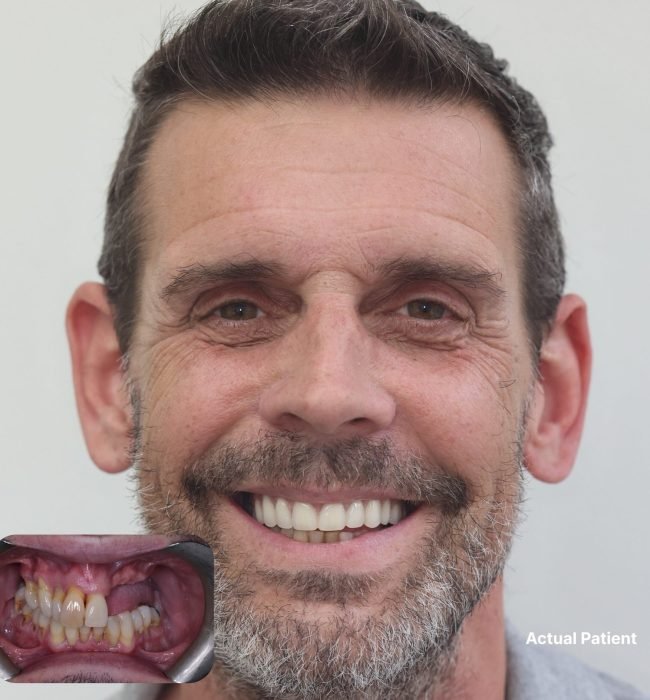
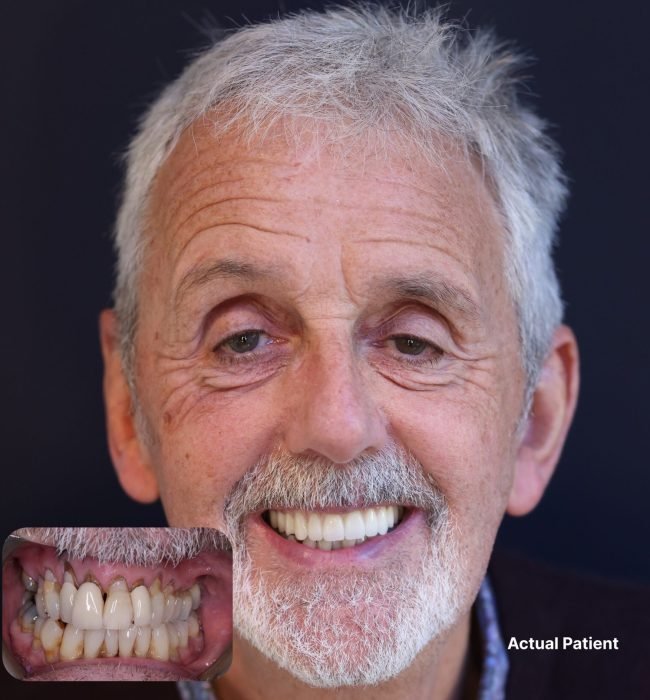
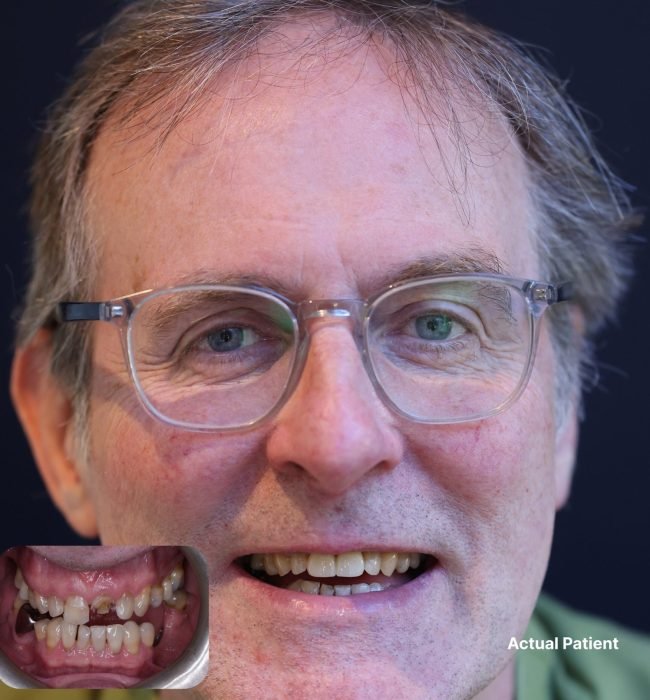
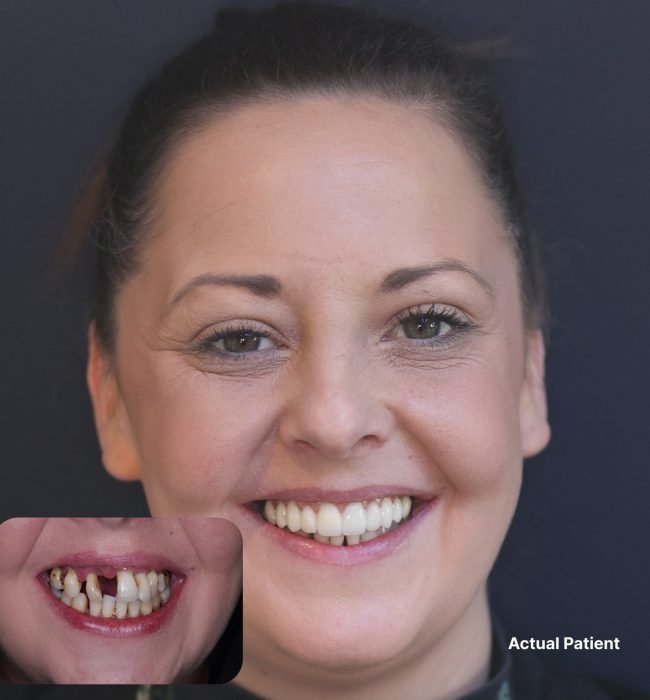
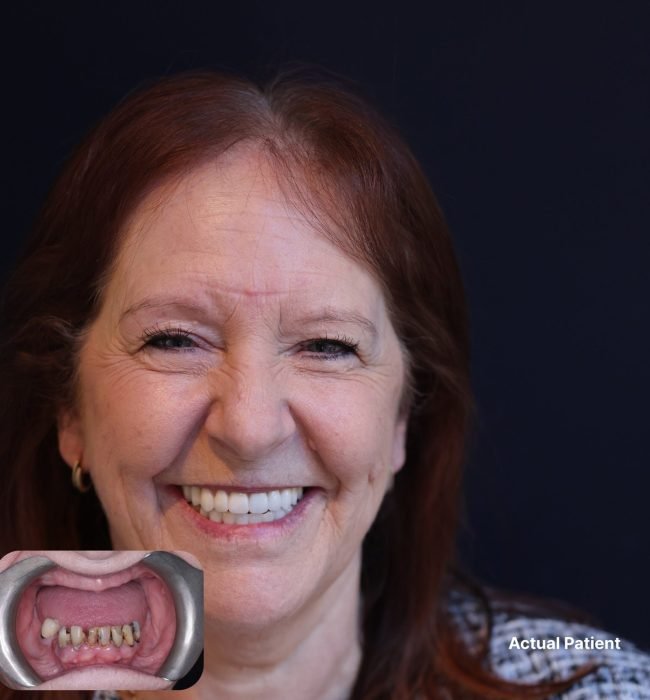
Be our Next Success Story!
All photographs show patients treated at Croft Dental and are published with their consent. Results shown are individual results.
Your treatment journey
-
1Step one: consultation and CBCT 3D scanDr Nikhil examines your mouth and takes a detailed CBCT scan. For zygomatic cases the scan is essential rather than helpful, since it maps the cheekbone anatomy, sinus position and remaining jawbone in three dimensions. He will also review your medical history carefully.
-
2Step two: your treatment planYou receive a written plan setting out how many zygomatic and conventional implants are recommended, the timeline, each stage and every cost. Finance is explained at the same time. Nothing proceeds until you have agreed.
-
3Step three: digital planningThe implant trajectory is planned in three dimensions before surgery. Zygomatic placement requires precision, since the implant passes close to the sinus and other structures. This planning stage is what makes the procedure predictable rather than exploratory.
-
4Step four: surgeryZygomatic implants are placed under local anaesthetic with sedation. Surgery is longer than conventional implant placement, typically two to four hours. Any remaining upper teeth are removed at the same time where necessary.
-
5Step five: your temporary teethA fixed temporary bridge is usually fitted within a few days of surgery, and in some cases on the same day. Zygomatic implants achieve high initial stability because they engage dense bone, which is why immediate or early loading is often possible.
-
6Step six: healingHealing takes several months while soft tissue settles and the implants stabilise fully. You wear the temporary bridge throughout, with review appointments monitoring progress.
The first week: swelling around the cheek and under the eye is common and expected, usually peaking around day two or three before settling. Some bruising is normal. Discomfort is managed with prescribed painkillers and improves steadily.
Sinus precautions: because the implants pass close to the sinus, you will be given specific instructions, usually including avoiding nose blowing, sneezing with the mouth closed, air travel and swimming for a defined period. These matter and we will go through them clearly.
Diet: soft food for several weeks while healing progresses.
Time off work: most patients take around a week, though this varies. -
7Step seven: your final teethThe definitive bridge is made and fitted once healing is complete, using stronger material and finished to a higher standard than the temporary. Shade and shape are agreed with you.
-
8Step eight: aftercare and maintenanceZygomatic implants require the same ongoing maintenance as any implant, meaning regular hygiene appointments and monitoring. Cleaning around the bridge uses a water flosser and interdental brushes, and we will teach you the technique properly before you leave.
Full written aftercare instructions are provided on the day, and you can contact the practice at any point if something does not feel right.
What you should know before deciding
Zygomatic implants are a well-established procedure with good long-term outcomes in appropriate cases. They are also more involved than conventional implants, and it would be wrong to present them otherwise.
Points to be aware of:
- Surgery is longer, and recovery involves more swelling and bruising than standard implant placement
- The implants pass close to the sinus, and sinus-related complications are possible, though uncommon when cases are planned properly
- The procedure requires specific training and experience, and is not offered by most practices
- Cost is higher than conventional implant treatment, reflecting the complexity involved
- As with any implant, long-term success depends on maintenance and regular monitoring
Dr Nikhil will discuss the risks specific to your case at your consultation, in full, before you make any decision. You will have time to consider it and you are welcome to seek a second opinion.
Pricing and fees
Treatment | From |
Implant consultation | Free |
Zygomatic implant treatment, full upper arch | Priced on assessment |
Combined zygomatic and conventional case | Priced on assessment |
CBCT 3D scan, single arch | £80 |
CBCT 3D scan, dual arch | £170 |
Sedation | £350 |
Tooth extraction, if required | £220 |
Zygomatic cases are priced individually because the number of implants and the complexity vary considerably between patients.
For context, a conventional fixed full arch package starts from £11,500. Zygomatic treatment costs more than this, reflecting the additional complexity, and your exact figure is given after your scan.
Your quoted fee covers the implants, the surgery, your temporary teeth and your final bridge. Everything is set out in writing before treatment begins.
Where to find us
Croft Dental sits at 64 Manchester Road, on the Handforth side of Wilmslow town centre. Coming up from The Carrs, we are north east along Manchester Road. If you reach Handforth Dean, you have gone too far.
We are around ten minutes on foot from Wilmslow station and easily reached from across Cheshire and Greater Manchester.
For this treatment specifically, patients come from considerably further. Because so few practices offer zygomatic implants, we see patients from across Greater Manchester, Merseyside, Lancashire and Staffordshire, as well as from Alderley Edge, Knutsford, Macclesfield and the surrounding Cheshire towns.
If you are travelling a significant distance, tell us when you book. We will plan appointments to minimise the number of journeys required, and we will be realistic with you about which ones genuinely need you to be here.
Not sure where to start? Give us a ring.
Make an Enquiry
- DENTIST
Meet your implant dentist
Dr Nikhil Oberai
BDS · MSc Implant Dentistry, University of Manchester · ADI Member · GDC 150126
Dr Nikhil places zygomatic implants at Croft Dental, a procedure carried out by a small number of clinicians in the North West.
His Master’s degree from the University of Manchester involved several years of postgraduate study and supervised clinical practice devoted entirely to implantology, and he has completed hundreds of implant cases with a 99.5% success rate.
Every alternative is also available here. Bone grafting, sinus lifts, All-on-4 and conventional implants are all carried out at the practice, which means zygomatic implants are recommended when they are genuinely the right answer rather than because they are the only option we provide.
He is a member of the Association of Dental Implantology, a Key Opinion Leader for Osstem, and an Honorary Clinical Teaching Fellow at the University of Manchester, where he helps train dentists on the implant programme. Practices across the North West refer their complex cases to him.
- Finance
Spread the cost of zygomatic implants with finance
We offer finance on implant treatment through Tabeo so the cost can be spread across monthly payments. Interest-free options are available with no arrangement fees or hidden charges.
Applications take a few minutes and you will know the outcome quickly. We will show you exactly what your treatment would cost per month at your consultation.
- REGISTRATION
We're Welcoming New Patients
We warmly welcome new patients to our practice. If it’s been a while since your last visit, if dental visits make you feel anxious, if you’ve recently moved to Wilmslow, or if you’re simply seeking a team that truly listens to your concerns, you’ll find a supportive and gentle environment here with us.
During your first appointment, we take the time to conduct a complete evaluation of your teeth, gums, and overall oral health. We will listen carefully to your goals, answer any questions, and collaboratively create a treatment plan tailored specifically to you.
"I cried at my first appointment. Over 22 weeks my teeth improved beyond recognition."
★★★★★ - Melissa Wilde | Croft Dental & Implant Clinic
- FAQs
Frequently asked questions
Zygomatic implants are longer dental implants anchored into the zygomatic bone, or cheekbone, rather than the upper jaw. They are used where the upper jaw has lost too much bone to support conventional implants. Because the cheekbone does not resorb after tooth loss, it provides a stable anchor point regardless of how much jawbone remains.
Zygomatic implants are used for patients missing most or all of their upper teeth who have severe upper jaw bone loss. They are commonly recommended for patients told they need extensive bone grafting, who have had a failed graft or failed upper implants, or who have worn an upper denture for many years. Suitability is determined by a CBCT 3D scan.
Zygomatic implants avoid the need for extensive grafting, are completed in a single surgical stage, and allow teeth to be fitted within days rather than after months of graft healing. Bone grafting remains appropriate where bone loss is moderate. In cases of severe bone loss, zygomatic implants often offer a shorter and more predictable route to a fixed result.
Surgery is carried out under local anaesthetic with sedation. Patients typically experience swelling around the cheek and under the eye for several days afterwards, along with some bruising, which is expected and settles within one to two weeks. Discomfort is managed with prescribed pain relief.
Zygomatic implants are designed as a permanent solution and studies report long-term success rates comparable to conventional implants when cases are properly selected and maintained. Long-term success depends on regular hygiene appointments, good cleaning around the bridge, and ongoing monitoring by the dental team.
Zygomatic cases are priced individually, because the number of implants required and the complexity of the case vary considerably between patients. The quoted fee covers the implants, the surgery, the temporary teeth and the definitive bridge. Costs are higher than conventional full arch implant treatment, which starts from £11,500, and a precise figure is given following consultation and CBCT scan.
A fixed temporary bridge is usually fitted within a few days of surgery, and in some cases on the same day. Zygomatic implants achieve high initial stability because they engage dense cheekbone, which is why early loading is frequently possible. The definitive bridge is fitted once healing is complete, several months later.
Yes. Patients who have had an unsuccessful bone graft are among the most common candidates for zygomatic implants, since the treatment does not rely on rebuilding bone in the upper jaw. A CBCT 3D scan assesses the remaining anatomy and determines whether zygomatic placement is appropriate.