
Single Dental Implants in Wilmslow
One missing tooth, replaced properly. Placed by an implant dentist with a Master’s degree from the University of Manchester, a few minutes from Wilmslow town centre.
A single dental implant replaces one missing tooth using a titanium post placed into the jawbone and topped with a crown matched to the teeth either side. At Croft Dental on Manchester Road in Wilmslow, a complete single implant starts from £2,300 and is placed by Dr Nikhil Oberai, who holds an MSc in Implant Dentistry from the University of Manchester and has a 99.5% success rate across hundreds of cases. Treatment typically takes three to six months across three or four appointments, with a temporary tooth fitted throughout so no visible gap remains. Unlike a bridge, an implant replaces the root as well as the crown, preventing the jawbone shrinking and leaving the neighbouring teeth untouched. Implant consultations are free of charge.
So, what is a dental implant?
There is a particular moment a lot of our patients describe when they finally sit down in the chair.
Somebody took a photograph. A wedding, a birthday lunch, a grandchild’s christening. And when the picture came round afterwards, the first thing they saw was not the occasion or the people. It was the gap.
Most people do not lose a tooth and ring a dentist the following week. They live with it. They start chewing on the other side without ever quite deciding to. They develop a version of smiling that keeps the lips a little closer together, and after a while they stop noticing they are doing it. It becomes a habit long before it becomes a decision.
If that sounds familiar, you are in company. We see it every week, and nobody here is going to ask why you left it.
A dental implant is what ends that. It is a small titanium post placed into the jawbone, sitting exactly where the root of your tooth used to be. Over the following months the bone grows onto it and holds it as firmly as the original root ever did. A crown is then fixed on top, shaped and shaded to match the teeth either side.
The finished result behaves like the tooth it replaced. You bite with it, chew with it, brush it. Most patients tell us they stop thinking about it within a few weeks, which is rather the point.
Three parts make up a single implant:
- The implant: a titanium post placed into the jawbone, replacing the root of the missing tooth.
- The abutment: a small connector that sits on top of the implant and holds the crown in position.
- The crown: the visible tooth, made from porcelain or zirconia and matched to the shade and shape of your natural teeth.
Your options for one missing tooth
If you are missing a single tooth, an implant and a bridge are the two realistic options. They are not equivalent, and the difference is worth understanding before you choose.
A single dental implant
- Replaces the root as well as the crown, so the jawbone stays stimulated and does not shrink away
- Leaves the neighbouring teeth completely untouched
- Cleaned like a normal tooth, with a brush and floss
- Frequently lasts for decades
- Costs more initially and takes longer to complete
A conventional bridge
- Requires the healthy teeth either side to be cut down and crowned to carry the bridge
- Does nothing to prevent bone loss beneath the gap
- Needs specific cleaning underneath with interdental brushes or a floss threader
- Typically lasts ten to fifteen years before it needs replacing
- Costs less initially and is completed in a few weeks
Which one suits you
The question most patients end up weighing is what happens to the teeth either side.
If those teeth are healthy and untouched, cutting them down to carry a bridge is a significant thing to do to two perfectly good teeth. If they already carry large fillings or crowns, a bridge may make rather more sense.
Dr Nikhil will talk you through both at your consultation and tell you which he would recommend in your case, and why.
Am I a suitable candidate?
Most adults missing one tooth are suitable. Dr Nikhil will assess your case properly using a CBCT 3D scan, but as a general guide:
Usually suitable if you
- Are missing one tooth, or have a tooth that cannot be saved
- Have healthy gums, or gum disease that can be treated beforehand
- Have enough jawbone to hold the implant, or bone that can be rebuilt
- Are in reasonable general health
- Do not smoke, or are willing to stop while the implant heals
We will need to assess further if you
- Have lost bone at the site, since grafting or a sinus lift may be needed first
- Have untreated gum disease, which must be resolved before an implant is placed
- Have diabetes, which affects healing and needs to be well controlled
- Smoke, as this raises the risk of implant failure considerably
- Take bisphosphonates or certain other medications affecting bone
- Grind your teeth, which may mean a nightguard is recommended to protect the crown
Implant treatment is contraindicated during pregnancy. We can plan your case and begin once it is appropriate.
If the tooth has been missing for years
Very common, and usually not the obstacle people assume it is.
The bone will have shrunk to some degree, because bone that is no longer holding a root stops being stimulated and gradually thins. A scan will show whether grafting is needed first. Plenty of people arrive convinced they have left it far too late and turn out to be perfectly straightforward cases.
Worth finding out rather than assuming.
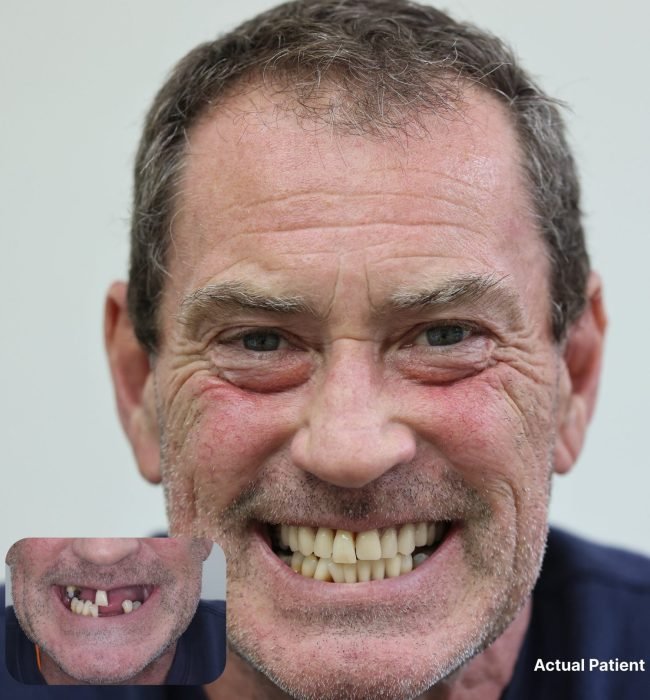
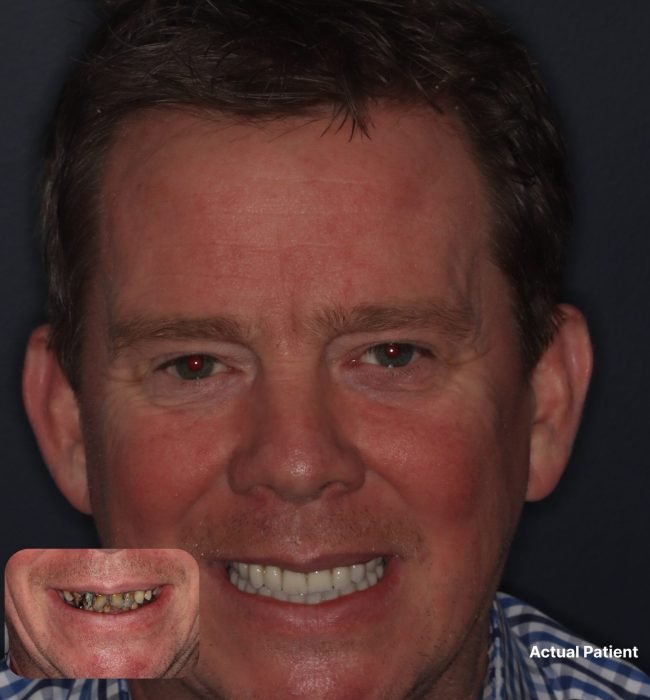
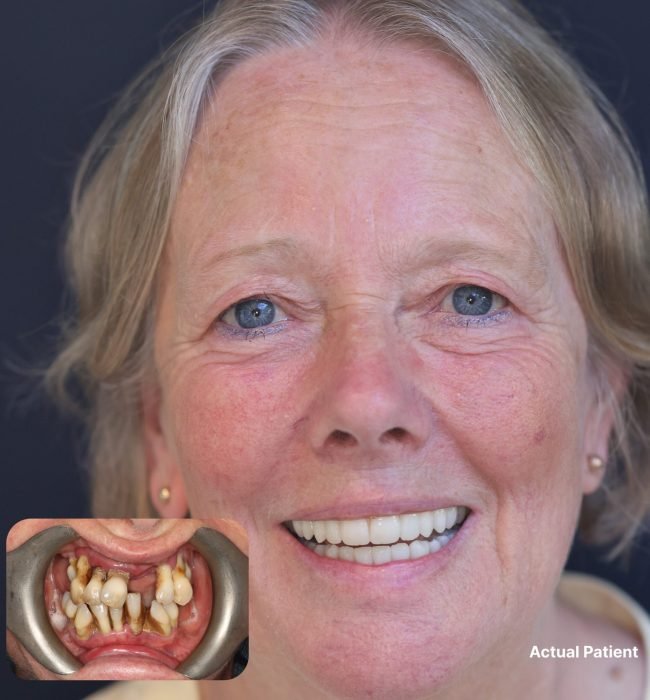
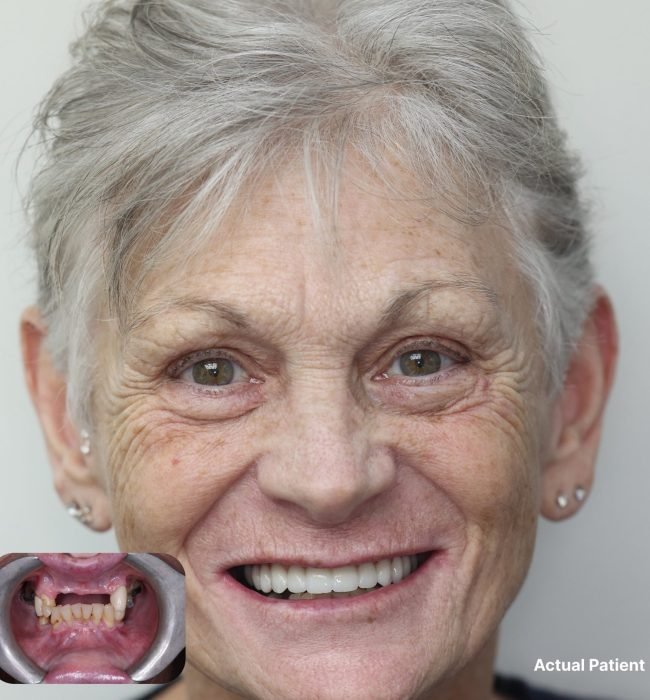
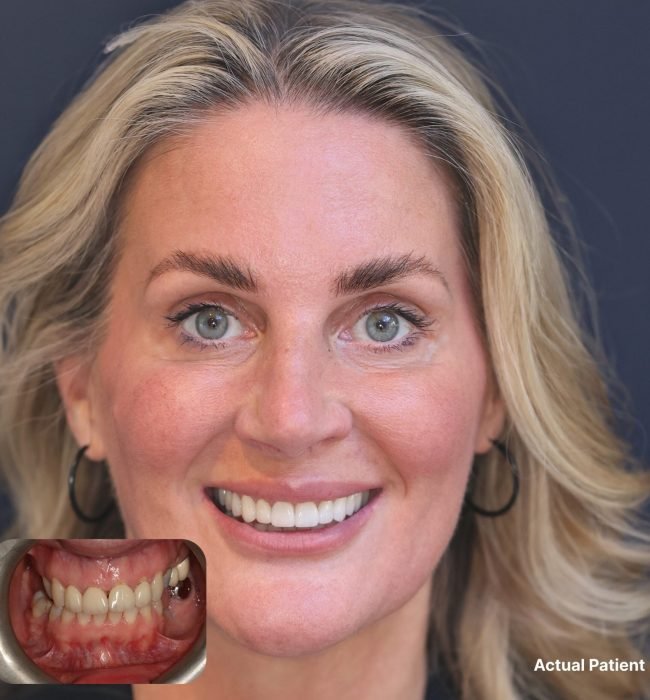
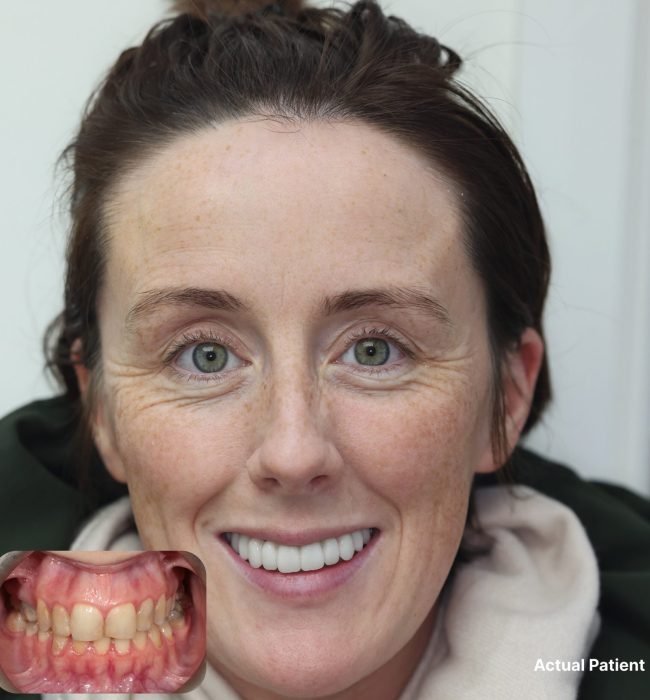
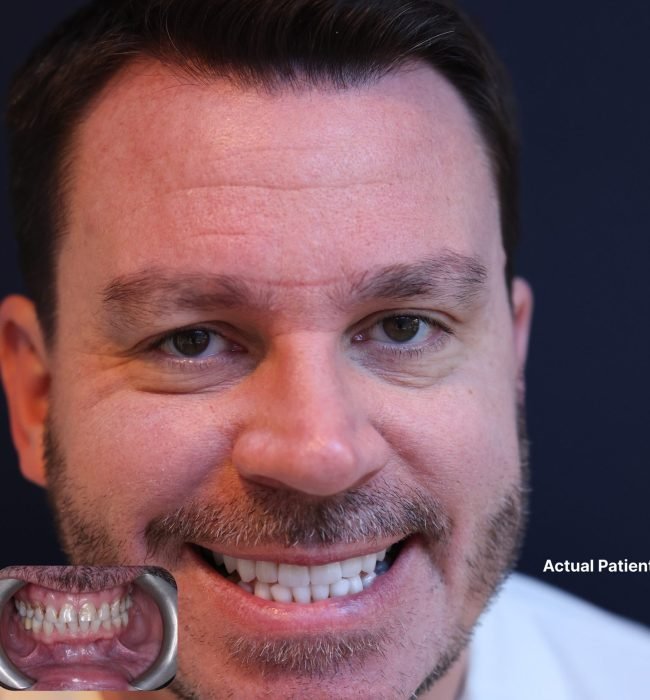
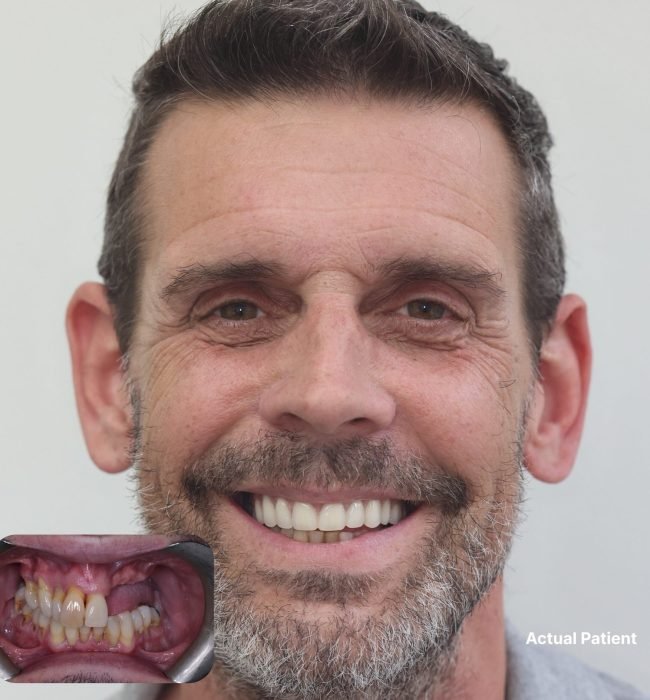
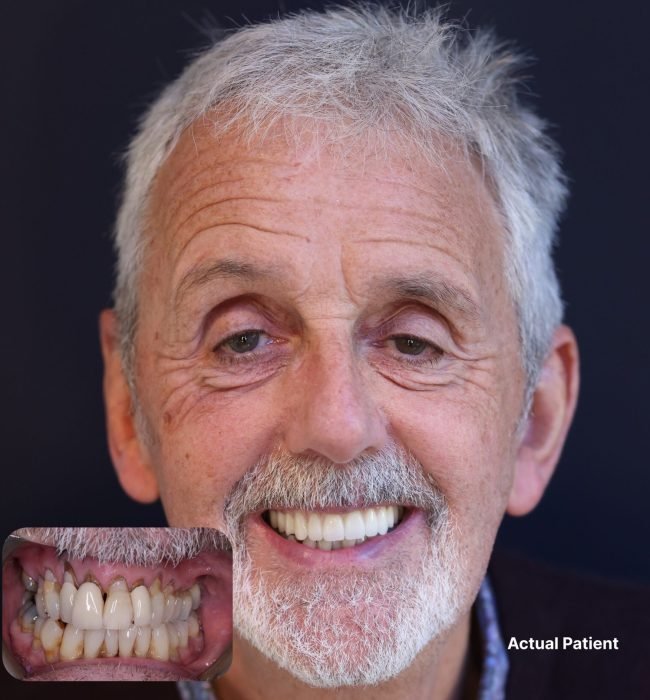
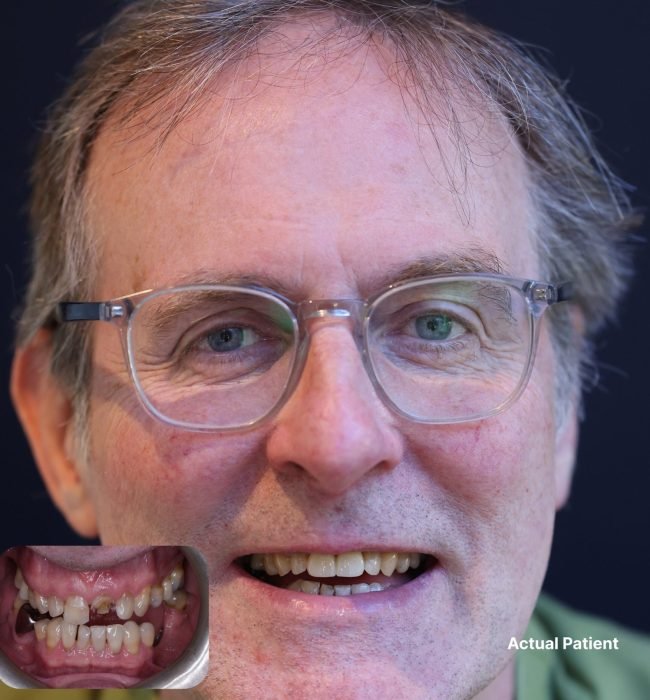
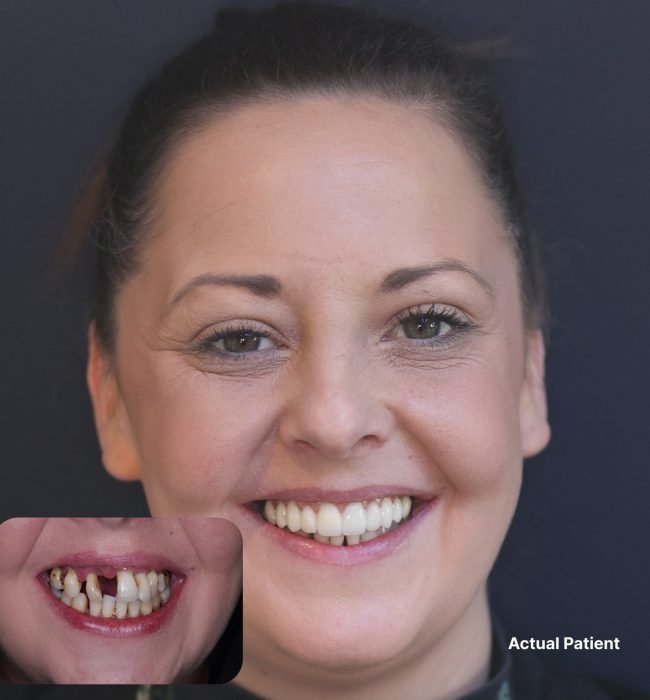
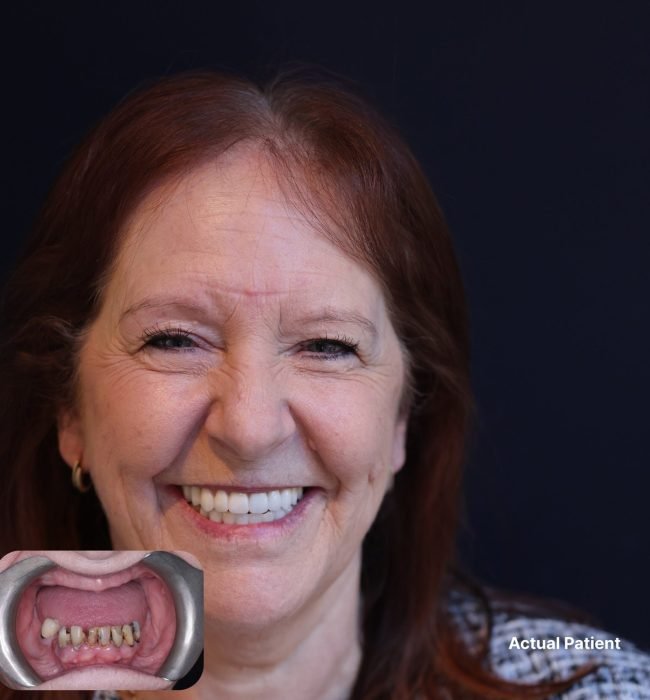
- Real Patient Results
Thousands of Smiles Transformed
Explore real patient results demonstrating the life-changing impact of expert implant dentistry at Croft Dental.
Be our Next Success Story!
All photographs show patients treated at Croft Dental and are published with their consent. Results shown are individual results.
Your treatment journey
-
1Step one: consultation and 3D scanDr Nikhil examines the site, discusses your options and takes a CBCT 3D scan. The scan shows bone volume, density and the position of the nerves and sinuses, which is how the implant position is planned precisely rather than approximately. You receive a written treatment plan with full costs afterwards.
-
2Step two: any preparatory workIf the tooth is still in place and needs removing, if gum disease needs treating, or if bone needs building up through a graft, that happens first. Healing time depends on what is required.
-
3Step three: implant placementThe implant is placed under local anaesthetic. For a single implant the procedure usually takes under an hour, and you will feel pressure rather than pain. Where the gap is visible when you smile, a temporary tooth is fitted, so you do not leave with a space.
-
4Step four: healing and integrationThe implant needs three to six months to fuse with the bone. There is very little to do during this period beyond keeping the area clean and attending a review appointment. Most patients carry on entirely as normal.
-
5Step five: digital impressionsOnce integration is confirmed we take a digital scan so your crown can be made. Shade is matched to your surrounding teeth at this stage.
-
6Step six: fitting your crownThe final crown is fitted and adjusted so it sits correctly against the opposing teeth. This appointment is usually short and requires no anaesthetic.
-
7Step seven: recovery and aftercareMost patients are back at work the following day. Some swelling and tenderness is normal for the first few days and typically settles within three to five. Stick to softer foods initially and chew on the other side.
Once healed there is nothing to avoid. We review the implant afterwards and continue to check it at your routine appointments, and it is cleaned like any other tooth.
Full written aftercare instructions are provided on the day, and you can ring the practice at any point if something does not feel right.
Pricing and fees
Treatment | From |
Single implant placement | £1,300 |
Implant crown and abutment | £1,000 |
Complete single implant | £2,300 |
Same day single implant | £2,000 |
Tooth extraction, if required | £220 |
Bone augmentation, if required | £450 |
Sinus lift, if required | £850 |
CBCT 3D scan, single arch | £80 |
Sedation, if preferred | £350 |
Implant consultation | Free |
A complete single implant is priced in two stages, because the placement and the crown happen several months apart. The £2,300 figure covers everything needed for a straightforward case.
Where extraction, bone grafting or a sinus lift is required first, that is quoted separately and set out clearly in your written treatment plan before anything begins.
Where to find us
Croft Dental sits at 64 Manchester Road, on the Handforth side of Wilmslow town centre. Coming up from The Carrs, we are north east along Manchester Road. If you reach Handforth Dean, you have gone too far.
We are around ten minutes on foot from Wilmslow station, five minutes from Handforth, and roughly ten minutes from Alderley Edge up the A34.
Patients travel to us for implant treatment from across the area, including Alderley Edge, Handforth, Styal, Prestbury, Mottram St Andrew, Knutsford, Macclesfield, Poynton, Mobberley, Bramhall and Cheadle, as well as from South Manchester along the A538 from the airport.
Single implant treatment involves three or four appointments across several months. If you are travelling a distance, say so when you book and we will plan the timings around what actually works for you.
Not sure where to start? Give us a ring.
Make an Enquiry
- DENTIST
Meet your implant dentist
Dr Nikhil Oberai
BDS · MSc Implant Dentistry, University of Manchester · ADI Member · GDC 150126
Dr Nikhil places single implants at Croft Dental and has completed hundreds of cases with a success rate of 99.5%. His Master’s degree from the University of Manchester involved several years of postgraduate study devoted entirely to implantology, which is a considerably deeper qualification than the short certificate courses many dentists complete before offering implants.
He is a member of the Association of Dental Implantology, a Key Opinion Leader for Osstem, and an Honorary Clinical Teaching Fellow at the University of Manchester, where he helps train dentists on the implant programme. Practices across the North West refer their complex implant cases to him.
Two things come up again and again in his patient reviews. The first is that he explains everything before he does it. The second is that it did not hurt.
- Finance
Spread the cost of dental implants with finance
We offer finance on implant treatment through Tabeo so the cost can be spread across monthly payments. Interest-free options are available with no arrangement fees or hidden charges.
Applications take a few minutes and you will know the outcome quickly. We will show you exactly what your treatment would cost per month at your consultation.
- REGISTRATION
We're Welcoming New Patients
We warmly welcome new patients to our practice. If it’s been a while since your last visit, if dental visits make you feel anxious, if you’ve recently moved to Wilmslow, or if you’re simply seeking a team that truly listens to your concerns, you’ll find a supportive and gentle environment here with us.
During your first appointment, we take the time to conduct a complete evaluation of your teeth, gums, and overall oral health. We will listen carefully to your goals, answer any questions, and collaboratively create a treatment plan tailored specifically to you.
"I cried at my first appointment. Over 22 weeks my teeth improved beyond recognition."
★★★★★ - Melissa Wilde | Croft Dental & Implant Clinic
- FAQs
Frequently asked questions
A single dental implant at Croft Dental starts from £1,300 for the placement, with the crown and abutment from £1,000, giving a complete implant from £2,300. Same day implants start from £2,000. Additional treatment such as tooth extraction from £220, bone grafting from £450 or a sinus lift from £850 is quoted separately following assessment. Implant consultations are free of charge.
Most single implant cases take between three and six months from placement to the fitting of the final crown. The majority of that time allows the implant to fuse with the jawbone, a process called osseointegration. Treatment usually involves three or four appointments. Cases requiring bone grafting beforehand take longer.
A single implant replaces the tooth root as well as the crown, which prevents the bone loss that occurs beneath a bridge, and it leaves the neighbouring teeth untouched. A conventional bridge requires the adjacent teeth to be cut down and crowned. Implants typically last considerably longer than bridges, though they cost more initially and take several months to complete.
Implant placement is carried out under local anaesthetic and most patients report feeling pressure rather than pain during the procedure. A single implant usually takes under an hour to place. Some tenderness and swelling for a few days afterwards is normal and is generally managed with ordinary painkillers. Sedation is available from £350 for patients who would prefer it.
Dental implants are designed as a permanent replacement, and with good oral hygiene and regular dental check-ups they frequently last for decades. The crown fitted on top may need replacing after fifteen to twenty years of normal wear, in the same way a crown on a natural tooth would.
No. Where the implant site is visible when smiling, a temporary tooth is fitted so there is no visible gap at any stage. The temporary is replaced with the final crown once the implant has fused with the jawbone.
In many cases, yes. Bone can often be rebuilt through bone augmentation from £450, or a sinus lift from £850 in the upper back jaw, before the implant is placed. A CBCT 3D scan is required to determine what is possible, and this is taken at the consultation.
There is no strict deadline, though the jawbone begins to shrink once a tooth is lost, with most of that change occurring in the first year. Placing an implant sooner generally means less bone loss to address. Teeth missing for many years can still be replaced, often with bone grafting beforehand.